• 亿邦公众号
    • APP下载

国内首个企业置装白皮书发布:以“舒适度”重新定义“工装”

作者:亿邦智库 文章来源:亿邦动力

2026-07-06 09:19

作者:亿邦智库 文章来源:亿邦动力

2026-07-06 09:19

邦小白快读

EN
全文速览

本次国内首个企业置装白皮书正式发布,标志着千亿规模的企业置装行业进入以人为本的发展新阶段,核心干货整理如下

1. 行业基本情况与增长趋势:当前国内企业置装市场规模超1585亿元,未来五年年复合增速将达到8%-12%,到2030年有望突破2100亿元,行业已经从依赖就业扩张的数量增长,转向产品价值提升、政策需求释放驱动的结构性增长阶段。

2. 行业核心变革方向:原行业长期存在采购方重价格、使用方重体验的供需错位问题,缺乏科学的好穿评估标准,本次白皮书明确以舒适度为核心的升级方向,构建了五维度可量化的舒适度模型,同时给出了商务办公、特种防护等五大核心场景的细分解决方案,方便按需选择。

当前企业置装行业正处于结构性变局中,品牌商可把握以下行业机会与发展方向:

1. 消费趋势与需求变化:Z世代成为职场主力后,对工装的个性化、舒适度需求大幅提升,不同场景需求分化明显:商务办公转向商务休闲,特种防护要求安全舒适双升级,餐饮需要耐用透气,外勤需要全场景防护,团建团服向日常可穿的时尚款升级,需求升级趋势明确。

2. 产品研发方向:可围绕白皮书提出的体感、行动、便利、心理、长效五个维度的舒适度模型打造产品,对接多级性能标签标准,针对不同岗位场景开发差异化产品,摆脱单纯价格竞争的困局。

3. 渠道合作机会:可对接京东政企业务这类平台,依托平台的大数据和全链路服务能力,拓展B端企业置装市场,获得更多客户资源。

对于开展企业置装业务的卖家来说,当前行业有明确的政策红利与增长机会,核心干货如下:

1. 政策与市场机会:工信部等六部门要求扩大国有企业职业装集中采购规模,加上46项个体防护装备强制性国标落地,为市场注入稳定增量,整个市场到2030年将突破2100亿元,年增速8%-12%,其中企业团建是增长最快的弹性板块,机会较多。

2. 需求变化与风险提示:企业采购已经从传统的低价中标转向按需精准配置,越来越看重工装的全生命周期价值,卖家需要改变低价竞争的旧思路,否则会被市场淘汰。

3. 合作与增长机会:可以对接京东政企业务这类平台,依托平台的数字化能力和全场景客户覆盖获得订单,借助平台的标准体系提升产品竞争力,规避供需错位的经营风险。

企业置装行业的结构性变化给生产工厂带来了新的商业机会与转型方向,核心干货如下:

1. 产品生产设计需求变化:过去千篇一律的批量工装已经无法满足市场需求,现在要求围绕五维度舒适度打造产品,还要满足不同岗位不同场景的差异化要求,兼顾安全防护和穿着体验,符合分级性能标准。

2. 商业机会:市场规模持续稳定增长,政策端带来大量增量需求,个性化场景化需求的提升,给工厂创造了差异化竞争的空间,可摆脱过去低质低价竞争的困境。

3. 数字化与电商转型启示:工厂可以对接京东这类拥有全链路数字化能力的平台,加入平台的一体化服务体系,依托平台的企业采购大数据优化产品设计生产,对接B端需求获得稳定订单,推进自身数字化转型。

企业置装行业进入重构价值的新周期,给相关服务商带来了新的发展方向,核心干货如下:

1. 行业发展趋势:行业已经从过去粗放的发工装阶段进入以人为本的新发展阶段,市场规模快速增长,需求从标准化批量采购转向千人千面的精准匹配,市场对全链路专业化置装服务的需求十分迫切。

2. 核心客户痛点:行业长期存在结构性痛点,采购方关注成本价格,使用方在意穿着体验,供需诉求错位,缺乏科学的好穿评估体系,安全防护与舒适体验被人为分割,员工感受被长期忽视,企业采购缺乏清晰的选品标准。

3. 解决方案方向:可参考白皮书提出的五维度舒适度模型,联合检测机构建立可量化的分级评估标准,针对不同细分场景推出差异化方案,打造端到端全链路置装服务,满足客户一站式需求。

企业置装行业的变革给平台商带来了新的发展机遇,也明确了平台的发展方向,核心干货如下:

1. 市场对平台的核心需求:行业存在供需错位、缺乏统一标准的结构性矛盾,市场迫切需要具备全场景覆盖、全链路定制、数字化驱动能力的平台,对接供需,建立科学标准,实现精准匹配。

2. 可借鉴的平台做法:可参考京东政企业务的模式,依托自身积累的企业采购大数据,联合行业机构、国家级检测机构共同建立可量化的置装舒适度评估标准和分级体系,整合上下游品牌供应商资源,打造从面料开发到后期洗护的全链路一体化服务。

3. 运营招商与风向规避:可拓展多行业多场景覆盖,引入符合分级标准的供应商,打造差异化供给,规避行业过去单纯拼价格的低质量竞争风向,推动行业供给侧升级,提升平台核心竞争力。

本次国内首个企业置装白皮书发布,揭示了企业置装行业的最新产业动向,核心研究参考内容如下:

1. 产业新动向:当前国内企业置装行业已经进入结构性增长新阶段,增长动能从过去依赖就业扩张的数量增长,转向产品价值提升、政策需求释放、场景扩展驱动的结构性增长,行业正式告别粗放发展,进入以人为本重构价值的新周期,行业逻辑从成本管控转向生产力投资,从价格竞争转向体验竞争。

2. 产业现存问题:行业长期存在结构性矛盾,供需双方诉求错位,缺乏科学的产品评估体系,安全防护与舒适体验割裂,员工需求被忽视,行业整体长期处于低质量价格竞争阶段。

3. 新商业模式探索:目前已经出现全链路数字化驱动的研产销运洗一体化平台型商业模式,依托平台整合产业链资源,为企业提供端到端解决方案,是行业供给侧升级的创新方向。

声明:快读内容全程由AI生成,请注意甄别信息。如您发现问题,请发送邮件至 run@ebrun.com 。

我是 品牌商 卖家 工厂 服务商 平台商 研究者 帮我再读一遍。

Quick Summary

China's first ever industry white paper on corporate workwear has been officially released, marking that the 100-billion-yuan corporate workwear industry has entered a new people-centric development stage. Below are the key takeaways:

1. Industry fundamentals and growth trends: China's current corporate workwear market exceeds 158.5 billion yuan in size. It is projected to grow at a compound annual rate of 8% to 12% over the next five years, surpassing 210 billion yuan by 2030. The industry has shifted from volume growth driven by employment expansion to structural growth powered by product value upgrades and unlocked policy-driven demand.

2. Core industry transformation directions: The industry has long struggled with a supply-demand misalignment: corporate buyers prioritize low prices, while end-users (employees) prioritize wearing experience, and there is a lack of scientific, quantifiable standards for evaluating workwear comfort. This white paper clarifies that comfort is the core direction for industry upgrades, establishes a quantifiable 5-dimensional comfort model, and provides tailored solutions for five core scenarios including business offices and special protection, to help buyers make customized choices based on their needs.

The corporate workwear industry is currently undergoing structural transformation, and brands can seize the following opportunities and development directions:

1. Changing consumption trends and demand: As Generation Z becomes the dominant force in the workforce, demand for personalized, comfortable workwear has risen sharply, with clearly diverging needs across scenarios: business workwear is shifting toward business casual styles, special protective workwear requires upgrades to both safety and comfort, catering workwear needs to be durable and breathable, field work workwear requires all-scenario protection, and team building uniforms are being upgraded to fashionable styles suitable for daily wear. The trend of demand upgrading is clear.

2. Product R&D directions: Brands can develop products around the 5-dimensional comfort model (body feeling, movement convenience, wearing convenience, psychological comfort, long-term performance) proposed in the white paper, align with multi-level performance label standards, and develop differentiated products for different position and scenario needs to break out of the cycle of pure price competition.

3. Channel cooperation opportunities: Brands can partner with platforms such as JD.com Corporate Business. Leveraging the platform's big data and full-link service capabilities, they can expand into the B2B corporate workwear market and access more customer resources.

For sellers operating corporate workwear businesses, the industry currently offers clear policy dividends and growth opportunities. Key takeaways are as follows:

1. Policy and market opportunities: Six Chinese government authorities including the Ministry of Industry and Information Technology have called for expanding the scale of centralized workwear procurement by state-owned enterprises, and 46 mandatory national standards for personal protective equipment have taken effect, injecting stable incremental demand into the market. The overall market will exceed 210 billion yuan by 2030, growing at an annual rate of 8% to 12%, with corporate team building uniforms as the fastest-growing flexible segment offering abundant opportunities.

2. Changing demand and risk warnings: Corporate procurement has shifted from traditional lowest-bid awarding to accurate on-demand configuration, with buyers increasingly valuing the full-lifecycle value of workwear. Sellers must abandon the old strategy of competing on price, or they will be eliminated from the market.

3. Cooperation and growth opportunities: Sellers can partner with platforms such as JD.com Corporate Business. They can access orders via the platform's digital capabilities and full-scenario customer coverage, improve product competitiveness through the platform's standard system, and avoid the operational risk of supply-demand misalignment.

The structural shift in the corporate workwear industry has brought new business opportunities and transformation directions for manufacturing factories. Key takeaways are as follows:

1. Changes in product design and production demand: One-size-fits-all mass-produced workwear can no longer meet current market demand. Today, products need to be built around the 5-dimensional comfort framework, meet differentiated requirements for different positions and scenarios, balance safety protection and wearing experience, and comply with graded performance standards.

2. Business opportunities: The market is experiencing sustained steady growth, and policy tailwinds have generated large incremental demand. Rising demand for personalized, scenario-specific products creates space for factories to compete on differentiation, allowing them to escape the past cycle of low-quality, low-price competition.

3. Insights for digital and e-commerce transformation: Factories can partner with platforms with full-link digital capabilities such as JD.com, join the platform's integrated service system, optimize product design and production using the platform's corporate procurement big data, access stable orders by connecting directly with B2B demand, and advance their own digital transformation.

The corporate workwear industry has entered a new cycle of value restructuring, bringing new development directions for related service providers. Key takeaways are as follows:

1. Industry development trends: The industry has moved beyond the early stage of rough, one-size-fits-all uniform distribution to a new people-centric development stage. The market is growing rapidly, demand has shifted from standardized bulk procurement to personalized, accurate matching, and there is strong market demand for full-link professional workwear services.

2. Core customer pain points: Long-standing structural pain points persist in the industry: buyers focus on cost while end-users focus on wearing experience, creating a persistent misalignment of supply and demand. There is a lack of a scientific evaluation system for comfortable workwear; safety protection and comfort are often treated as separate priorities, employee experience has long been overlooked, and corporate buyers lack clear standards for product selection.

3. Solution directions: Service providers can reference the 5-dimensional comfort model proposed in the white paper, work with testing institutions to establish quantifiable graded evaluation standards, launch differentiated solutions for different segmented scenarios, and build end-to-end full-link workwear services to meet customers' one-stop demand.

The transformation of the corporate workwear industry has brought new development opportunities for marketplace platforms, and clarified the development direction for the platform model. Key takeaways are as follows:

1. Core market demand for platforms: The industry faces structural problems of supply-demand misalignment and the lack of unified standards. The market urgently needs platforms with full-scenario coverage, full-link customization capabilities, and digital-driven operations to connect supply and demand, establish scientific standards, and achieve accurate matching.

2. Reference platform practices: Platforms can learn from the model of JD.com Corporate Business. Leveraging its accumulated big data on corporate procurement, it partnered with industry institutions and national-level testing agencies to co-build a quantifiable comfort evaluation and grading standard for workwear, integrate upstream and downstream brand and supplier resources, and build an integrated full-link service covering everything from fabric development to post-purchase care.

3. Operations, merchant recruitment and risk mitigation: Platforms can expand coverage across multiple industries and scenarios, onboard suppliers that meet the graded standards to build differentiated supply, avoid the industry's long-standing low-quality competition pattern centered purely on price, drive supply-side upgrading of the industry, and improve the platform's core competitiveness.

The release of China's first white paper on the corporate workwear industry reveals the latest industry trends. Below are key takeaways for research reference:

1. New industry trends: China's corporate workwear industry has entered a new stage of structural growth. Growth drivers have shifted from volume growth relying on employment expansion to structural growth driven by product value upgrading, unlocked policy-driven demand, and scenario expansion. The industry has formally left behind rough development and entered a new people-centric cycle of value restructuring; industry logic has shifted from cost control to productivity investment, and from price competition to experience-based competition.

2. Existing industry problems: Long-standing structural contradictions remain in the industry: there is a misalignment between the demands of supply and demand, a lack of scientific product evaluation systems, a disconnect between safety protection and comfort requirements, employee needs are overlooked, and the industry as a whole has long been stuck in a stage of low-quality price competition.

3. Exploration of new business models: An integrated end-to-end platform business model covering R&D, production, distribution, aftercare, driven by full-link digitalization, has already emerged. By integrating industrial chain resources to deliver end-to-end solutions for corporate clients, this model represents an innovative direction for supply-side upgrading of the industry.

Disclaimer: The "Quick Summary" content is entirely generated by AI. Please exercise discretion when interpreting the information. For issues or corrections, please email run@ebrun.com .

I am a Brand Seller Factory Service Provider Marketplace Seller Researcher Read it again.

每个企业的职业服都值得再做一套。

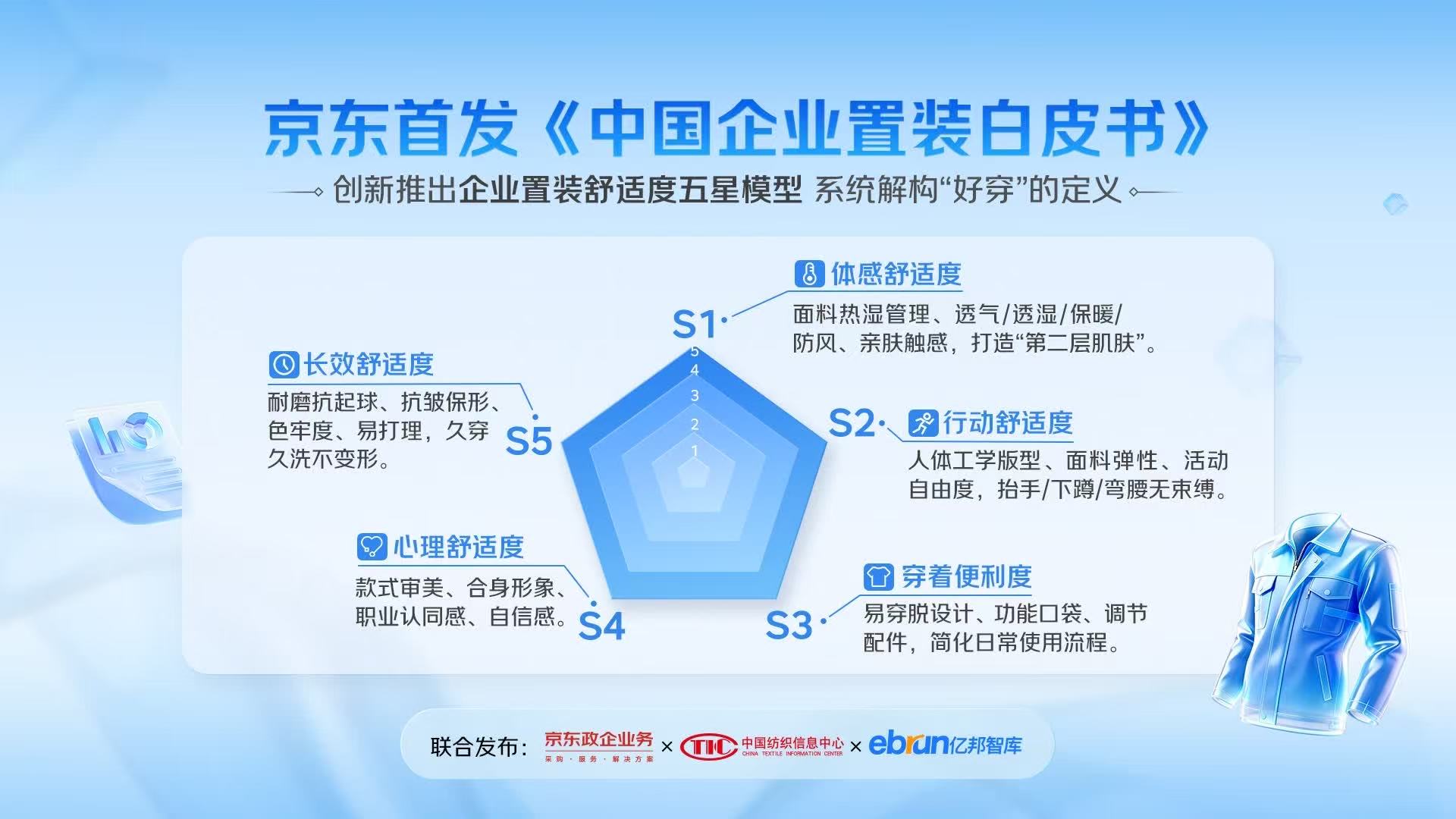
【亿邦原创】当新质生产力、Z世代与安全生产三条主线同时交汇,一项长期被视作“后台配置”的职能——企业置装,正在经历一场深刻的范式变革。由京东政企业务、中国纺织信息中心与亿邦智库联合发布的《中国企业置装白皮书——2026团服职业装采购指南》(以下简称“白皮书”),首次系统性地揭示了这场变革的背景、理念与核心路径,标志着行业正式迈入以员工体验与综合价值为导向的新阶段。
01

一个千亿级市场的结构性变局

中国拥有约4.75亿城镇就业人口,催生了超1585亿元的置装大市场。未来五年,这个数字将以8%到12%的年复合增速持续攀升,到2030年有望突破2100亿元。增长背后,是三重力量的共振:46项个体防护装备强制性国标的集中落地,正推动安全标准全面升级;工信部等六部门明确要求扩大国有企业对职业装的集中采购规模,为市场注入稳定增量;而Z世代占据职场主力后,对“统一标准”的疏离与对“个性化舒适”的渴望,正在倒逼企业重新审视置装采购的逻辑。

换句话说,市场规模增长只是结果,增长动能的切换才是关键——从依赖就业扩张的数量增长,转向由产品价值提升、政策需求释放与场景扩展驱动的结构性增长。

挑战同时存在。长期以来,企业置装始终难以突破困局——采购方关注价格,使用方在意体验,供需之间几乎不在同一频道对话;“好穿”与否全凭主观判断,缺乏科学评估体系;安全防护与舒适体验被人为分割,员工在长时间穿着中的生理与心理感受被系统性忽视。正是这些结构性矛盾,催生了这份白皮书——它的目标,是为行业提供一套可落地的的科学选品标准和评估工具。

02

“好穿”这件事,终于有了科学答案

白皮书的核心观点凝练而明确:“舒适度”是驱动团服职业装现代化的核心引擎。但此处的“舒适度”远不止柔软或合身那么简单。白皮书创新性构建了“企业置装舒适度模型”,从五个维度系统解构“好穿”的科学内涵:

· 体感舒适度:关注面料的热湿管理能力与皮肤触感,让服装成为“第二层肌肤”。

· 行动舒适度:聚焦版型剪裁的人体工学适配性,赋予员工全天候的活动自由。

· 穿着便利度:考察易穿脱设计与功能性细节,在细微处提升每日效率。

· 心理舒适度:涵盖款式美观度与职业认同感,让工装承载职业自信。

· 长效舒适度:涉及耐用性、抗皱保形与易打理程度,增强使用周期价值。
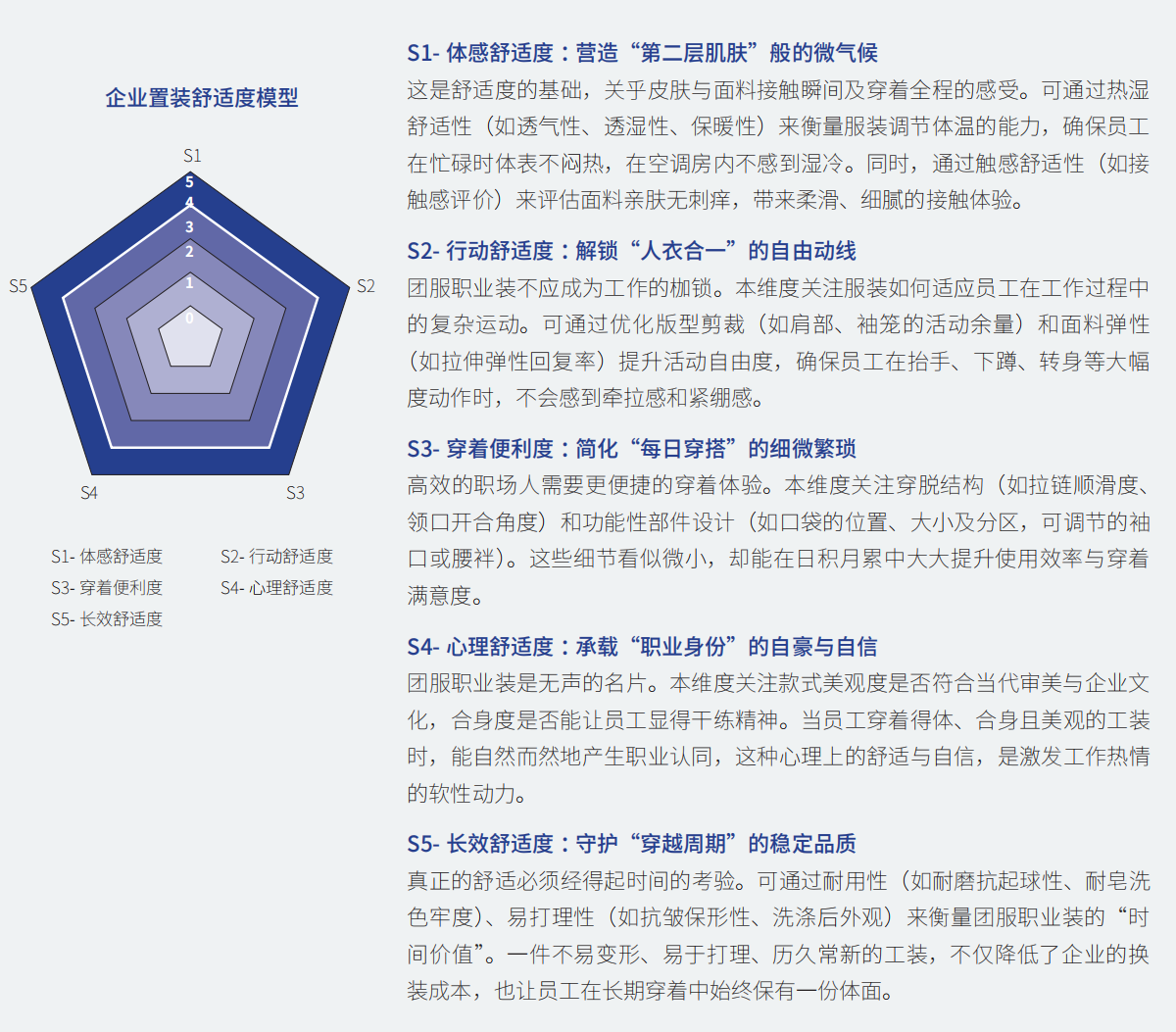
京东政企业务定制负责人对亿邦动力表示,京东首发企业置装舒适度模型的出发点,是回归“人”本身,把“好穿”变成可量化、可感知的科学标准。这也是这套模型的核心价值——依托京东政企业务长期积累的企业采购大数据,联合中联品检、广检集团等国家级检测机构的技术支撑让“好穿”不再是一句模糊的描述,而是一套可测量、可比较的硬标准,具体表现为:团体定制服装分级技术要求,根据不同岗位特点和使用场景,设置多级性能标签(如标准级/舒适级/尊享级,基础防护级/专业防护级/特种防护级),覆盖西装、T恤、衬衫、夹克、裤子等核心品类。

有了科学评估模型,下一步就是如何落地。报告融合了从材料到成衣的全产业链经验,吸收京东大时尚、京东京造、京东工业、BONO、十如仕、波司登、李宁、安踏、仙桃职业工装电商产业园等主流品牌和供应商的实践经验,提出了覆盖企业置装核心场景的细分解决方案:

· 商务办公:正从刻板正装转向“商务休闲”,高端产品均价显著高于标准产品,印证了需求升级的真实性;

· 特种防护:在强制性国标推动下,安全与舒适的双重升级成为刚需;

· 餐饮服务:在高频次洗涤与长时间穿着的双重压力下,对耐用性与透气性提出了更高要求;

· 外勤户外:场景中,从基础防晒到三防功能的全场景防护需求正在快速释放;

· 企业团建:作为增长最快的弹性板块,正从基础文化衫升级为可日常穿着的时尚团服,成为企业员工体验管理的重要一环。

这意味着企业采购不再需要依赖经验或低价中标,而可以根据岗位性质、工作环境与预算,清晰选择对应级别的方案,真正实现“按需配置、精准投入”。对于长期处于低质量竞争的行业而言,这无疑是一次供给侧的实质性突破。

03

小小一件工装,正在变成一项战略投资

从“统一标识”到“赋能个体”,从“成本管控”到“生产力投资”,从“价格竞争”到“体验竞争”——这不只是一本白皮书的观点,更是行业正在发生的真实变化。

我们看到,以京东政企业务为代表的平台服务商,通过全链路数字化驱动的“研产销运洗”一体化服务,让企业不再只局限于购买成品工装,而是获得了一整套从面料开发、款式设计到生产交付、甚至后期洗涤的端到端解决方案。目前,京东政企业务已经完成了对制造、消费品、金融、通信、能源、交通、医疗、教育等行业领域的深度渗透,覆盖车间作业、窗口服务、商务办公等30+细分工作场景。这种全场景的覆盖能力,恰恰折射出市场对于专业化置装服务的迫切需求——不同岗位、不同环境,需要的是“千人千面”的精准匹配,而非“千篇一律”的批量采购。

《2026中国企业置装白皮书》的发布,首次为企业置装提供了从理念到实践的完整框架,标志着行业正式告别了“发工装”的粗放阶段,进入“以人为本”重构价值的新周期。

当一件工装能让员工在工作中感到体面、自信与舒适,它便不再是简单的劳保用品,而是企业凝聚人心、提升效率的战略装备。在这场变革中,具备全场景覆盖、全链路定制以及数字化驱动能力的平台,将成为推动这场变革的核心力量。

而对企业决策者而言,采购部门不仅要算初次投入,更要算“全生命周期价值”的账。此刻,值得企业管理者重新思考一个问题:一件工装,究竟是企业的成本线,还是员工的价值感?

【版权提示】亿邦动力倡导尊重与保护知识产权。未经许可,任何人不得复制、转载、或以其他方式使用本网站的内容。如发现本站文章存在版权问题,烦请提供版权疑问、身份证明、版权证明、联系方式等发邮件至run@ebrun.com,我们将及时沟通与处理。

已点赞

+1

{{ praise_text }}

好文章,值得被更多人看到

FAQ回顾

我国企业置装行业的发展趋势是什么?

中国企业置装市场当前规模超1585亿元,未来五年将以8%到12%的年复合增速持续攀升,2030年有望突破2100亿元,增长动能已从依赖就业扩张的数量增长转向结构性增长。

评判企业工装的舒适度有哪些维度?

企业置装舒适度可从五个维度评判:体感舒适度关注面料热湿管理与皮肤触感,行动舒适度考察版型人体工学适配性,穿着便利度关注易穿脱等细节,心理舒适度涵盖款式与职业认同感,长效舒适度涉及耐用性、易打理程度。

企业置装采购有哪些可参考的科学标准?

《中国企业置装白皮书》构建了可量化的舒适度评估模型,推出团体定制服装分级技术要求,按岗位特点和场景设置多级性能标签,覆盖西装、T恤等多核心品类,企业可结合岗位性质、预算按需选择方案。

京东政企业务的企业置装服务有什么特点?

京东政企业务提供全链路数字化驱动的“研产销运洗”一体化端到端置装解决方案,已渗透制造、金融、能源、医疗等多个行业,覆盖30个细分工作场景,可实现不同岗位需求的精准匹配。

广告

下一篇

征集报名《品牌数字化服务商资源手册》

《品牌数字化服务商资源手册》展示数字化服务商风采,亿邦全年零售大会通发,触达更多资源,马上加入!

马上入驻

让雷军和00后都“上头”的装备 在618卖爆了 有商家销量破亿

对于销售洗车装备的商家而言,消费者选择“自己动手洗车”,决策起点远不止“省钱”这一单一诉求,其背后的核心驱动力是解压与掌控感。

未来零售

2026-07-06 09:18:33