



• 亿邦公众号
    • APP下载

58000亿 OpenAI要IPO了

作者:张雪 文章来源:投中网

2026-06-10 08:52

作者:张雪 文章来源:投中网

2026-06-10 08:52

邦小白快读
EN
全文速览

本文围绕OpenAI递交S-1招股书准备IPO这件事,梳理了核心信息与行业背景,干货整理如下:

1. 核心事件信息:美国时间6月8日OpenAI官宣已秘密向美国SEC提交S-1招股书,上市时间暂未确定,目前正与高盛、摩根士丹利合作推进,最早可能今年秋季上市,当前投后估值约8520亿美元,本轮融资是风险投资有史以来最大规模的单笔融资。

2. OpenAI发展历程:2015年以非营利AI研究实验室成立,先后经历三次架构重写,从非营利转型为受非营利母体控制的有限营利结构,再到ChatGPT爆火转型消费应用公司,最终启动IPO准备。

3. 当前现状与行业格局:OpenAI当前年化收入接近250亿美元,但烧钱速度极快,预计2030年才能实现现金流转正,当前AI领域形成SpaceX、Anthropic、OpenAI三雄争霸格局,三家万亿级公司同时IPO,将考验美国资本市场的承接能力。

OpenAI的转型与IPO事件,给科技品牌、AI领域品牌的发展带来诸多参考干货,整理如下:

1. 品牌战略调整启示:OpenAI最初定位非营利研究实验室,最终走向IPO,说明前沿科技品牌发展到一定阶段,必然要从技术优先转向兼顾商业化增长与财务健康,品牌重心需要根据发展阶段灵活调整。

2. 消费与市场趋势:ChatGPT创下两个月破亿用户的增长记录,说明C端AI产品已经进入爆发期,同时OpenAI企业业务占比已经超过40%,未来很快会和消费业务持平,AI广告赛道也展现出巨大潜力,灰度测试六周就达到1亿美元年化收入。

3. 商业化落地经验:OpenAI为了保障收入增长,主动关闭了无法落地的Sora项目,聚焦企业业务、编码工具和超级应用打造,这种聚焦可落地业务的思路,对很多科技品牌有参考价值。

OpenAI IPO事件反映出AI领域的发展现状,给AI相关赛道卖家带来很多机会与风险提示,整理如下:

1. 市场机会梳理:当前AI行业已经进入商业化落地期,多个细分赛道存在增长机会:OpenAI正把ChatGPT升级为集编程、智能体、第三方服务于一体的超级应用,同时企业AI服务、AI广告、AI编码助手都展现出高速增长潜力,卖家可以围绕这些赛道找切入机会。

2. 风险提示:大模型行业属于重资本支出赛道,烧钱速度远超传统行业,OpenAI当前毛利率仅33%,2026年预计现金消耗达270亿美元,预计2030年才能实现现金流转正,进入该赛道的卖家需要警惕资金链压力,提前做好资金规划。

3. 竞争启示:当前AI赛道头部已经形成三雄争霸格局,Anthropic聚焦企业端赛道,毛利率高于OpenAI,预计今年二季度就能实现盈利,卖家可以选择差异化细分赛道布局,避开头部的直接竞争。

OpenAI的发展与AI行业的爆发,给工厂带来很多商业机会与转型启示,整理如下:

1. 数字化转型启示:当前AI商业化已经进入快车道,AI技术已经从实验室走向实际应用,工厂可以借助AI技术改造生产流程、优化产品设计,抓住AI产业升级的红利,提升自身的生产效率与竞争力。

2. 商业机会梳理:大模型行业的高速发展带来了庞大的硬件基础设施需求,OpenAI不仅和Oracle签了3000亿美元的框架协议,和英伟达、微软等企业也有数百亿美元级别的多年合同,覆盖芯片、电力、机柜、数据中心等多个领域,相关生产制造工厂可以抓住这波长期需求增长,获得稳定的大订单。

3. 商业化思路启示:OpenAI的发展说明,技术只有落地才能产生持续价值,工厂布局AI不能停留在概念层面,需要聚焦能实际降本增效的场景,才能获得可持续的收益,避免盲目投入造成资源浪费。

OpenAI IPO事件透露出AI大模型行业的发展趋势与客户痛点,给AI相关服务商带来很多参考,整理如下:

1. 行业发展趋势:当前大模型行业已经从早期技术验证阶段进入商业化落地阶段,企业端需求增长迅速,OpenAI当前企业业务占比已经超过40%,预计2026年底就会和消费业务占比持平,同时AI广告、AI编码工具都是新的高速增长点,To B AI服务是未来行业的核心方向。

2. 行业核心痛点:当前大模型服务商最大的痛点就是推理算力成本过高,直接压制了毛利率,OpenAI当前毛利率仅为33%,2026年推理成本就预计达到141亿美元,如何降低推理成本、优化算力利用效率,是服务商亟待解决的核心问题。

3. 生态合作机会:OpenAI正计划把ChatGPT打造为集多种功能于一体的AI超级开放平台,整合第三方服务,相关服务商可以围绕这个超级应用生态开发配套产品与服务,抓住生态增长的红利,获得更多客户资源。

OpenAI等三家万亿级企业同步启动IPO,给公开市场平台带来了很多机遇与挑战,干货整理如下:

1. 行业需求变化:随着大模型这类重资产高科技行业的发展,头部企业的资金需求越来越大,一级市场已经无法单独支撑这类企业的持续烧钱扩张,越来越多的头部科技初创企业会提前走向公开市场,平台需要提前调整策略,适配大规模IPO的需求。

2. 风险规避提示:按流通比例测算,OpenAI等三家企业本次IPO合计至少需要从公开市场吸纳4000亿美元资金,这个规模相当于美国过去十年整个IPO市场的募资总和,对市场流动性是极大考验,平台需要合理安排IPO节奏,做好流动性风险预警,避免出现流动性危机。

3. 发展机会:大模型企业上市后,衍生出很多新的服务需求,比如本次融资OpenAI就向散户开放了投资份额,也被纳入多家ETF产品,平台可以围绕AI赛道开发更多适配不同类型投资者的产品,丰富自身的招商与产品矩阵,抓住AI赛道的增长机会。

OpenAI从非营利实验室到申请IPO的发展历程,展现了AI产业的最新动向,给产业研究提供了很多新方向,干货整理如下:

1. 产业最新动向:当前AI大模型行业已经脱离早期基础研究阶段,进入商业化高速发展期,头部大模型企业已经达到万亿级估值,陆续启动IPO登陆二级市场,行业初步形成OpenAI、Anthropic、SpaceX三雄争霸的格局,三家万亿级企业同时IPO是全球资本市场从未出现过的新情况。

2. 创新商业模式参考:OpenAI开创了非营利母体控股有限营利子公司的特殊架构,既满足了早期前沿研究保持独立性的需求,又解决了发展过程中大规模融资的需求,为非营利性质的前沿科技研究机构转型商业化提供了新的模式参考,具备很高的研究价值。

3. 产业新问题:大模型行业属于典型的重资本支出行业,烧钱速度远超传统行业,一级市场已经无法支撑其持续扩张,公开市场能否承接这么大规模的资金需求,大模型企业如何平衡技术研发投入和盈利的关系,都是产业发展过程中出现的新问题,值得深入研究。

声明:快读内容全程由AI生成,请注意甄别信息。如您发现问题,请发送邮件至 run@ebrun.com 。

我是 品牌商 卖家 工厂 服务商 平台商 研究者 帮我再读一遍。

Quick Summary

This article organizes core information and industry context around OpenAI's confidential S-1 filing in preparation for an initial public offering (IPO), with key takeaways as follows:

1. Core event details: On June 8 U.S. time, OpenAI announced it confidentially submitted an S-1 prospectus to the U.S. SEC, with no confirmed listing timeline yet. It is working with Goldman Sachs and Morgan Stanley on the offering, which could launch as early as this fall. OpenAI currently has a post-money valuation of around $852 billion, and the current funding round is the largest single venture capital financing round in history.

2. Development history: Founded in 2015 as a non-profit AI research lab, OpenAI has undergone three major structural overhauls: it transitioned from a pure non-profit to a capped-profit structure controlled by its non-profit parent, shifted to a consumer application company following ChatGPT's explosive growth, and is now preparing for its IPO.

3. Current status and industry landscape: OpenAI posts an annualized revenue of nearly $25 billion, but has an extremely high cash burn rate and is not expected to reach positive free cash flow until 2030. The AI sector has formed a three-way rivalry between SpaceX, Anthropic and OpenAI. The simultaneous IPO of three trillion-dollar companies will test the absorption capacity of U.S. public markets.

OpenAI's transformation and upcoming IPO offer valuable insights for technology and AI-focused brands, summarized below:

1. Lessons for brand strategy adjustment: OpenAI started as a non-profit research lab and is now heading for an IPO, demonstrating that once cutting-edge technology brands reach a certain stage of development, they must inevitably shift from a technology-first focus to balancing commercial growth and financial health, and flexibly adjust brand priorities aligned with their growth stage.

2. Consumer and market trends: ChatGPT's record of crossing 100 million users in just two months confirms that consumer-facing AI products have entered a period of explosive growth. At the same time, enterprise business already accounts for over 40% of OpenAI's revenue and will soon match the share of its consumer business. The AI advertising track also shows massive potential, already hitting $100 million in annualized revenue after just six weeks of gray testing.

3. Commercialization lessons: To secure consistent revenue growth, OpenAI proactively paused the undelivered Sora project to refocus on enterprise business, coding tools and building its super app. This focus on commercially viable products offers a valuable reference for many technology brands.

OpenAI's IPO reflects the current state of the AI industry and offers insights on opportunities and risks for sellers in AI-related sectors, summarized below:

1. Market opportunity breakdown: The AI industry has now entered its commercialization phase, with growth opportunities across multiple niche tracks. OpenAI is upgrading ChatGPT into a super app integrating programming, agents, and third-party services, while enterprise AI services, AI advertising and AI coding assistants all show strong high-growth potential. Sellers can explore entry points around these tracks.

2. Risk warning: The large model industry is a capital-intensive sector with a far faster cash burn rate than traditional industries. OpenAI currently holds just a 33% gross margin, is projected to burn $270 billion in cash by 2026, and will not reach positive cash flow until 2030. Sellers entering this space should watch for capital chain pressure and plan funding well in advance.

3. Competitive insights: A three-way rivalry between leading players has formed in the AI sector: Anthropic focuses on the enterprise segment, holds a higher gross margin than OpenAI, and is expected to turn a profit as early as Q2 this year. Sellers can pursue differentiated positioning in niche tracks to avoid direct competition with industry leaders.

OpenAI's growth and the AI boom bring major commercial opportunities and transformation insights for manufacturing factories, outlined below:

1. Lessons for digital transformation: AI commercialization is now accelerating, and AI technology has moved out of the lab into real-world applications. Factories can leverage AI to revamp production processes and optimize product design, capture dividends from AI-driven industrial upgrading, and improve production efficiency and competitiveness.

2. Commercial opportunity breakdown: The rapid growth of the large model industry has created massive demand for hardware infrastructure. OpenAI has signed a $300 billion framework agreement with Oracle, and also holds multi-year contracts worth tens of billions of dollars with NVIDIA, Microsoft and other firms covering chips, power, server cabinets, data centers and more. Relevant manufacturing factories can capitalize on this long-term demand growth to secure large, stable orders.

3. Commercialization insights: OpenAI's growth demonstrates that technology only generates sustained value when it is commercially deployed. When factories explore AI opportunities, they should not stop at the conceptual level; instead, they need to focus on use cases that deliver tangible cost reduction and efficiency gains to generate sustainable returns and avoid wasted resources from blind investment.

OpenAI's IPO reveals key development trends and client pain points in the large model industry, offering valuable insights for AI-related service providers, summarized below:

1. Industry development trends: The large model industry has moved beyond the early technology validation phase into the commercial deployment stage, with enterprise demand growing rapidly. Enterprise business already accounts for over 40% of OpenAI's revenue, and is projected to match the share of consumer business by the end of 2026. Meanwhile, AI advertising and AI coding tools are emerging high-growth segments, making B2B AI services the core direction of the industry going forward.

2. Core industry pain points: The biggest challenge facing large model service providers today is excessively high inference computing costs, which directly suppress gross margins. OpenAI currently holds just a 33% gross margin, and its inference costs are projected to reach $141 billion by 2026. Reducing inference costs and improving computing efficiency remains the core, unaddressed problem for service providers.

3. Ecosystem partnership opportunities: OpenAI is building ChatGPT into an open AI super platform that integrates a full range of functions and third-party services. Relevant service providers can develop complementary products and services around this super app ecosystem, capture growth dividends from the ecosystem expansion, and access larger customer pools.

The simultaneous IPO preparation of three trillion-dollar companies including OpenAI brings major opportunities and challenges for public market platforms, with key takeaways below:

1. Shifting industry demand: As capital-intensive high-tech sectors like large model AI develop, leading firms have growing and increasingly large capital requirements that private markets can no longer support alone. A growing number of leading technology startups will move to public markets earlier, requiring platforms to adjust their strategies in advance to accommodate large-scale IPOs.

2. Risk mitigation guidance: Based on free float estimates, the combined IPOs of OpenAI and its two peers will require at least $400 billion in new capital from public markets — equal to the total IPO fundraising across the entire U.S. market over the past decade. This represents an enormous test of market liquidity. Platforms need to schedule IPO timelines carefully, implement liquidity risk early warning systems, and prevent potential liquidity crises.

3. Growth opportunities: The listing of large model companies will generate demand for a range of new services. For example, OpenAI is opening up a portion of its offering to retail investors and has been added to multiple ETF products. Public platforms can develop more products tailored to different investor types around the AI track, expand their product and issuer portfolios, and capture growth opportunities from the AI boom.

OpenAI's journey from non-profit lab to IPO filing reveals the latest dynamics of the AI industry and opens up new research directions for industry analysts, outlined below:

1. Latest industry dynamics: The large model AI industry has moved beyond the early basic research stage and entered a period of rapid commercial growth. Leading large model firms have already reached trillion-dollar valuations and are sequentially preparing for IPOs to list on public markets. The industry has formed an initial three-way rivalry between OpenAI, Anthropic and SpaceX, and the simultaneous IPO of three trillion-dollar companies is an unprecedented event for global capital markets.

2. A new innovative business model for study: OpenAI pioneered a unique structure where a non-profit parent holds a controlling stake in a capped-profit subsidiary. This model meets the need for independent early-stage cutting-edge research while enabling large-scale financing to support growth. It offers a new template for non-profit cutting-edge research institutions looking to commercialize and holds high research value.

3. New industry questions for exploration: The large model industry is a distinctly capital-intensive sector with a far faster cash burn rate than traditional industries, and private markets can no longer support its continued expansion. Whether public markets can absorb such massive capital demand, and how large model companies can balance technology R&D investment and profitability, are new emerging questions in industry development that warrant in-depth research.

Disclaimer: The "Quick Summary" content is entirely generated by AI. Please exercise discretion when interpreting the information. For issues or corrections, please email run@ebrun.com .

I am a Brand Seller Factory Service Provider Marketplace Seller Researcher Read it again.

人人都爱“第一股”,OpenAI也不例外。

美国时间6月8日,OpenAI在官网上丢出了一个重磅炸弹,正式官宣已向美国证券交易委员会秘密提交了S-1招股书。公告内容如下:

我们最近提交了一份保密的S-1文件。我们预计这份文件可能会泄露,所以现在就先公布一下。我们还没有决定上市时间;可能还需要一段时间,因为我们想做的一些事情,作为一家私营公司可能更容易实现。但这其中有很多权衡取舍,而这份文件也让我们有机会在最终确定上市是最佳选择时,尽早上市。

虽然短短百十个字,但却充满了犹豫与矛盾,一方面怕错失上市时机,想尽早上市,一方面又舍不得现有的未上市身份,让上市时间待定。此前据彭博社报道,OpenAI正与高盛和摩根士丹利合作进行上市,最早可能在今年秋季实现。

不管怎样,在SpaceX掌舵人马斯克、Anthropic CEO达里奥·阿莫代伊之后,山姆·奥特曼即将成为又一个万亿市值公司的敲钟人。

与另外两家稍显不同的是,OpenAI登陆二级市场多少有点“背叛初心”的意味,上市则表明未来OpenAI的重心将从模型能力领先转向收入增长、利润率和自由现金流等冰冷的财务数据。

十一年简史

说到“背叛初心”,我们需要把时间拨回2015年底。

2015年12月11日,OpenAI以非营利研究实验室的身份诞生。马斯克联合Peter Thiel、Reid Hoffman等硅谷科技领袖宣布向OpenAI承诺10亿美元资金,旨在建立一个不受商业压力和金钱追求影响的人工智能研究实验室。

彼时的AI还是Google Brain、DeepMind与学术界的游戏,“AGI”在硅谷更多被认为是一种带宗教色彩的远期愿景。

OpenAI这一非营利性质的设定在当时看来也是个乌托邦一样的存在。然而,理想化的非营利理念也很快面临现实压力。2017年,马斯克在邮件中写道“我受够了,这是最后一根稻草”,警告如果OpenAI变成科技初创公司,他将不再提供资金。2018年2月,马斯克离开OpenAI董事会,标志着他与奥特曼决裂的开始。

接下来,戏剧性的一幕幕接连发生,历史上很少有公司能在十年内把自己重写三次,OpenAI就是其中之一。

第一次重写发生在2019年。 有消息显示,创始团队最初的“10亿美元”承诺实际到2019年前累计到账资金约1.3亿美元,另一边训练大模型的算力账单远远超过捐赠所能覆盖的边界。

现实压力之下,OpenAI创设了“capped-profit”结构,即成立一家受非营利母体控制的有限营利子公司OpenAI LP,这使公司能够合规地接受大规模外部投资,不过,当时投资人回报被强制封顶为100倍。

同年,微软投入第一笔10亿美元,双方达成深度战略合作,OpenAI被推上了Azure。也是在这一年,GPT-2、GPT-3相继问世,但都还不足以掀翻消费互联网。

第二次重写则发生在众所周知的2022年11月。

ChatGPT在毫无市场预热的情况下上线,五天破百万用户,两个月破亿,创下了消费互联网史上最快的产品扩散速度,相应地,OpenAI正式从一家“研究机构”骤变为“消费应用公司”。有合作基础的微软也没闲着,其迅速将合作金额加码到100亿美元级别,并把GPT模型嵌入微软系产品中。

随后是2023年11月那场被称作“OpenAI五日危机”的董事会风波,奥特曼被解雇又被请回,几乎全部员工以辞职威胁,微软在背后施压。也是这场风波暗示了OpenAI的未来走向,它在某种程度上证明原有的非营利董事会无法为有着全球科技巨头潜力的公司做方向决策。

2025年的再资本化被看做是第三次重写。

这一年,OpenAI完成了对营利子公司的重组,非营利母体OpenAI Foundation持有营利子公司的股权,价值约1300亿美元,员工通过二级转让方式以5000亿美元估值套现66亿美元。

八个月后,也就是今年3月,OpenAI完成了一轮高达1220亿美元的融资,投后估值8520亿美元(约57688亿人民币),这是风险投资有史以来最大规模的一笔单笔融资。在这轮融资中,OpenAI首次通过银行渠道向散户投资者开放了超过30亿美元的投资份额,并被纳入ARK Invest等数家交易所交易基金(ETF)。这一举动,一度被外界解读为IPO的序曲。

只是让人没想到的是,Anthropic不仅在估值上迅速超过了OpenAI,在IPO的时间表上,也比OpenAI快了一周。

财务的两面

尽管这次递表是秘密的,不过从公开渠道,我们还是可以瞥见一些OpenAI的财务现状,同样,其财务数据也是矛盾的两面,一面是前所未有的收入增速,一面是前所未有的烧钱速度。

先看收入端。
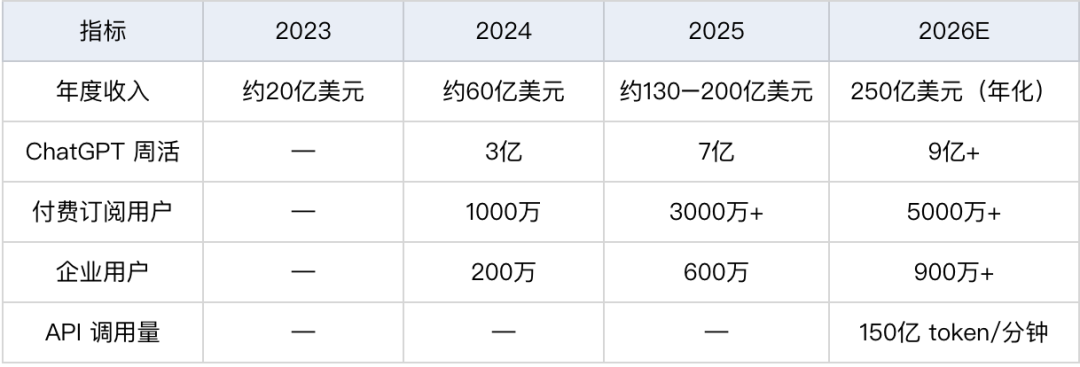
图片

可以看到,OpenAI 2025年的收入在130亿至200亿美元之间,这是由于不同时期的统计口径不同,但到了今年2月,其年化收入已经接近250亿美元,3月的月营收也达到了20亿美元,其中企业业务占比已超过40%,并且预计在2026年底将与消费业务持平。

在具体业务上,OpenAI的营收主要来自消费端,企业端和广告三部分,其中消费端是基石,企业端极具潜力,而广告则是被低估的隐线,Sacra数据显示,OpenAI的广告灰度测试在6周内就达到了1亿美元的年化收入,其内部对2026全年广告收入的预期约为24亿美元。

看来,不管技术如何更迭,卖广告永远是个不错的商业模式。

为了进一步强化收入增长的可持续性,近几个月来,OpenAI不仅关闭了看不到商业化落地的sora,还大力投资其企业业务以及编码助手产品Codex,就在6月3日,OpenAI举行了一场题为《Intelligence at Work》的发布会,重磅推出了Codex的三项重大更新。

最近几天,有消息指出OpenAI正在对ChatGPT进行自2022年上线以来的最大规模升级,新版在未来几周内逐步上线,核心思路是将ChatGPT从一个纯对话机器人,升级为集编程工具、AI智能体、第三方服务入口于一体的“超级应用”。

再看成本端。

OpenAI当前的毛利率仅约33%,被推理算力成本牢牢压制。据测算,其2025年的推理成本约84亿美元,2026年预计上升到141亿美元。

再叠加训练支出、数据中心租赁、英伟达采购合同以及对基础设施伙伴的预付承诺,2026年OpenAI的现金消耗预计约为270亿美元,2027年这一数字将膨胀至630亿美元。

基于此,公司内部把现金流转正的时间点定在了2030年。

换句话说,OpenAI正在以每年数百亿美元的速度烧钱,去维持其在通用大模型上的领先地位与基础设施护城河,而这种支出是实打实的物理意义上的资本支出——电力、土地、芯片、机柜。更何况,OpenAI与Oracle签下的星际之门项目,单一框架协议金额即达3000亿美元,与微软、与英伟达、与博通、与AMD也都有数百亿美元级别的多年合同。

因此,也有分析称这是OpenAI走向IPO的根本动力,它不再是一家可以靠一级市场单独支撑的公司。

三雄争霸

那么二级市场可以吗?

和A股市场一样,美股似乎也很久没有这么热闹了,正如开头所说,SpaceX、Anthropic和OpenAI这三头大鲸选择在今年同时上岸,这对资本市场来说,既是造富盛宴,也是实力考验。因为这三家企业面对的是同一群机构、投资人和同一池的流动性。

对比来看,OpenAI的财务曲线不如Anthropic陡峭,叙事也不及SpaceX宏大和全面。

作为OpenAI最直接的竞争对手,Anthropic长期被定位为“安全优先”的AI实验室,其旗舰产品Claude在编码、长文本与企业Agent场景中的口碑也超过了GPT系列。

当然,它最亮眼的还是商业化表现,年化收入从2025年的约45亿美元,一跃升到了2026年440亿美元的年化收入。这种爆发式的增长主要由API与企业合同驱动。

Anthropic的客户结构里几乎没有消费应用,而是代表新一代AI Native SaaS的公司。其毛利率显著高于OpenAI,并预计将在今年第二季度就实现盈利。

SpaceX更像是一个国家级的工业项目,它拥有美国国防部、NASA和企业级Starlink客户的长期合同,其收入是政府订单驱动的。再加上,AI和商业航天热点概念的双重加持,也难怪它获得大幅超额认购,据悉多家机构投资者提交了约100亿美元或以上的认购订单。

所以,三家万亿美元公司同时上市的关注点已经不在估值是否合理上了,而是公开市场能否承接得了。

按标准IPO流通占比15–25%测算,这三家企业合计至少要在公开市场吸走4000亿美元的资金,这是什么概念?这几乎是过去十年整个美国IPO市场募资的总额。后续,这场IPO浪潮该如何收尾,也是一个全新命题。

最后再回到OpenAI上,在发布提交招股书消息之前,奥特曼与现任OpenAI首席科学家雅库布·帕乔基联名发表了一篇题为《为所有人造福:我们的计划》的长文。

在这篇文章里,他们将AI比作电,电力本身只是工具,真正的变革来自于人们利用它创造的新可能,最终推动了寿命延长和收入大幅增长。他们也在文章中提出了OpenAI的三个阶段,分别是

开展AGI研究、研究成果产品化以及让每个人都有一个AGI。

有人说,这篇文章里隐晦交代了部分IPO募得资金的用途——AI的第三阶段。

“现在我们进入了第三阶段。经济格局正围绕人工智能进行重塑。当前的核心问题是如何让先进的人工智能变得普及、经济、安全、实用且易于上手,从而使每个人和每个组织都能从中受益。前沿技术只是其中的一部分。更重要的任务是将这些技术转化为人们真正能够用来发展壮大的工具。我们坚信,权力的广泛分配将有助于创造更美好的未来。人类历史表明,权力集中会造成脆弱性,而权力广泛共享则能使社会更具韧性、适应性和自由度。”

注:文/张雪,文章来源:投中网(公众号ID:China-Venture),本文为作者独立观点,不代表亿邦动力立场。

【版权提示】亿邦动力倡导尊重与保护知识产权。未经许可,任何人不得复制、转载、或以其他方式使用本网站的内容。如发现本站文章存在版权问题,烦请提供版权疑问、身份证明、版权证明、联系方式等发邮件至run@ebrun.com,我们将及时沟通与处理。

已点赞

+1

{{ praise_text }}

好文章,值得被更多人看到

广告

下一篇

征集报名《品牌数字化服务商资源手册》

《品牌数字化服务商资源手册》展示数字化服务商风采,亿邦全年零售大会通发,触达更多资源,马上加入!

马上入驻

演员黄磊投了一个院士项目

随着资本市场回归理性、硬科技成为主旋律,一向热衷“演而优则投”的一线明星们的跨界投资布局也在发生变化,由消费和文娱深入到半导体、人工智能、新能源等“高冷”赛道。

未来零售

2026-06-10 07:20:32











