• 亿邦公众号
    • APP下载

馥郁满铺获近亿元投资

作者:龚作仁 文章来源:Laborer

2026-05-15 10:51

作者:龚作仁 文章来源:Laborer

2026-05-15 10:51

邦小白快读

EN
全文速览

本次核心事件是“中国香水第一股”颖通控股斥资9750万元拿下国货新锐护肤品牌馥郁满铺母公司15%股权,交易完成后颖通将成为第三大股东,这件事背后透露出美妆行业的最新动向,有这些核心干货信息。

1. 核心背景:颖通控股是国内最大的香水品牌管理企业,2025年成功在港交所上市,本次投资是其IPO募资规划中投资品牌、拓展业务的落地动作,核心目的是开拓新增长曲线,应对原有代理业务的风险。

2. 馥郁满铺基本情况:该品牌主打芳疗微生态护肤,深耕特色原料,产品覆盖多个护肤品类,线上全平台布局,线下已经落地首家旗舰店,成立以来多次获得资本投资,核心单品销售表现亮眼。

3. 消费趋势参考:当下消费者对天然疗愈、功效型护肤的需求不断提升,芳疗情绪护肤赛道增长潜力大,普通消费者可关注这类高潜力细分赛道的新锐品牌。

本次事件透露出美妆行业发展的多个关键信息,能给不同类型的品牌商提供发展参考。

1. 消费趋势:当下消费者对天然疗愈、专业功效型护肤及个人护理产品的需求持续攀升,芳疗所属的情绪美容赛道增长爆发力强,预计2030年中国情绪经济市场规模突破5万亿元,情绪美容市场规模将达数千亿元,品牌可重点布局该细分赛道。

2. 品牌运营参考:馥郁满铺的差异化路线值得借鉴,通过清晰定位、独有的品牌审美、差异化表达、专业科研能力构筑核心竞争力,深耕单一原料打造品牌标签,路径清晰。

3. 渠道建设参考:走线上全平台运营+线下逐步落地的路线,先通过快闪、慢闪测试市场,再落地核心城市旗舰店,依靠线下强化香氛类核心资产的用户体验,加深品牌认知。

4. 战略转型参考:传统代理型品牌商可通过投资优质新锐品牌,拓展业务边界,规避原有模式风险,打造新的增长曲线。

本次事件给美妆赛道的卖家释放了明确的市场机会、风险提示以及可学习的运营经验。

1. 增长机会:芳疗功效护肤属于情绪美容的核心细分赛道,当前需求持续增长,市场规模不断扩大,整体情绪经济2030年有望突破5万亿元,是非常有潜力的新增量市场,适合卖家切入布局。

2. 可学习运营经验:馥郁满铺走差异化定位路线,精准把握用户需求,靠核心单品打爆市场,同时采用线上全平台布局、线下通过快闪慢闪测试后落地旗舰店的全渠道扩张路径,模式清晰可复制。

3. 风险提示:高度依赖品牌授权的代理模式存在极大风险,品牌方收回自主运营会对业绩造成毁灭性打击,卖家需要提前布局自有品牌或投资控股品牌,掌握经营主动权。

4. 合作机会:高潜力新锐品牌可以对接头部美妆运营商,借助对方的运营和渠道资源加速全渠道扩张,实现更快增长。

本次美妆行业投融资事件,给美妆生产工厂带来多方面的商业机会和转型启示。

1. 产品生产设计需求变化:当下消费者越来越偏好天然疗愈、功效型芳疗护肤产品,品牌方更加注重特色原料研发、差异化产品体系打造,工厂需要针对性布局相关原料储备、特色生产工艺,适配品牌方的差异化生产需求。

2. 新增商业机会:芳疗情绪护肤赛道处于高速增长期,赛道内新锐品牌融资活跃,扩张速度快,会持续产生新增订单需求,工厂可以提前对接这类高潜力新锐品牌,拓展自身客户群体,抢占新增量市场。

3. 转型发展启示:头部美妆运营商都在加速数字化转型,全渠道布局业务,工厂也需要加快推进自身数字化改造,提升柔性生产能力和交付效率,适配品牌方的数字化需求,跟上行业发展节奏。

4. 竞争力打造方向:品牌越来越重视香氛相关的用户体验,工厂可以围绕香氛护肤开发定制化生产方案,打造自身差异化竞争力。

本次事件反映出美妆行业的最新发展趋势,暴露了行业参与者的核心痛点,给美妆相关服务商带来很多发展参考。

1. 行业发展趋势:传统品牌代理运营商正在发生集体转型,纷纷从原本的品牌服务“卖水人”转向掌控品牌资产的“造船者”,大量头部企业会通过投资、孵化、并购布局品牌端,催生大量新增服务需求。

2. 行业核心客户痛点:传统代理企业的核心痛点是业务模式被动,高度依赖品牌授权,协议到期不续就会造成业绩大幅下滑,同时原有业务增长见顶,急需开拓新增长曲线;新锐护肤品牌的核心痛点是全渠道拓展能力不足,缺成熟的运营和渠道资源。

3. 业务拓展方向:服务商可以针对传统代理企业的转型需求,开发资本运作、品牌孵化相关的配套服务;针对新锐品牌的扩张需求,推出全渠道运营、线下门店拓展相关的配套服务,抓住行业转型带来的增量机会。

本次事件反映出美妆品牌对平台的最新需求,给美妆平台的招商、运营以及风险把控带来多个启示。

1. 品牌需求梳理:线上端,新锐美妆品牌普遍需要全平台布局,覆盖抖音、天猫、小红书、京东等不同平台获取流量;线下端,香芬护肤品牌需要线下场景强化用户体验,倾向先通过快闪、慢闪测试市场,再落地核心城市旗舰店。

2. 招商机会:芳疗功效护肤是高增长细分赛道,已经涌现出一批获得资本加持的高潜力新锐品牌,平台可以针对性引入这类品牌,丰富平台品类矩阵,带动品类增长。

3. 运营优化方向:线下平台可以为品牌提供更多快闪、慢闪场地资源,降低品牌线下拓店的试错成本;线上平台可以针对情绪护肤打造专属营销活动和流量池,帮助品牌撬动增量。

4. 风险规避:平台在和品牌合作时需要关注股权和经营稳定性,头部代理企业转型过程中存在一定不确定性,要提前做好风险把控。

颖通投资馥郁满铺的事件,是中国美妆产业转型的典型案例,反映了产业发展的最新动向,具备较高研究价值。

1. 产业新动向:传统品牌代理运营行业正在发生集体转型,头部代理企业为了规避授权模式的经营风险、开拓新增长曲线,纷纷通过投资、并购布局自有或控股品牌,实现从服务商到品牌持有者的身份转变,这是当前美妆行业的重要新趋势。

2. 创新商业模式:这种转型本质是传统代理企业将多年积累的运营能力、渠道资源、资本积累变现,转化为自有可控的品牌资产,是企业能力的升级迭代,目前业内已经有多起同类案例,模式具备可复制性。

3. 细分赛道新动向:国货新锐品牌开始在细分情绪护肤赛道突围,凭借差异化定位获得资本和市场的认可,芳疗功效护肤成为新的高增长细分赛道,印证了消费升级下消费者对产品情绪价值的需求不断提升。

4. 产业现存问题:传统代理模式的系统性风险已经凸显,依赖外部授权的业务模式极易陷入被动,产业需要探索更多可持续的发展路径。

声明:快读内容全程由AI生成,请注意甄别信息。如您发现问题,请发送邮件至 run@ebrun.com 。

我是 品牌商 卖家 工厂 服务商 平台商 研究者 帮我再读一遍。

Quick Summary

The core event covered in this article is that Yingtong Holdings, known as China's first publicly traded fragrance company, has acquired a 15% stake in the parent company of Chinese emerging skincare brand AroMacy for RMB 97.5 million. The deal will make Yingtong the third-largest shareholder of the parent company, and this transaction reveals the latest trends in China's beauty and cosmetics industry. Key takeaways are as follows:

1. Background: Yingtong Holdings is China's largest fragrance brand management firm, which successfully listed on the Hong Kong Stock Exchange in 2025. This investment is part of its post-IPO plan to acquire brands and expand business, with the core goal of opening up a new growth curve to mitigate risks from its core agency business.

2. Overview of AroMacy: The brand focuses on aromatherapy-based micro-ecological skincare, specializes in niche featured ingredients, offers a full range of skincare products, operates across all major online platforms, and has opened its first offline flagship store. It has secured multiple rounds of venture capital since its founding, and its core SKUs have posted strong sales performance.

3. Takeaway for consumers: Consumer demand for natural, healing and efficacious skincare is steadily growing, and the aromatherapy emotional skincare track boasts huge growth potential. General consumers can pay attention to emerging brands in this high-potential niche segment.

This transaction reveals multiple key insights into the development of China's beauty industry, which can serve as valuable references for brand owners of all types:

1. Consumer trend: Consumer demand for natural healing, professional efficacious skincare and personal care products is rising continuously. The emotional beauty track, which includes aromatherapy skincare, has strong growth momentum. It is projected that China's overall emotional economy will exceed RMB 5 trillion by 2030, with the emotional beauty market reaching hundreds of billions of RMB. Brands should prioritize布局 in this niche segment.

2. Brand operation takeaway: AroMacy's differentiation strategy is worth learning from. It has built core competitiveness via clear positioning, unique brand aesthetic, differentiated brand expression and professional R&D capabilities, and built its brand identity through deep focus on a single signature ingredient, marking a clear, actionable path to success.

3. Channel development takeaway: AroMacy adopts a "full online coverage + gradual offline expansion" strategy: it first tests market demand via pop-up and slow-pop-up events, then opens flagship stores in core cities. Offline presence enhances the user experience of fragrance-focused core assets and deepens brand awareness.

4. Strategic transformation reference: Traditional agency-based beauty businesses can expand their business boundaries, mitigate risks from their original business model and build new growth curves by investing in high-quality emerging brands.

This transaction sends clear signals about market opportunities, risk warnings and actionable operational lessons for beauty sellers:

1. Growth opportunity: Aromatherapy efficacious skincare is a core niche segment of emotional beauty. Demand is growing steadily and the market is expanding rapidly; the overall emotional economy is projected to exceed RMB 5 trillion by 2030, making this a high-potential new incremental market well-suited for sellers to enter.

2. Operational lessons to learn: AroMacy adopts a clear, replicable model: it pursues differentiated positioning to accurately capture user demand, drives market growth with hit core SKUs, covers all major online platforms, and expands offline by testing the market via pop-ups before opening flagship stores.

3. Risk warning: The agency model that relies heavily on brand licensing carries major risks: when brand owners take back operation rights, it can deliver a devastating blow to a seller's revenue. Sellers should proactively build their own brands or acquire controlling stakes in brands to retain operational control.

4. Cooperation opportunity: High-potential emerging brands can partner with leading beauty operators to leverage their operational experience and channel resources to accelerate full-channel expansion and faster growth.

This beauty industry investment deal brings multiple business opportunities and transformation insights for cosmetics manufacturers:

1. Shifts in production and design demand: Consumers increasingly prefer natural healing and efficacious aromatherapy skincare products, and brands are prioritizing featured ingredient R&D and differentiated product portfolios. Manufacturers need to proactively stock related ingredients and develop specialized production processes to meet brands' differentiated production requirements.

2. New business opportunities: The aromatherapy emotional skincare track is growing rapidly, and emerging brands in this segment have strong access to capital and are expanding fast, generating continuous new order demand. Manufacturers can proactively partner with these high-potential emerging brands to expand their customer base and capture share in the new growing market.

3. Transformation insights: Leading beauty operators are accelerating digital transformation and expanding across all channels. Manufacturers should also speed up their own digital upgrades to improve flexible production capacity and delivery efficiency, meet brands' digital requirements, and keep pace with industry development.

4. Direction for competitiveness building: As brands increasingly prioritize fragrance-related user experience, manufacturers can develop customized production solutions focused on fragrance skincare to build their own differentiated competitive edge.

This transaction reflects the latest development trends of China's beauty industry and highlights core pain points of industry participants, offering valuable development references for beauty-related service providers:

1. Industry trend: Traditional brand agency operators are undergoing a collective industry-wide transformation, shifting from "water sellers" that provide brand services to "ship builders" that own and control brand assets. A large number of leading industry players are布局 the brand end via investment, incubation and M&A, generating substantial new service demand.

2. Core pain points of key clients: For traditional agency firms, the core pain point is the passivity of their business model: heavy reliance on brand licensing means that non-renewal of contracts can trigger sharp revenue drops, while growth of their original business has plateaued, leaving them in urgent need of new growth curves. For emerging skincare brands, the core pain point is insufficient full-channel expansion capability and a lack of mature operational and channel resources.

3. Direction for business expansion: Service providers can develop supporting services for capital operation and brand incubation to meet the transformation demand of traditional agency firms; they can also launch supporting services for full-channel operation and offline store expansion to meet the expansion demand of emerging brands, capturing incremental opportunities brought by industry transformation.

This transaction reflects the latest demand from beauty brands for platforms, bringing multiple insights for beauty platforms on merchant recruitment, operation and risk management:

1. Summary of brand demand: Online, most emerging beauty brands need full-platform布局 to capture traffic across Douyin, Tmall, Xiaohongshu, JD.com and other platforms. Offline, aromatherapy skincare brands need offline scenarios to enhance user experience, and typically prefer to test the market via pop-up and slow-pop-up events before opening flagship stores in core cities.

2. Recruitment opportunity: Aromatherapy efficacious skincare is a high-growth niche segment that has already produced a number of capital-backed high-potential emerging brands. Platforms can proactively onboard these brands to enrich their category matrix and drive overall category growth.

3. Operation optimization direction: Offline platforms can provide more pop-up and slow-pop-up venue resources for brands to reduce the trial-and-error cost of offline expansion; online platforms can create dedicated marketing campaigns and traffic pools for emotional skincare to help brands unlock incremental growth.

4. Risk mitigation: When cooperating with brands, platforms need to pay attention to equity and operational stability. Leading agency firms face certain uncertainty during their transformation, so platforms should carry out risk management in advance.

Yingtong's investment in AroMacy is a typical case of China's beauty industry transformation, reflecting the latest industry development trends and carrying high research value:

1. New industry trends: The traditional brand agency operation industry is undergoing a collective transformation. To mitigate operational risks from the licensing model and open up new growth curves, leading agency players are increasingly布局 self-owned or controlled brands via investment and M&A, completing a identity shift from service provider to brand owner. This is a key new trend in the current beauty industry.

2. Innovative business model: This transformation essentially sees traditional agency firms monetize their years of accumulated operational capability, channel resources and capital into self-controlled brand assets, representing an upgrade of corporate capability. There have already been multiple similar cases in the industry, proving the model is replicable.

3. New trends in niche segments: Domestic emerging Chinese brands are beginning to break through in the niche emotional skincare segment, winning recognition from both capital and the market via differentiated positioning. Aromatherapy efficacious skincare has emerged as a new high-growth niche segment, confirming that consumer demand for emotional value in products is continuously rising amid consumption upgrading.

4. Existing industry problems: The systemic risk of the traditional agency model has become prominent, as business models relying on external licensing easily fall into a passive position. The industry needs to explore more sustainable development paths.

Disclaimer: The "Quick Summary" content is entirely generated by AI. Please exercise discretion when interpreting the information. For issues or corrections, please email run@ebrun.com .

I am a Brand Seller Factory Service Provider Marketplace Seller Researcher Read it again.

5月12日晚间,“中国香水第一股”颖通控股有限公司(以下简称:颖通控股)发布“关于投资馥郁满铺的自愿性公告”。
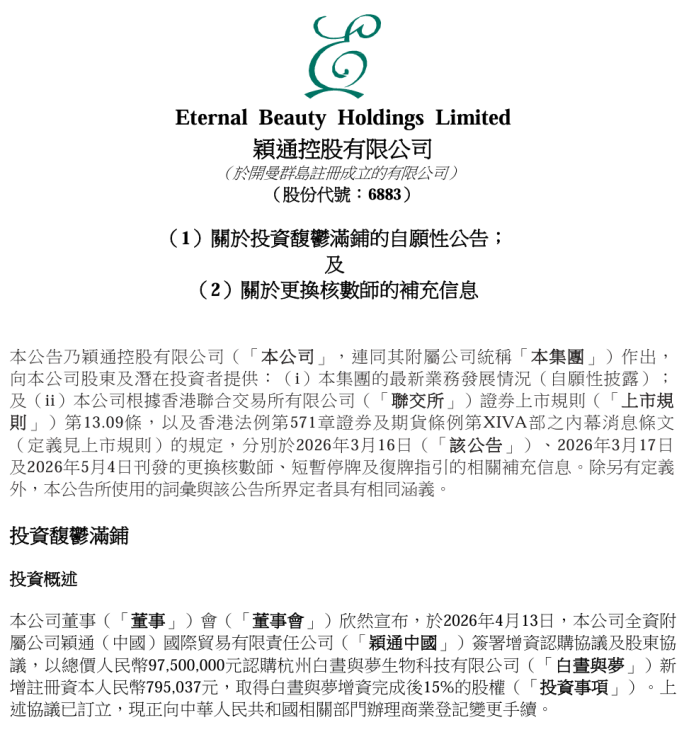
▍截自颖通控股公告

公告显示,2026年4月13日,颖通控股通过全资附属公司颖通(中国)国际贸易有限责任公司签署增资认购协议及股东协议,斥资9750万元认购杭州白昼与梦生物科技有限公司(以下简称:白昼与梦)新增注册资本79.50万元,取得白昼与梦增资完成后15%的股权。

公告还披露,此次出资中,79.50万元用于缴纳白昼与梦的注册资本,剩余9670.50万元计入白昼与梦的资本储备。

值得注意的是,白昼与梦正是国货品牌馥郁满铺的母公司。此番战略投资,也清晰释放出颖通控股寻求业务转型、探索新增长路径的信号。

公开信息显示,颖通控股主营业务为品牌代理,包括产品分销,以及为品牌定制市场进入与扩张计划。其品牌代运营历史悠久,1987年起便入局美妆品牌运营,业务版图覆盖香水、彩妆、护肤等品类。

招股书显示,截至2025年9月30日,颖通控股管理合计74个外部品牌,包括Hermès、Van Cleef&Arpels等,覆盖不同定价与功能,满足消费者差异化需求。此外,公司还于1999年推出自有品牌Santa Monica,业务包括眼镜及入门级高端香水。

颖通控股为业内所熟知,主要源于其在香水品牌管理上的龙头地位。

数据显示,2023财年至2025财年,颖通控股的营收分别为16.99亿元、18.64亿元、20.83亿元。其中香水品类是营收主力,同期收入分别为15.04亿元、15.23亿元、16.87亿元,三年占比均超80%。
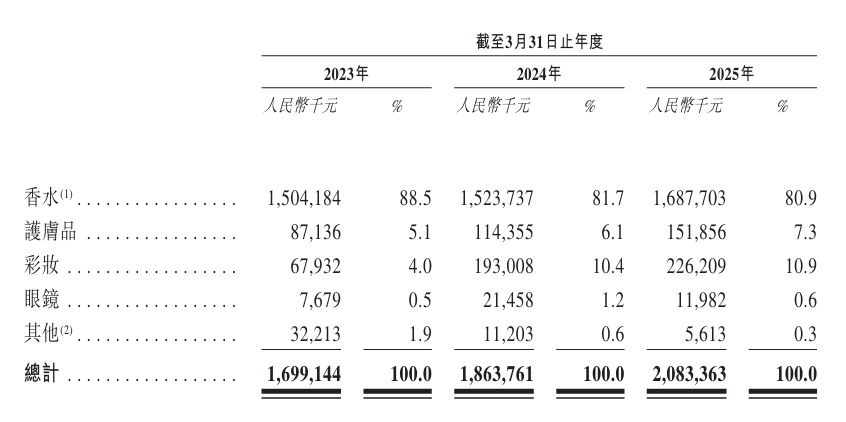
▍截自颖通控股招股书

依据该公司招股书援引的弗若斯特沙利文数据,以2023年零售额计算,颖通控股为中国第三大香水集团,同时也是中国最大的香水品牌管理企业。

2024年7月,颖通控股向港交所提交主板上市申请;2025年6月,其成功冲刺港交所,成为“中国香水第一股”。

事实上,颖通控股布局对外品牌投资并非临时之举,而是早已埋下伏笔。

其在招股书中曾明确披露,IPO募集资金将投向四大用途:其一,进一步发展自有品牌以及收购或投资外部品牌;其二,发展及扩大直销渠道;其三,加速数字化转型;其四,提升企业知名度以及声誉。

那么,为什么是馥郁满铺?

颖通控股在最新公告中直言:当下消费者对天然疗愈、专业功效型护肤及个人护理产品的需求持续攀升,相关市场规模也日益扩大。馥郁满铺凭借清晰的差异化定位,在细分赛道具备突出成长潜力;同时依托独有的品牌审美体系、差异化品牌表达、专业科研实力,以及对用户需求和市场趋势的精准把控,构筑了坚实的核心竞争力。

显然,颖通控股也希望借助此次投资,进一步加码高增长的功效护肤与个人护理赛道,拓宽自身业务布局。

青眼通过企查查查询白昼与梦股权架构后发现,若颖通控股取得15%股权,那么其将成为白昼与梦的第三大股东,位于该公司创始人姜腾和凯辉消费共创基金之后。目前,姜腾的持股比例为61%,凯辉消费共创基金的持股比例为19%。

在颖通控股此番投资落地之前,馥郁满铺已是本土美妆市场颇受关注的新锐品牌。该品牌由创始人姜腾创立,最早萌芽于杭州大运河畔的一家芳疗小铺。以“芳疗微生态护肤”为核心理念,融合了欧洲芳香疗法体系与东方文化美学。

馥郁满铺产品主打芳香疗愈,尤其深耕晚香玉这一原料的开发。此外,品牌也独创了“精油疗愈+生物发酵+硬核成分”护肤三角体系。

目前,馥郁满铺产品线包括精粹水、精华油、卸妆油膏、精华乳、洁颜蜜、面霜、面膜等。其天猫旗舰店铺单品售价在139元—969元之间。青眼发现,目前,其天猫店铺销量第一的产品为价格189元的“洁颜蜜”单品,已售出10w+。

渠道布局方面,线上,馥郁满铺在各电商平台均开设官方旗舰店。当前,馥郁满铺抖音旗舰店粉丝为49.9万,天猫旗舰店粉丝为36.4万,小红书旗舰店粉丝为7.9万,京东旗舰店粉丝为2.3万。线下,品牌也于2025年12月在上海开启首家线下旗舰店“馥邸”。

值得一提的是,尽管近年来美妆品牌投融资明显降温,馥郁满铺依然持续获得资本青睐。

2023年,馥郁满铺就获得了凯辉消费共创基金的天使轮投资,此基金由凯辉基金与开云集团、欧莱雅集团和保乐力加集团共同成立,馥郁满铺是其首个投资的护肤品牌。

2025年,馥郁满铺相继完成总金额数千万元的Pre-A轮及A轮融资,Pre-A轮投资方为内向基金、凯辉基金,A轮投资方则为挑战者创投。

为什么该品牌能得到资本的看中?

其一,是馥郁满铺不错的市场表现。据公开报道,2022年至2025年间,馥郁满铺整体GMV突破6亿;抖音单月自播销售额破千万。品牌明星单品“大金砖”,也做到了上市6个月销售额达1200万。

此外,洁颜蜜、精华油、眼油等系列也是该品牌的代表性产品。有数据显示,馥郁满铺核心单品精华眼油在2025年双11期间销售额同比激增超500%,登上品类榜首。

▍资料图

其二,赛道爆发力强。馥郁满铺主攻的芳疗功效护肤赛道,本身亦属于情绪护肤的范畴。据青眼情报数据,中国情绪经济市场规模有望在2030年突破5万亿元,而作为其核心细分领域的情绪美容也将呈现爆发式增长,预计到2030年市场规模达数千亿元。

其三,目前,馥郁满铺正在以线下为战略重心扩张全渠道版图。2025年3月,品牌在杭州天目里落地首个慢闪概念空间“晚香回廊”;8月,于南京万象天地打造“云织空间”快闪店;9月,又在杭州中心外庭推出“洄荡空间”限时快闪。紧随其后,2025年12月,全国首家旗舰店于上海东湖路正式启幕。

众所周知,线下仍是消费者体验和了解香氛的关键渠道,而香气也是馥郁满铺最核心的品牌资产之一。走向线下,能让消费者对品牌认知得到进一步加深。对于馥郁满铺而言,引入颖通控股的投资及合作,也能借助其运营优势,进一步完成全渠道拓展。

在颖通控股宣布投资馥郁满铺的这个时间节点,其自身也面临着一定的发展挑战。

前不久,颖通控股陷入了一场涉及7000万港元的预付款“罗生门”。

据颖通控股原审计师普华永道披露,颖通控股在上市后不久便与三家服务供应商签署多年期协议,且一次性预付了7000万港元。对此,普华永道认为颖通控股未能提供合理解释,双方也无法就额外审计费用达成一致。

2026年3月,颖通控股发布公告,其审计师普华永道辞任。由于此事件,颖通控股也于3月17日宣布停牌,截至目前,仍未复牌。

第二个挑战是业绩的下滑。根据颖通控股截至2025年9月30日的中期业绩报告,其半年度收入为10.28亿元,同比下滑3.4%。

更深层次的压力则是其业务模式的风险。颖通控股招股书显示,公司高度依赖品牌授权商,且与品牌授权商订立的大部分协议的初始期限仅3-5年。一旦品牌方收回授权,对颖通控股的业绩影响也是巨大的。

一个典型案例是:2022年12月,颖通控股与某主要奢侈品牌授权商协议到期未续,而该协议在2023财年贡献约4.25亿元收入,占总营收25.5%。到期不续的原因,正是品牌方决定自行在中国内地运营该品牌。

在此背景下,颖通此番投资馥郁满铺,实则是为开拓新的增长曲线。

品牌代运营公司通过投资谋求新的增长,这种案例在业内也并不鲜见。

2026年4月,杭州欢禧集团斥资1.2亿元,完成对韩国彩妆品牌Lilybyred的注资及股权收购;若羽臣也官宣拿下美国高端护肤品牌奥伦纳素的全部股权。

和颖通控股一样,若羽臣、欢禧集团均以品牌管理或代运营起家。但代运营模式高度依赖合作协议,极易陷入被动受制的局面。正因如此,布局自有品牌、投资/收购成熟外部品牌,已成为这类企业规避经营风险的核心路径。

而这类企业的转型,本质上是一次能力变现的升级迭代。凭借多年代理积淀的运营功底,叠加资本加持,通过投资、孵化、并购入局品牌端,将原本的资本积累和优势,转化为可掌控的品牌资产。

过去,手握渠道和运营资源的美妆企业只是行业里的“卖水人”;如今,它们显然更想成为行业的“造船者”,拿到对品牌的控制权,奔赴更广阔的市场。

注:文/龚作仁,文章来源:Laborer,本文为作者独立观点,不代表亿邦动力立场。

【版权提示】亿邦动力倡导尊重与保护知识产权。未经许可,任何人不得复制、转载、或以其他方式使用本网站的内容。如发现本站文章存在版权问题,烦请提供版权疑问、身份证明、版权证明、联系方式等发邮件至run@ebrun.com,我们将及时沟通与处理。

已点赞

+1

{{ praise_text }}

好文章,值得被更多人看到

FAQ回顾

颖通控股对馥郁满铺的投资细节是什么?

2026年4月13日,颖通控股通过全资子公司斥资9750万元认购杭州白昼与梦生物科技有限公司新增注册资本,获得其增资后15%的股权,成为该公司第三大股东。

颖通控股为何投资馥郁满铺?

主要为了加码高增长的功效护肤与个人护理赛道,寻求业务转型,并借助馥郁满铺在芳疗微生态护肤领域的差异化定位和成长潜力,拓宽自身业务布局。

馥郁满铺品牌的市场表现如何?

2022年至2025年间整体GMV突破6亿,抖音单月自播销售额破千万。明星单品“大金砖”上市6个月销售额达1200万,核心单品精华眼油在2025年双11期间销售额同比激增超500%。

广告

下一篇

跨境电商资源对接

《全球跨境电商服务商资源手册》第二期手册现已发布,触达更多资源,了解跨境服务商信息,欢迎点击链接下载。

了解详情

嘉立创IPO顺利过会:以“数”与“智”贯通全链,撑开制造“长尾”广阔天地

2026年5月12日,深圳证券交易所上市审核委员会召开2026年第22次审议会议,深圳嘉立创科技集团股份有限公司首发申请顺利过会。这是2026年过会的第67家企业。

数据要素 工业 智能制造 B2B

2026-05-15 10:41:46