• 亿邦公众号
    • APP下载

马蹄社走进朗翰科技,一场关于“验证”的深度研学

作者:亿邦动力 文章来源:亿邦动力

2026-05-15 10:35

作者:亿邦动力 文章来源:亿邦动力

2026-05-15 10:35

邦小白快读
EN
全文速览

本次是马蹄社联合亿邦原创走进朗翰科技的深度研学活动,核心讨论了当下创业领域,新产品如何破局、如何低成本试错的相关问题,干货内容整理如下:

1.本次研学围绕线上流量越来越贵、新兴产品如何打破物理和认知边界的普遍痛点展开,朗翰科技创始人提出了用众筹做前期验证的低成本试错路径。

2.要转变对众筹的认知,众筹不是项目的终点,仅仅是项目发展的起点,众筹成功的核心作用是帮助项目撬动后续独立站、亚马逊以及全球线下渠道的长期增长。

3.众筹有两大核心使命,分别是完成产品最终定价测试、验证全球市场的真实需求,可以把原本创始人靠盲猜的决策变为可验证的关键决策,大幅降低创业试错成本。

对于计划出海的品牌来说,本次研学分享的众筹验证模式对品牌出海全链路布局有很高的参考价值,核心干货整理如下:

1.定价环节,品牌可以利用众筹阶段完成产品最终定价测试,避免品牌拍脑袋定价格出现错误,降低定价失误给品牌带来的损失,摸清目标市场对价格的接受度。

2.需求把握层面,众筹可以帮助品牌提前验证全球市场的真实消费需求,提前摸清海外消费趋势,避免盲目投入研发和生产占用大量资金。

3.渠道布局层面,品牌要明确众筹只是出海的第一步,完成众筹验证后,需要进一步撬动独立站、亚马逊、全球线下多渠道布局,才能实现品牌的长期增长,适合新兴出海品牌打开海外市场。

对于出海卖家来说,本次分享的内容带来了新的低成本增长机会与风险提示,核心干货整理如下:

1.当下线上流量成本越来越高,新产品出海的试错成本也随之攀升,众筹验证模式是目前可落地的最低成本试错路径,可以提前验证市场需求,帮助卖家降低踩坑风险。

2.卖家要纠正对众筹的认知误区,不要把众筹当成最终的变现目标,要把百万美金级别的众筹成绩当成发展起点,后续通过多渠道布局撬动长期业务增长。

3.这种模式尤其适合做新兴产品的出海卖家,可以提前完成定价和需求验证,明确用户真实需求后再发力全渠道,规避盲目铺货、盲目投入推广带来的资金风险,适合中小卖家轻资产出海。

对于做出海业务的生产工厂来说,本次分享的模式给工厂推进电商转型、寻找新增量带来了不少启示,核心干货整理如下:

1.工厂在推出新产品开拓海外市场时,可以先通过众筹模式验证市场真实需求,以及消费者对产品定价的接受度,拿到验证结果后再安排生产,能避免盲目备货导致的库存积压,大幅降低生产端的风险。

2.工厂做数字化和电商出海转型时,可以采用先众筹验证再全渠道布局的路径,验证需求匹配度后,再对接独立站、亚马逊、线下渠道打开销路,能拿到更稳定的全球市场增长机会。

3.这种模式能帮助工厂把原本靠经验判断生产的传统模式,转变为靠市场验证数据做决策的新模式,符合工厂数字化转型的方向,能帮助工厂更精准匹配全球市场的需求。

对于出海相关服务商来说,本次分享透露出海行业的新趋势、客户痛点和新的机会点,核心干货整理如下:

1.当前出海行业的核心痛点是线上流量越来越贵,新兴新产品出海的试错成本居高不下,大部分创始人都存在靠盲猜做决策的问题,市场亟需低成本的试错解决方案。

2.行业出现了新的发展趋势,越来越多出海项目开始采用“众筹前期验证+后期全渠道布局”的发展路径,众筹的核心价值也从原来的融资转向了需求验证和定价测试,这给服务商带来了新的业务方向。

3.服务商可以围绕出海项目的验证需求,开发对应服务产品,比如对接众筹资源、提供众筹数据验证分析、后续渠道对接等服务,匹配当前出海客户的真实痛点,把握新的行业增长机会。

对于出海相关平台来说,本次分享反映了出海商家的真实需求,对平台招商、运营管理都有参考价值,核心干货整理如下:

1.当前出海商家的核心需求是降低前期试错成本,提前完成产品需求和定价的验证,平台可以围绕商家这一需求,完善自身服务体系,开发针对众筹项目对接后续渠道的相关服务,提升平台对商家的吸引力。

2.越来越多出海项目在完成众筹验证后,需要进入亚马逊、专业分销等渠道获得长期增长,平台可以针对性招商经过众筹市场验证的优质项目,提升平台入驻商家的整体成功率,降低平台的运营风险。

3.平台可以围绕众筹验证模式,开发对应的商家运营课程、资源对接服务,帮助商家降低试错风险,同时也能吸引更多新兴出海项目入驻,拓展平台的商家规模。

对于出海产业的研究者来说,本次研学分享透露出海领域的产业新动向和新的商业模式探索,核心干货整理如下:

1.当前出海产业出现了新的项目发展路径,改变了过去先生产研发再铺渠道的传统模式,创新出“先众筹验证再全渠道爆发”的新商业模式,是出海行业应对当下线上流量成本上涨的新探索,具备较高的研究价值。

2.众筹行业的功能发生了新变化,过去众筹主要被看做中小项目的融资方式,现在众筹的核心使命转变为产品定价测试和全球市场需求验证,成为出海创始人最低成本的试错路径,这是出海产业发展的新动向。

3.这种新的商业模式解决了传统出海模式中盲猜决策、试错成本高的核心问题,为中小新兴出海项目提供了可复制的发展路径,值得进一步研究该模式对整体出海产业格局的影响。

声明:快读内容全程由AI生成,请注意甄别信息。如您发现问题,请发送邮件至 run@ebrun.com 。

我是 品牌商 卖家 工厂 服务商 平台商 研究者 帮我再读一遍。

Quick Summary

This article summarizes key insights from a deep-dive research trip co-hosted by MatiClub and Ebrun, which visited Langhan Technology to discuss how new products can break through and achieve low-cost trial-and-error in today's startup landscape:

1. Against the widespread pain points of rising online customer acquisition costs and the challenge for emerging products to break through physical and cognitive boundaries, Langhan Technology's founder proposed crowdfunding as a low-cost approach to early-stage validation.

2. Founders need to reframe their understanding of crowdfunding: it is not the end goal of a project, but just the starting point. Its core value after a successful campaign lies in powering long-term growth across DTC standalone sites, Amazon, and global offline channels.

3. Crowdfunding serves two core purposes: testing final product pricing and validating real demand in global markets. It replaces founder's guesswork with data-backed decision-making, drastically reducing startup trial-and-error costs.

For brands planning to go global, the crowdfunding validation model shared at this event offers high reference value for end-to-end cross-border expansion strategy. Key takeaways are as follows:

1. For pricing strategy, brands can run final pricing tests during the crowdfunding stage, eliminating guesswork that often leads to costly mistakes, while clarifying price acceptance in target markets.

2. For demand forecasting, crowdfunding lets brands pre-validate real consumer demand across global markets and identify upcoming overseas consumption trends, avoiding tying up large amounts of capital in blind R&D and production.

3. For channel strategy, brands must recognize that crowdfunding is only the first step of global expansion. After validation, brands need to leverage multi-channel distribution across standalone sites, Amazon, and global offline channels to achieve long-term growth, making this model ideal for emerging cross-border brands looking to break into overseas markets.

For cross-border sellers, the content shared at this event reveals new low-cost growth opportunities and key risk warnings. Key insights are summarized below:

1. As online traffic costs continue to rise, trial-and-error costs for new product launches abroad have also climbed. The crowdfunding validation model is currently the most practical low-trail-and-error approach, which pre-validates market demand and helps sellers reduce risk of costly missteps.

2. Sellers need to correct the common misconception about crowdfunding: it should not be treated as the final revenue goal. Instead, even a $1 million crowdfunding milestone should be seen as a starting point for long-term growth via subsequent multi-channel expansion.

3. This model is particularly well-suited for cross-border sellers launching new products. It enables pre-validation of pricing and demand, allowing sellers to scale across channels only after clarifying real user needs, avoiding capital risk from blind bulk inventory and marketing spend. It is an ideal lightweight approach for small and medium-sized sellers going global.

For manufacturing factories with cross-border business, the model shared at this event offers valuable inspiration for digital e-commerce transformation and new growth. Key takeaways are as follows:

1. When factories launch new products to enter overseas markets, they can first use crowdfunding to validate real market demand and consumer acceptance of product pricing, and only arrange mass production after receiving validation results. This avoids overstock from blind production and drastically reduces risk on the manufacturing side.

2. When pursuing digital transformation and cross-border e-commerce expansion, factories can adopt the path of "crowdfunding validation first, full-channel expansion later". After confirming product-market fit via crowdfunding, they can connect with standalone sites, Amazon, and offline channels to open up sales channels, securing more stable long-term growth in global markets.

3. This model helps factories shift from traditional experience-based production decision-making to a data-driven, market-validated approach, which aligns with the direction of digital transformation and helps factories more accurately match demand across global markets.

For cross-border service providers, the content shared at this event reveals new industry trends, unmet client pain points, and emerging growth opportunities. Key insights are summarized below:

1. The core pain point of today's cross-border industry is soaring online traffic costs, which have pushed trial-and-error costs for new products to all-time highs. Most founders still rely on guesswork to make decisions, creating strong market demand for low-cost trial-and-error solutions.

2. A new industry trend has emerged: more and more cross-border projects are adopting the "early crowdfunding validation + later full-channel expansion" development path. The core value of crowdfunding has also shifted from fundraising to demand validation and pricing testing, opening up a new line of business for service providers.

3. Service providers can develop tailored offerings to meet the validation needs of cross-border projects, such as crowdfunding resource connections, crowdfunding data validation and analysis, and post-crowdfunding channel matching services. Aligning with the real pain points of cross-border clients allows providers to capture new industry growth opportunities.

For cross-border platforms, the content shared reflects the real needs of cross-border merchants, and offers useful reference for platform recruitment and operations management. Key insights are as follows:

1. The top priority for today's cross-border merchants is reducing early trial-and-error costs and completing pre-validation of product demand and pricing. Platforms can build out their service offerings around this merchant need, developing services that connect validated crowdfunding projects to downstream channels, to improve platform attractiveness to sellers.

2. After completing crowdfunding validation, a growing number of cross-border projects need to enter channels like Amazon and professional distribution networks to achieve long-term growth. Platforms can prioritize recruiting high-quality projects that have already passed market validation via crowdfunding, which improves the overall success rate of onboarding merchants and reduces platform operational risk.

3. Platforms can develop tailored merchant operation courses and resource matching services built around the crowdfunding validation model. This helps merchants reduce trial-and-error risk, while also attracting more emerging cross-border projects to onboarding, expanding the platform's overall merchant base.

For researchers of the cross-border industry, the insights shared at this event reveal new industry trends and innovative business model exploration in the global expansion space. Key takeaways are as follows:

1. A new development path for cross-border projects has emerged that upends the traditional "R&D and production first, channel expansion later" model. The innovative "crowdfunding validation first, full-channel scaling later" business model is a response to rising online traffic costs, and carries significant research value.

2. The core function of the crowdfunding industry has shifted: while crowdfunding was previously primarily viewed as a fundraising tool for small and early-stage projects, its core mission today has transformed into product pricing testing and global market demand validation. It has become the lowest-cost trial-and-error path for cross-border founders, marking a clear new direction for the cross-border industry's evolution.

3. This new business model solves the core pain points of the traditional cross-border model: guesswork-based decision-making and high trial-and-error costs. It provides a replicable development path for small and medium-sized emerging cross-border projects, making it worthwhile to conduct further research on the model's impact on the overall cross-border industry landscape.

Disclaimer: The "Quick Summary" content is entirely generated by AI. Please exercise discretion when interpreting the information. For issues or corrections, please email run@ebrun.com .

I am a Brand Seller Factory Service Provider Marketplace Seller Researcher Read it again.

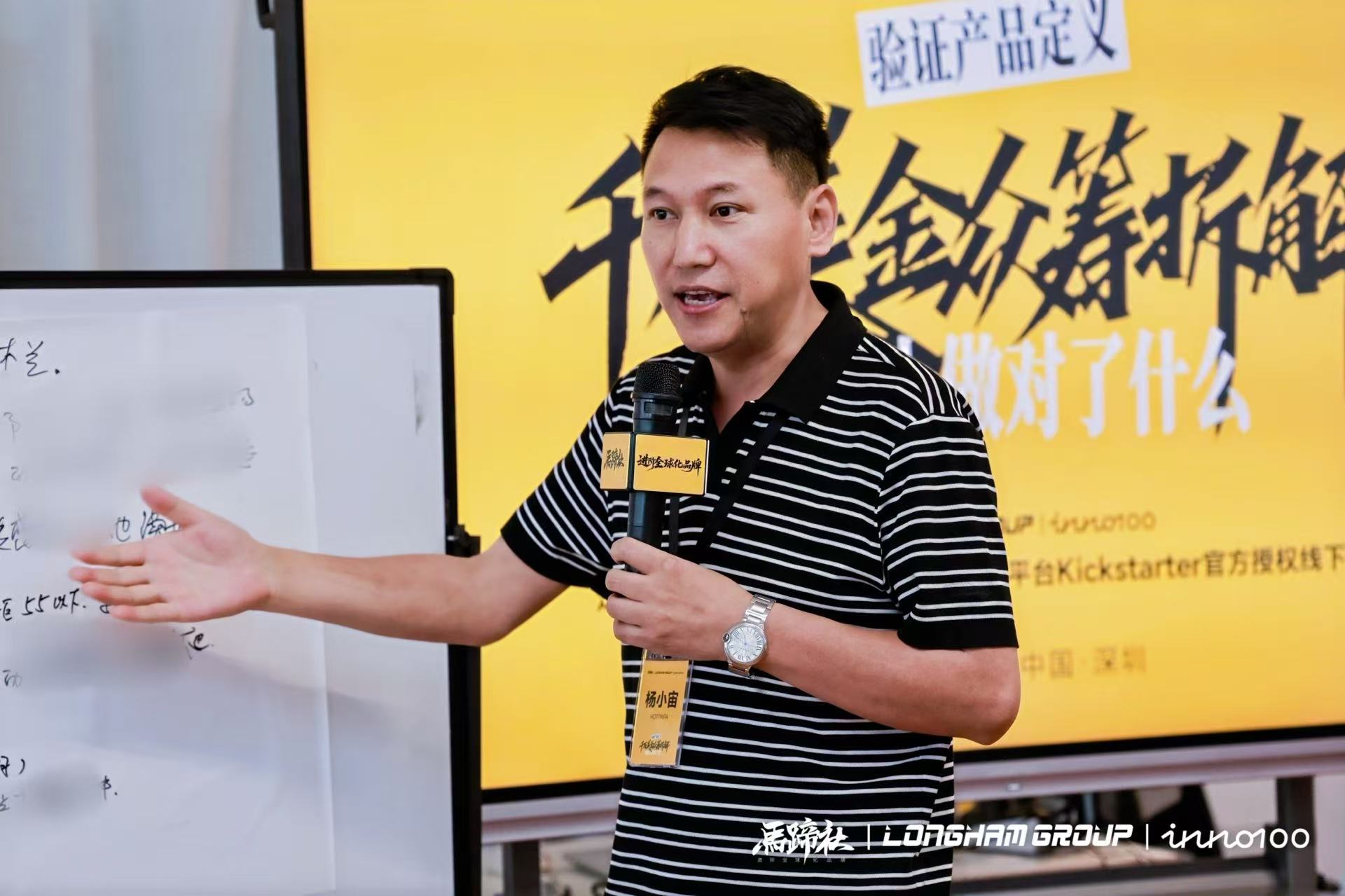
【亿邦原创】5月13日,马蹄社在朗翰科技的这场研学,现场气氛比想象中还要炸。大家围坐在一起,从线上流量越来越贵聊到新兴产品到底该怎么打破物理和认知的边界。

朗翰科技创始人王润龙Baron一开口就很直接:“百万美金众筹只是起点,真正要撬动的是后续独立站、亚马逊甚至全球线下渠道的长期爆发。”

众筹最核心的两大使命,第一是完成产品的最终定价测试;第二是无情地验证全球市场有没有真实需求。把盲猜变成可验证的关键决策——这才是创始人最低成本的试错路径。


【版权提示】亿邦动力倡导尊重与保护知识产权。未经许可,任何人不得复制、转载、或以其他方式使用本网站的内容。如发现本站文章存在版权问题,烦请提供版权疑问、身份证明、版权证明、联系方式等发邮件至run@ebrun.com,我们将及时沟通与处理。

已点赞

+1

{{ praise_text }}

好文章,值得被更多人看到

FAQ回顾

产品众筹的核心使命是什么?

朗翰科技创始人王润龙指出,产品众筹的两大核心使命是:第一,完成产品的最终定价测试;第二,验证产品在全球市场是否存在真实需求。

众筹对创业者的价值是什么?

众筹是将产品推向市场前的关键验证环节,它帮助创业者将市场“盲猜”转化为可验证的决策,被认为是创始人最低成本的试错路径。

成功的众筹项目后续如何发展?

据朗翰科技观点,百万美金众筹仅是起点,其真正价值在于撬动后续独立站、亚马逊以及全球线下渠道的长期销售爆发。

广告

下一篇

2022“EBRUN全球好物”征集

跨境行业重磅严选,亿邦动力首届『EBRUN全球好物』启动征集,面向全球市场重新定义“好产品”!

点击报名参选

北大97后 半年三轮融资

5月15日,投中网独家获悉,钙钛矿太阳能电池企业炎和科技完成数亿元A2轮融资,由老股东朝希资本领投

品牌故事 未来零售

2026-05-15 09:36:52