• 亿邦公众号
    • APP下载

营收一年缩水超800亿,白酒到底了吗?|财报分析

作者:李金津 文章来源:亿邦动力

2026-05-08 15:20

作者:李金津 文章来源:亿邦动力

2026-05-08 15:20

邦小白快读

EN
全文速览

白酒行业经历十年来最剧烈下滑,2025年营收减少836.88亿元,同比下滑18.85%,利润下滑24.25%,行业整体衰退明显。

1. 下滑数据:21家上市企业中仅山西汾酒正增长,其余均下滑,部分企业营收跌回十年前水平;行业集中度高,前5家企业营收占比81.33%,茅台利润碾压其他总和。

2. 原因分析:压货模式导致虚假增长,五粮液暴雷调减营收303亿元,暴露渠道库存高企问题;终端消费疲软,高端酒需求减弱。

3. 未来展望:线上渠道逆势增长,茅台直销收入845.43亿元增12.96%,占比首次过半;2026年一季度头部企业如茅台实现双增长,行业筑底企稳,但复苏缓慢。

4. 实操干货:企业需摆脱压货依赖,拥抱新渠道如电商平台,以贴近消费者需求,迎接复苏机会。

品牌营销和渠道转型成为关键,消费趋势变化带来新机遇。

1. 消费趋势:高端酒需求疲软,低度酒、果味酒和小瓶酒爆发,吸引年轻消费者,打破地域限制;用户行为转向线上购买,新消费场景兴起。

2. 渠道建设:线上直销渠道增长显著,茅台转型成功,直销占比超50%;其他品牌如口子窖、古井贡酒线上营收增超30%,京东、抖音等平台GMV增长25%以上。

3. 产品研发:新消费人群需求推动创新,如低度酒接住年轻群体,为行业注入活力;产品设计需适应小瓶和果味趋势。

4. 定价竞争:压货模式导致价格泡沫,五粮液收入确认方式改为终端销售,提示需真实定价以避免风险。

政策变化和市场机会需重点关注,风险与增长并存。

1. 风险提示:压货模式弊端暴露,五粮液财务调整调减营收303亿元,传统渠道收入如珍酒李渡降51.4%,水井坊降50.95%,提示渠道库存风险。

2. 增长市场:线上渠道逆势增长,电商平台如抖音GMV增25%,用户增30%;茅台直销转型成功,提供可学习案例。

3. 消费需求变化:年轻消费者偏好低度酒和果味酒,需求转向线上;新消费人群引入新活力,机会在电商大促和团购。

4. 机会提示:头部企业复苏迹象如茅台2026年一季度双增,建议拥抱新渠道;合作方式可借鉴平台合作,如京东销售额增长200亿元。

生产和电商启示显著,商业机会在新需求中浮现。

1. 产品需求:低度酒、果味酒和小瓶酒需求增长,吸引年轻消费人群,生产需适应新口味和包装设计。

2. 商业机会:线上渠道扩张提供新市场,电商平台如淘天酒类成交400亿元,白酒占比超75%;工厂可切入电商供应链。

3. 数字化启示:电商利用算法推荐和内容种草,打破地域限制,如抖音用户增速30%,启示工厂推进数字化销售。

4. 生产调整:压货模式问题提示需优化库存管理,减少对传统渠道依赖;拥抱新渠道以提升效率。

行业趋势和痛点突出,解决方案在新渠道中。

1. 行业趋势:白酒行业整体下滑,线上渠道逆势增长,2026年进入弱复苏周期;新技术如电商算法推荐提升触达效率。

2. 客户痛点:压货模式导致渠道库存高企,传统收入下滑超50%,如五粮液暴露虚假增长问题;终端消费疲软是核心痛点。

3. 解决方案:拥抱新渠道如直销和线上销售,茅台转型案例显示成效;利用电商平台技术解决地域限制。

4. 发展趋势:线上占比仍低,如古井贡酒线上仅5.35%,服务商可提供数字化工具提升效率;低度酒爆发提供创新机会。

商业需求和平台做法为核心,风险需规避。

1. 商业需求:白酒企业对线上渠道需求增加,寻求增长新路径;电商平台如抖音GMV增25%,用户增30%,显示招商潜力。

2. 平台最新做法:淘天、京东、抖音成重要阵地,淘系酒类成交400亿元,快手GMV破120亿元;算法推荐和内容种草帮助触达新人群。

3. 运营管理:线上渠道占比偏低,如金徽酒线上不足4%,平台可优化招商策略;大促补贴影响利润率,需平衡运营。

4. 风险规避:压货模式问题如五粮液财务调整,提示平台需严格收入确认规则,规避数据泡沫;风向规避在库存管理上。

产业动向和新问题突出,商业模式转型关键。

1. 产业新动向:行业集体下滑,营收缩水超800亿,集中度提升至CR5占比81.33%;2026年弱复苏,头部企业边际改善。

2. 新问题:压货模式弊端暴露,五粮液收入确认方式改革调减303亿营收,渠道库存问题成行业通病。

3. 商业模式:从经销商主导转向消费者主导,线上直销兴起,茅台占比过半;建议政策支持转型,拥抱新渠道。

4. 启示:新消费趋势如低度酒增长,商业模式需创新;产业调整期提示需法规规范收入确认,以促稳健复苏。

声明:快读内容全程由AI生成,请注意甄别信息。如您发现问题,请发送邮件至 run@ebrun.com 。

我是 品牌商 卖家 工厂 服务商 平台商 研究者 帮我再读一遍。

Quick Summary

The baijiu industry experienced its sharpest decline in a decade, with 2025 revenue dropping by 83.688 billion yuan (down 18.85% year-on-year) and profits falling 24.25%, signaling a clear industry-wide downturn.

1. Decline Data: Among 21 listed companies, only Shanxi Fenjiu showed positive growth, while the rest declined—some even saw revenues fall back to levels from ten years ago. The industry is highly concentrated, with the top five firms accounting for 81.33% of revenue, and Moutai's profits surpassing the combined total of all others.

2. Cause Analysis: The "channel stuffing" model created false growth; Wuliangye's financial adjustment, which slashed revenue by 30.3 billion yuan, exposed high channel inventory. Weak end-consumer demand, especially for premium baijiu, further contributed.

3. Outlook: Online channels bucked the trend, with Moutai's direct sales revenue rising 12.96% to 84.543 billion yuan, accounting for over half of total sales for the first time. In Q1 2026, leading firms like Moutai achieved double-digit growth, indicating the industry has bottomed out, though recovery remains slow.

4. Practical Insights: Companies must move away from channel stuffing, embrace new channels like e-commerce to better meet consumer demand, and seize recovery opportunities.

Brand marketing and channel transformation are now critical, with shifting consumer trends opening new opportunities.

1. Consumer Trends: Demand for premium baijiu is weak, while low-alcohol, fruit-flavored, and small-bottle baijiu are booming, attracting younger consumers and breaking regional barriers. User behavior is shifting toward online purchases, and new consumption scenarios are emerging.

2. Channel Development: Direct online sales are growing significantly; Moutai’s successful transformation has made direct sales over 50% of its revenue. Other brands like Kouzijiao and Gujing Gongjiu saw online revenue rise over 30%, while platforms like JD.com and Douyin reported GMV growth exceeding 25%.

3. Product R&D: New consumer demographics are driving innovation—low-alcohol options appeal to younger drinkers, injecting vitality into the industry. Product design must adapt to trends like small bottles and fruit flavors.

4. Pricing & Competition: Channel stuffing created price bubbles; Wuliangye’s shift to recognizing revenue only upon end-sales highlights the need for realistic pricing to mitigate risks.

Policy changes and market opportunities require close attention, as risks and growth coexist.

1. Risk Alert: The flaws of channel stuffing are exposed—Wuliangye’s 30.3-billion-yuan revenue adjustment, along with traditional channel revenue declines of 51.4% for Zhenjiu Lifu and 50.95% for Shuijingfang, signal high inventory risks.

2. Growth Markets: Online channels are growing against the trend; e-commerce platforms like Douyin saw GMV rise 25% and users increase 30%. Moutai’s direct sales transformation offers a replicable case study.

3. Shifting Demand: Younger consumers prefer low-alcohol and fruit-flavored baijiu, with demand moving online. New consumer groups bring fresh vitality, creating opportunities during e-commerce promotions and group buying.

4. Opportunity Alert: Leading firms like Moutai showed recovery signs with double-digit growth in Q1 2026, suggesting a pivot to new channels. Partnerships, such as JD.com’s 20-billion-yuan sales increase, offer viable models.

Production and e-commerce insights are significant, with commercial opportunities emerging from new demand.

1. Product Demand: Low-alcohol, fruit-flavored, and small-bottle baijiu are gaining traction among younger consumers, requiring adaptations in flavor profiles and packaging design.

2. Commercial Opportunities: Online channel expansion offers new markets; platforms like Taotian transacted 40 billion yuan in alcohol sales, with baijiu accounting for over 75%. Factories can integrate into e-commerce supply chains.

3. Digital Insights: E-commerce uses algorithm-based recommendations and content marketing to break geographical barriers—Douyin’s 30% user growth underscores the need for factories to adopt digital sales.

4. Production Adjustments: Channel stuffing issues highlight the need for optimized inventory management and reduced reliance on traditional channels; embracing new channels can boost efficiency.

Industry trends and pain points are pronounced, with solutions lying in new channels.

1. Industry Trends: The baijiu sector is declining overall, but online channels are growing counter-cyclically, entering a weak recovery cycle in 2026. New technologies like e-commerce algorithms improve reach efficiency.

2. Client Pain Points: Channel stuffing has led to high inventory, with traditional revenue dropping over 50%—as seen in Wuliangye’s exposed false growth. Weak end-consumer demand remains a core issue.

3. Solutions: Adopting new channels like direct and online sales, exemplified by Moutai’s transformation, is key. E-commerce platform technologies can help overcome geographical limitations.

4. Development Trends: Online penetration remains low (e.g., Gujing Gongjiu’s online share is only 5.35%), creating opportunities for service providers to offer digital tools. The low-alcohol boom also presents innovation avenues.

Commercial needs and platform strategies are central, with risks requiring mitigation.

1. Commercial Demand: Baijiu firms are increasingly seeking online channels for new growth; platforms like Douyin, with 25% GMV and 30% user growth, show strong merchant acquisition potential.

2. Platform Strategies: Taotian, JD.com, and Douyin have become key battlegrounds—Taotian’s alcohol sales hit 40 billion yuan, while Kuaishou’s GMV exceeded 12 billion. Algorithmic recommendations and content marketing help reach new audiences.

3. Operations Management: Online channel shares remain low (e.g., Jinhuijiu’s is under 4%), suggesting platforms can optimize merchant recruitment. Promotional subsidies impact margins, requiring balanced operations.

4. Risk Mitigation: Issues like Wuliangye’s revenue adjustment highlight the need for strict revenue recognition rules to avoid data bubbles; inventory management is crucial for risk control.

Industry dynamics and emerging issues are prominent, with business model transformation being key.

1. Industry Trends: The sector collectively declined, with revenue shrinking over 80 billion yuan and concentration rising—the top five firms now hold 81.33% share. A weak recovery is expected in 2026, with marginal improvements among leaders.

2. Emerging Issues: Channel stuffing flaws are exposed; Wuliangye’s revenue recognition reform, reducing revenue by 30.3 billion yuan, highlights inventory problems as a sector-wide issue.

3. Business Models: The shift from distributor-led to consumer-led models is underway, with online direct sales rising—Moutai’s direct sales exceed 50%. Policy support for transformation and new channel adoption is recommended.

4. Implications: New trends like low-alcohol growth necessitate business model innovation; the adjustment period calls for regulatory standards in revenue recognition to foster steady recovery.

Disclaimer: The "Quick Summary" content is entirely generated by AI. Please exercise discretion when interpreting the information. For issues or corrections, please email run@ebrun.com .

I am a Brand Seller Factory Service Provider Marketplace Seller Researcher Read it again.

【亿邦原创】21家上市白酒企业年报悉数出炉。整体来看,这是行业近十年来最剧烈的一次集体下滑,没有例外,没有侥幸。

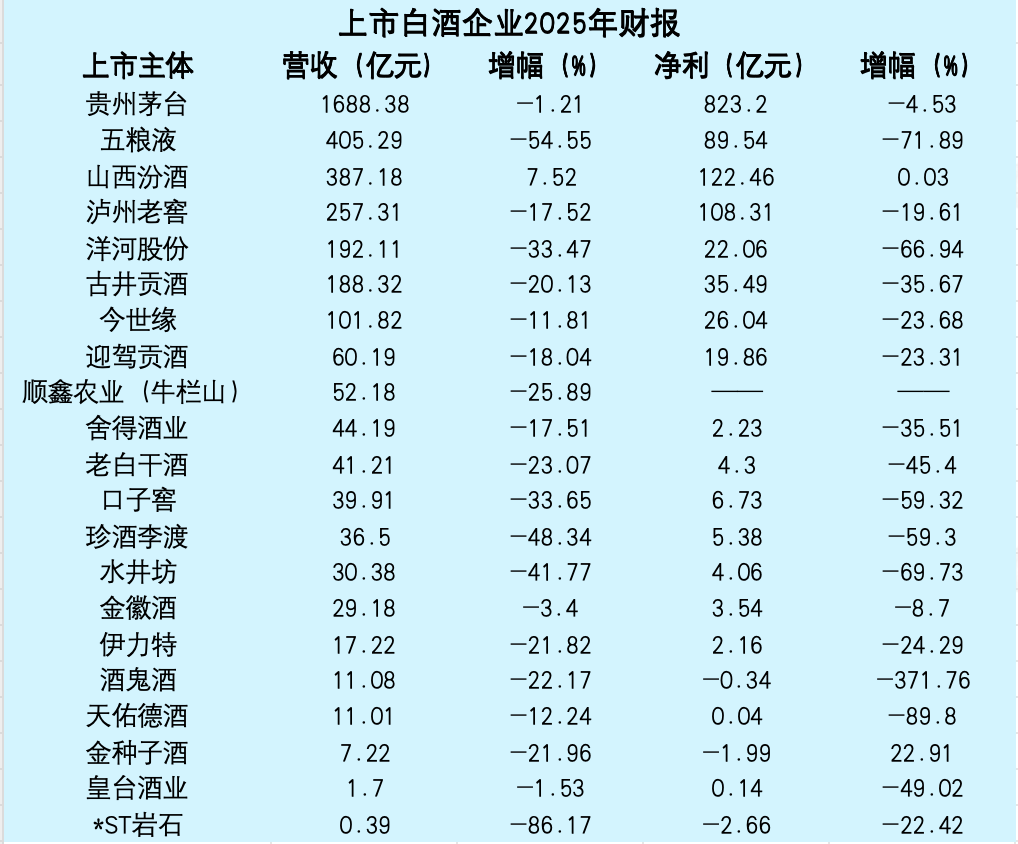
据亿邦动力统计,21 家上市白酒企业2025 年合计营收降至 3602.77 亿元,较上年营收同比减少 836.88 亿元,整体营收同比下滑18.85%;合计净利润(不含顺鑫农业)回落至 1270.55 亿元,整体同比下滑24.25%。
01 集体下滑,部分酒企跌回十年前

白酒全行业衰退成为事实。在21家公司中,20家营收下滑,19家净利润下滑,18家营收与净利双降。唯一的亮色是山西汾酒,成为唯一一家正增长的企业,在寒冬中守住了阵地。

对比历年业绩表现,21 家企业全部出现了不同程度的业绩倒退,多数企业营收水平回到了 2017-2021 年区间,部分企业甚至跌至十年前水平。

行业集中度持续提升,“马太效应”越发凸显。前5家企业(CR5)的营收占比约为81.33%,前10家企业(CR10)的营收占比高达93.73%。利润端的分化更为极端,茅台一家赚的钱,碾压其余全部上市白酒企业之和。

但即便是龙头企业,也难以独善其身。贵州茅台出现上市 25 年来首次营收与净利润双降。五粮液营收大跌54.55%,泸州老窖营收跌去17.5%。高端酒需求疲软、渠道库存高企,让这些曾经的 “现金牛” 也感受到了寒意。

此外,次高端及区域名酒成为下滑重灾区。洋河股份、古井贡酒、水井坊、舍得酒业、口子窖等品牌,净利润降幅均超过 30%。其中,酒鬼酒业绩失速,净利润同比大幅下跌371.76%。

盈利能力方面,行业分化也进一步加剧。头部7家酒企以及水井坊、迎驾贡酒,毛利率维持在70%以上,牢牢占据行业盈利能力顶端;口子窖、舍得酒业、酒鬼酒三家此前主要聚焦次高端价格带的非头部酒企,2025年毛利率均跌破70%。

寒意袭来,已有酒企率先倒下。*ST岩石(原上海贵酒)2025年营业收入仅0.39亿元,远低于3亿元的退市红线,将成为白酒退市第一股。

02 头部暴雷,白酒压货策略不灵了

此次财报披露期间,最令人意外的无疑是五粮液“业绩暴雷”事件。

4 月 30 日晚,五粮液发布《前期会计差错更正公告》,对 2025 年一季报、半年报、三季报及全年财报进行史诗级追溯调整,累计调减营收303.07 亿元、调减利润169 亿元。这是 A 股史上罕见的财务数据大修正。

调整的核心,是收入确认方式的改变。此前,五粮液采用 “发货即确认收入” 的模式,将大量压给经销商的库存计入营收。也就是说,只要把酒发给经销商,不管经销商是否卖出去,都计入当期营收。这种模式下,五粮液可通过向经销商压货,人为拉高营收数据。

更正后,五粮液改为 “以终端实际销售 / 经销商完成动销为确认依据”,未实现终端销售的库存不再计入当期收入,让业绩回归真实水平。

这场财务调整,发生在五粮液人事变动之后。今年 2 月底,原董事长曾从钦因涉嫌严重违纪违法被立案调查并留置。新班子上台,选择让过去埋的雷提前显露,清理一个巨大的 “数据泡沫”。

这并非五粮液一家的问题,而是行业通病。过去十年,“压货” 是许多酒企增长的增长路径。当品牌不愁卖时,经销商跟着吃肉,甚至抬价卖,库存自然不是问题;但当终端消费疲软,经销商的容纳能力终究有限,一味压货只能让渠道提前崩溃。

传统渠道的业绩表现,也印证了压货模式的失灵。珍酒李渡2025年经销收入由63.56亿元降至30.91亿元,同比锐减51.4%;水井坊批发代理收入同比下降50.95%,同样近乎腰斩,口子窖下降36.36%,舍得酒业、古井贡酒、老白干酒、迎驾贡酒、顺鑫农业、酒鬼酒、金种子酒等降幅均超20%。

03 新渠道逆势增长,2026拐点将至?

传统渠道增长乏力,线上与直销(含团购)渠道却逆势增长。

茅台年报显示,直销渠道收入达845.43亿元,同比增长12.96%,超越批发代理渠道,占总营收比重首次过半;标志着茅台从“经销商主导”转向“消费者主导”,转型成效显著。另外,口子窖、舍得酒业、古井贡酒等多家企业线上营收同比增长超30%。

从平台表现看,京东、淘天、抖音等主流平台成为白酒销售的重要阵地。2025年,淘系酒类成交规模约400亿元,其中白酒占比超75%;快手酒水板块GMV突破120亿元;抖音酒水行业GMV规模同比增长25%,酒水支付用户数增速达30%。京东酒水过去三年销售额增长200亿元。

线上渠道能够实现逆势增长,一方面得益于电商平台的算法推荐和内容种草,让白酒能够触达更多不同年龄段、不同消费场景的人群,打破了传统渠道的地域限制;另一方面,低度酒、果味酒、小瓶酒的爆发,接住了新消费人群的需求,吸引大量年轻消费者购买,为白酒行业注入新活力。

但需清醒看到,线上渠道在多数酒企营收中的占比仍偏低。古井贡酒线上占比5.35%;金徽酒线上占比不足4%;口子窖线上占比约5.7%。即便是表现突出的舍得酒业,电商收入6.04亿元,占总收入比重也仅15%左右。此外,电商大促期间的平台补贴、百亿补贴等活动,也让直销的利润率低于经销模式。

从2026年一季度财报来看,白酒行业并未出现全面升温,仍处于深度调整期,但筑底企稳、边际改善的信号已经比较明确。多数券商分析认为,白酒行业已经进入弱复苏周期,后续有望逐步回暖,但复苏过程比较缓慢。

具体来看,头部企业的复苏迹象较为明显:贵州茅台2026年一季度实现营收、净利双增长,直销转型持续见效;五粮液受基数较低的影响,净利润大幅提升,随着新管理团队的调整,后续有望逐步企稳。迎驾贡酒、老白干酒等少数区域酒企,凭借区域优势和大众消费的支撑,实现正增长。

白酒行业的集体下滑,是行业长期积累的问题与终端消费疲软共同作用的结果。行业唯有摆脱对传统压货模式的依赖,贴近消费者、拥抱新渠道,才能在调整期站稳脚跟,迎接下一轮复苏。


亿邦持续追踪报道该情报,如想了解更多与本文相关信息,请扫码关注作者微信。

【版权提示】亿邦动力倡导尊重与保护知识产权。未经许可,任何人不得复制、转载、或以其他方式使用本网站的内容。如发现本站文章存在版权问题,烦请提供版权疑问、身份证明、版权证明、联系方式等发邮件至run@ebrun.com,我们将及时沟通与处理。

已点赞

+1

{{ praise_text }}

好文章,值得被更多人看到

FAQ回顾

2025年中国上市白酒企业整体业绩表现如何?

2025年,21家上市白酒企业合计营收为3602.77亿元,同比减少836.88亿元,下滑18.85%;合计净利润(不含顺鑫农业)为1270.55亿元,同比下滑24.25%。

五粮液2025年业绩暴雷的主要原因是什么?

五粮液对前期财报进行追溯调整,累计调减营收303.07亿元,核心原因是将收入确认方式从“发货即确认收入”改为“以终端实际销售/经销商完成动销为确认依据”,挤出了向经销商压货形成的数据泡沫。

白酒行业的新渠道表现如何?

线上与直销渠道逆势增长。茅台直销渠道收入845.43亿元,同比增长12.96%,占比首次过半。多家企业线上营收增长超30%,但线上收入在多数酒企总营收中占比仍偏低,普遍在5%左右。

广告

下一篇

征集报名《品牌数字化服务商资源手册》

《品牌数字化服务商资源手册》展示数字化服务商风采,亿邦全年零售大会通发,触达更多资源,马上加入!

马上入驻

文旅带火新疆 伊力特业绩却遇冷 “西北F4”困局何解?

这家坐拥新疆地域红利的白酒龙头,究竟为何陷入持续下滑的困境?业绩遇冷的背后,是产品、渠道、市场还是战略出现了问题?

未来零售

2026-05-08 13:00:55