• 亿邦公众号
    • APP下载

五一消费迎热潮 京东折扣超市露营新品开卖即售罄 榴莲西瓜低价出圈

作者:龚作仁 文章来源:Laborer

2026-05-06 14:20

作者:龚作仁 文章来源:Laborer

2026-05-06 14:20

邦小白快读

EN
全文速览

京东折扣超市五一促销活动引爆消费热潮,提供丰富实惠和参与方式。

1. 抽奖福利:单笔消费满149元可参与抽奖,北京、河北、安徽门店赢500元超市提货卡,江苏门店抽苏超宿迁队助威球衣,假期首日多人中奖。

2. 低价商品:进口金枕榴莲19.9元/斤售出近2万斤,多次补货;冰品全场6.9折起销量激增;广西甘美4K西瓜2.99元/斤产地直采,低于市场价。

3. 露营装备:一桌四椅套装129元热销售罄,快速安装轻便易携,性价比高。

4. 专属福利:持苏超赛事票根免费领取京鲜舫啤酒一听或助威棒一根,增强消费体验。

5. 实操建议:关注门店活动,利用满额抽奖和票根福利,优先选购榴莲、西瓜等低价爆品。

京东折扣超市通过促销展示品牌营销策略和价格竞争优势,洞察消费趋势和用户行为。

1. 品牌营销:结合五一假期推出抽奖活动(如满149元抽500元提货卡或苏超球衣),强化品牌形象,吸引客流。

2. 定价竞争:榴莲19.9元/斤、西瓜2.99元/斤等低价策略,远低于市场价(如西瓜市价超5元/斤),体现价格底气。

3. 消费趋势:露营装备热销显示户外需求增长,自有品牌酒水(如京鲜舫啤酒2.5元/听)凭借性价比稳居销量前二,反映用户偏好低价高质。

4. 渠道建设:全国十家门店布局(如北京、江苏),通过产地直采供应链优化商品供应。

5. 产品研发:露营装备设计轻便易携,满足家庭出游需求;酒水类产品以极致价格吸引消费者。

京东折扣超市五一活动提供市场增长机会和可学习策略,应对消费需求变化。

1. 增长市场:抽奖活动(如满149元抽奖)带动客流飙升,榴莲售出近2万斤,冰品销量环比激增,显示节日促销潜力。

2. 消费需求变化:低价商品(如榴莲19.9元/斤、西瓜2.99元/斤)和露营装备热销,反映消费者追求性价比和户外趋势。

3. 机会提示:结合区域热点(如苏超联赛)推出专属福利(如票根领免费啤酒),可复制以吸引特定客群;产地直采模式降低成本,提供合作机会。

4. 可学习点:供应链优势实现紧急补货,应对供不应求;天天低价策略增强顾客忠诚,未来深化硬折扣模式。

5. 事件应对措施:通过满额抽奖和低价爆品缓解高价痛点,正面影响包括销售提升和品牌曝光。

京东折扣超市活动揭示产品生产需求和电商合作机会,推动数字化启示。

1. 产品生产需求:露营装备(如一桌四椅套装)热销显示设计需轻便易携和快速安装;产地直采西瓜(广西甘美4K)强调品质控制,如田间装车后严格品检。

2. 商业机会:源头工厂直供模式(如露营装备合作)实现低价销售(129元 vs 市面170元),可拓展类似产品;榴莲、西瓜直采显示生鲜供应链机会。

3. 推进数字化启示:供应链优化(如产地至门店分发)支持低价策略,启示工厂需加强电商整合;数据驱动(如榴莲售出2万斤)指导生产计划。

4. 合作方式:与京东合作直供商品,利用其门店网络扩大销路,如自有品牌酒水以批发价销售。

京东折扣超市案例展示行业趋势和解决方案,解决客户痛点。

1. 行业发展趋势:硬折扣模式兴起(如天天低价策略),五一消费热显示低价零售需求增长。

2. 客户痛点:消费者面临高价商品(如榴莲市价二三十元),京东以19.9元/斤提供解决方案;露营装备传统售价高,京东以5折价满足需求。

3. 解决方案:强大供应链实现产地直采(如西瓜2.99元/斤),降低价格;抽奖活动(如满149元抽奖)吸引客流,缓解销售瓶颈。

4. 数据支持:榴莲售出近2万斤、冰品销量激增等案例证明策略有效性;未来深化低价优势,启示服务商优化供应链服务。

京东折扣超市平台展示最新运营做法和招商策略,应对商业需求。

1. 平台最新做法:推出区域化活动(如江苏苏超抽球衣、北京满额抽提货卡),结合节日热点;供应链管理紧急补货榴莲,应对供不应求。

2. 平台招商:全国十家门店布局(如河北涿州、江苏宿迁),吸引消费者;产地直采商品(如西瓜、榴莲)作为招商亮点,提供低价优势。

3. 运营管理:以数据驱动(如榴莲销量)优化库存;天天低价策略强化平台吸引力,未来持续深化实惠。

4. 风险规避:通过直采模式控制成本,避免高价风险;抽奖池设计(如大奖待领)维持后续客流,减少销售波动。

京东折扣超市活动揭示产业新动向和商业模式启示,提供政策参考。

1. 产业新动向:折扣超市成为消费热点(如五一十店人气爆棚),反映硬折扣模式兴起;产地直采(如西瓜田间直运)显示供应链创新。

2. 新问题:供应链挑战(如榴莲多次补货)凸显需求预测难点;低价策略可能引发行业价格竞争。

3. 商业模式:天天低价策略结合促销活动(抽奖、票根福利),实现销售增长;直供模式(露营装备源头工厂)降低成本,启示可持续零售。

4. 政策法规启示:建议支持产地直采以降低商品价格,增强消费者实惠;数据案例(如榴莲售2万斤)可为零售政策提供实证参考。

声明:快读内容全程由AI生成,请注意甄别信息。如您发现问题,请发送邮件至 run@ebrun.com 。

我是 品牌商 卖家 工厂 服务商 平台商 研究者 帮我再读一遍。

Quick Summary

JD Discount Supermarket's Labor Day promotion sparked a consumer shopping frenzy, offering substantial value and various ways to participate.

1. Raffle Benefits: A single purchase over 149 RMB qualifies for a raffle. Shoppers in Beijing, Hebei, and Anhui stores could win a 500 RMB supermarket gift card, while those in Jiangsu stores had a chance to win a Suzhou Dongwu FC cheerleading jersey, with many winners on the first day of the holiday.

2. Low-Price Goods: Imported golden pillow durian sold for 19.9 RMB/jin (approx. 500g), with nearly 20,000 jin sold and multiple restocks. Frozen treats saw a sales surge with store-wide discounts starting at 6.9% off. Guangxi Ganmei 4K watermelons were direct-sourced from the origin at 2.99 RMB/jin, below market price.

3. Camping Gear: A set including one table and four chairs sold out quickly at 129 RMB, praised for its easy assembly, portability, and high cost-effectiveness.

4. Exclusive Perks: Presenting a Suzhou Dongwu FC match ticket stub allowed customers to claim a free can of Jing Xian Fang beer or a cheer stick, enhancing the shopping experience.

5. Practical Tips: Focus on in-store promotions, utilize the spend-based raffle and ticket stub benefits, and prioritize purchasing low-price hit items like durian and watermelon.

JD Discount Supermarket's promotion demonstrates effective brand marketing strategies and price competitiveness, offering insights into consumer trends and user behavior.

1. Brand Marketing: The holiday-linked raffle (e.g., spend 149 RMB to win a 500 RMB card or a football jersey) reinforced brand image and attracted foot traffic.

2. Pricing Competition: Aggressive pricing for items like durian (19.9 RMB/jin) and watermelon (2.99 RMB/jin), significantly undercutting market rates (e.g., watermelon typically over 5 RMB/jin), showcases strong pricing power.

3. Consumer Trends: Hot-selling camping gear indicates growing outdoor demand. Own-brand beverages (e.g., Jing Xian Fang beer at 2.5 RMB/can) ranked top two in sales due to value-for-money, reflecting a consumer preference for affordable quality.

4. Channel Development: A network of ten stores nationwide (e.g., Beijing, Jiangsu), supported by an optimized supply chain utilizing direct sourcing from origins.

5. Product Development: Camping gear designed for portability and easy setup meets family outing needs; beverage products attract consumers with extremely competitive pricing.

JD Discount Supermarket's Labor Day campaign presents market growth opportunities and learnable strategies for adapting to shifting consumer demand.

1. Growth Market: Raffle promotions (e.g., spend 149 RMB for a chance to win) drove significant traffic, with nearly 20,000 jin of durian sold and frozen treat sales surging, highlighting the potential of holiday promotions.

2. Evolving Demand: Strong sales of low-price items (durian at 19.9 RMB/jin, watermelon at 2.99 RMB/jin) and camping gear reflect consumer pursuit of value and outdoor trends.

3. Opportunity Alert: Tying promotions to regional events (e.g., Suzhou Dongwu FC matches with free beer for ticket holders) is a replicable tactic to attract specific demographics; the direct sourcing model lowers costs and offers partnership potential.

4. Key Learnings: Supply chain strength enabled rapid restocking to meet high demand; the everyday low-price strategy boosts customer loyalty, with plans to deepen the hard discount model.

5. Response Measures: Tactics like spend-based raffles and low-price hit items effectively addressed consumer pain points around high costs, yielding positive impacts like sales growth and brand exposure.

JD's campaign reveals product manufacturing demands and e-commerce collaboration opportunities, offering digitalization insights.

1. Production Requirements: Hot-selling camping gear (e.g., table & 4-chair set) necessitates designs focused on portability and quick assembly. Direct-sourced watermelon (Guangxi Ganmei 4K) emphasizes stringent quality control from field loading onwards.

2. Business Opportunities: Direct supply from source factories (e.g., for camping gear) enables low retail prices (129 RMB vs. market ~170 RMB), a model expandable to other products; direct sourcing of durian/watermelon highlights fresh produce supply chain potential.

3. Digitalization Insights: An optimized supply chain (origin to store distribution) underpins the low-price strategy, indicating factories need deeper e-commerce integration; data-driven insights (e.g., 20,000 jin durian sold) can guide production planning.

4. Collaboration Models: Partnering with JD for direct supply leverages its store network to expand sales channels, as seen with own-brand beverages sold at wholesale-competitive prices.

The JD Discount Supermarket case illustrates industry trends and solutions for addressing client pain points.

1. Industry Trend: The rise of the hard discount model (e.g., everyday low prices), evidenced by strong Labor Day sales, indicates growing demand for value retail.

2. Client Pain Points: JD addressed high consumer prices (e.g., durian typically 20-30 RMB/jin) by offering it at 19.9 RMB/jin; it met demand for affordable camping gear, priced at roughly 50% off traditional retail.

3. Solutions: A robust supply chain enables direct origin sourcing (e.g., watermelon at 2.99 RMB/jin), driving down prices. Raffle promotions attract customer traffic and alleviate sales bottlenecks.

4. Data Support: Case metrics like nearly 20,000 jin of durian sold and surging frozen treat sales validate strategy effectiveness. Future plans to deepen low-price advantages suggest service providers should optimize supply chain offerings.

JD Discount Supermarket showcases current platform operations and merchant acquisition strategies for meeting commercial needs.

1. Platform Initiatives: Regionalized campaigns (e.g., football jersey raffles in Jiangsu, gift card raffles in Beijing) tied to holiday events; agile supply chain management facilitated urgent durian restocks to meet demand.

2. Merchant Acquisition: A ten-store national footprint (e.g., Hebei Zhuozhou, Jiangsu Suqian) attracts consumers. Direct-sourced products (watermelon, durian) serve as key selling points for merchants, offering a low-price advantage.

3. Operations Management: Data-driven decisions (e.g., based on durian sales) optimize inventory. The everyday low-price strategy strengthens platform appeal, with ongoing commitment to affordability.

4. Risk Mitigation: The direct sourcing model helps control costs and avoid high-price risks; raffle pool design (e.g., keeping major prizes available) maintains sustained customer flow, reducing sales volatility.

JD's campaign reveals new industry dynamics and business model implications, offering potential policy insights.

1. Industry Dynamics: Discount supermarkets emerged as a consumption hotspot (e.g., packed stores during Labor Day), signaling the rise of hard discount models; direct origin sourcing (e.g., watermelons transported directly from fields) indicates supply chain innovation.

2. Emerging Issues: Supply chain challenges (e.g., repeated durian restocks) highlight difficulties in demand forecasting; aggressive pricing strategies might intensify industry price competition.

3. Business Model: Combining everyday low prices with promotions (raffles, ticket stub perks) drove sales growth. The direct supply model (e.g., camping gear from source factories) lowers costs, suggesting a pathway toward sustainable retail.

4. Policy Implications: Supports policies encouraging direct sourcing to reduce consumer prices and enhance affordability; empirical data (e.g., 20,000 jin durian sold) can inform retail policy formulation.

Disclaimer: The "Quick Summary" content is entirely generated by AI. Please exercise discretion when interpreting the information. For issues or corrections, please email run@ebrun.com .

I am a Brand Seller Factory Service Provider Marketplace Seller Researcher Read it again.

五一假期首日线下消费热力全开,京东折扣超市全国十家门店人气爆棚、客流飙升。门店同步上线满额抽奖、苏超专属福利,叠加榴莲、西瓜产地直采低价好物与爆款露营装备等,全方位点燃市民五一囤货消费热情。
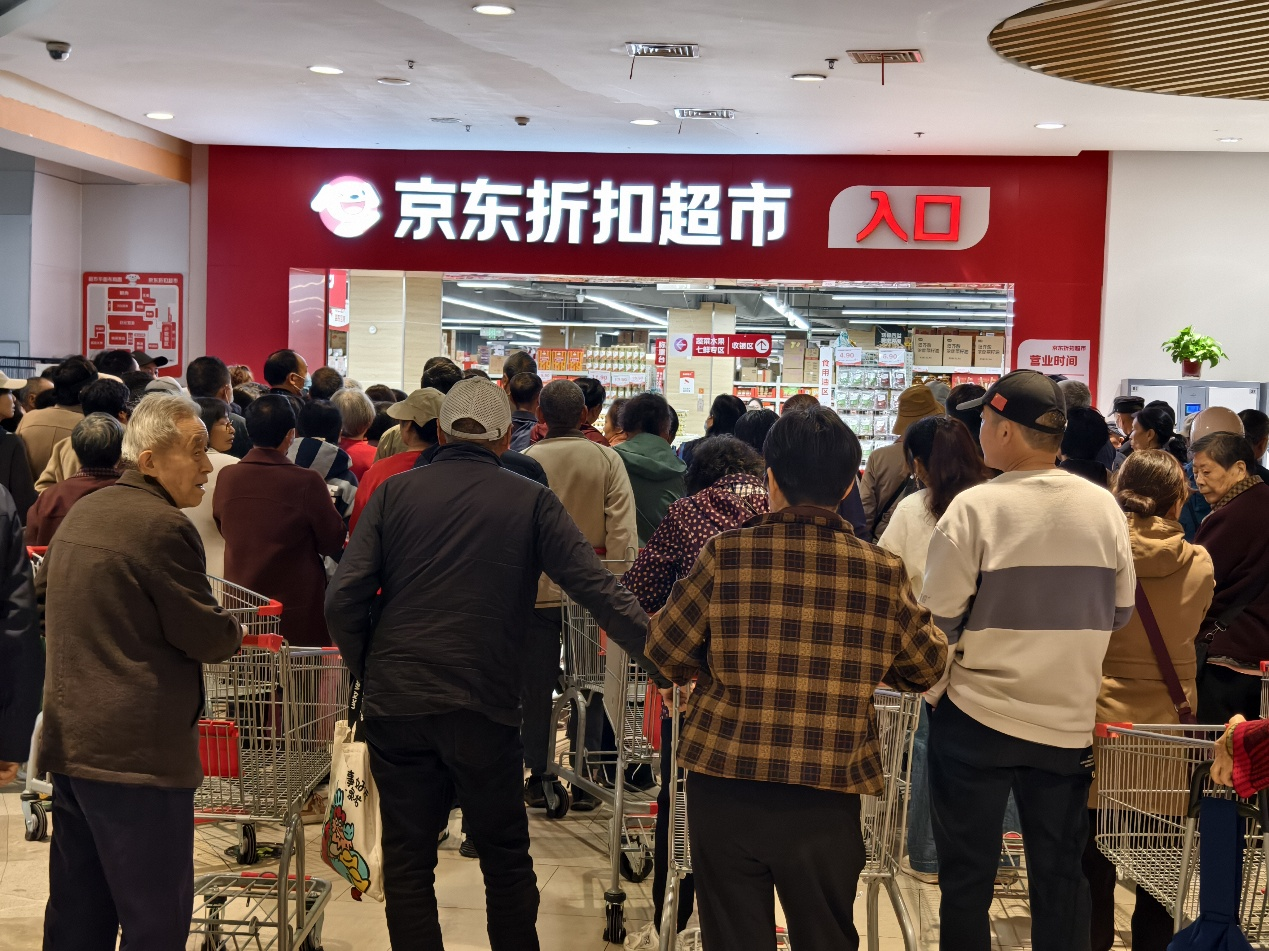
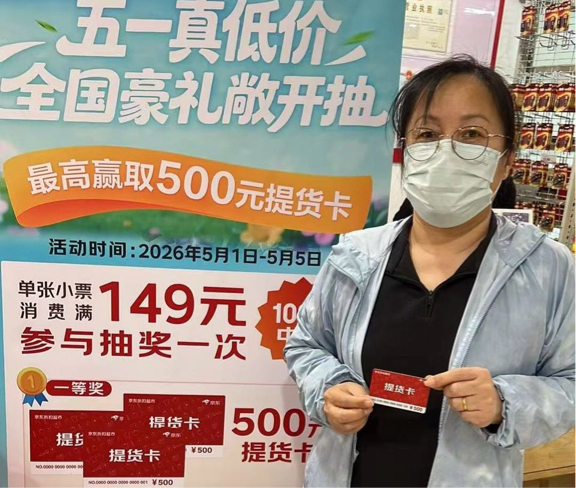
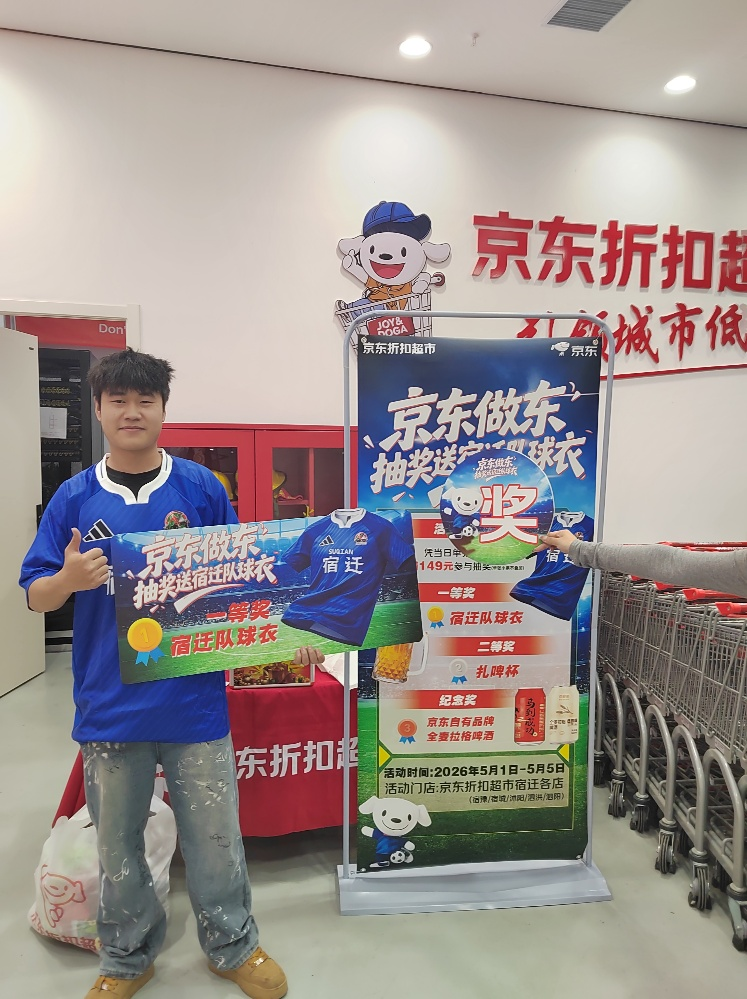
5月1日至5日,全国十家京东折扣超市推出消费满额抽奖活动:北京、河北、安徽区域门店,单笔消费满149元可参与抽奖,最高可赢取500元超市提货卡;江苏区域则紧扣2026江苏省城市足球联赛(简称“苏超”)观赛热潮,宿迁五店特别推出“消费满额抽苏超宿迁队同款主场助威球衣”活动,同样单笔消费满149元即可参与。
除抽奖福利外,5月1日至15日,消费者持苏超赛事票根,可前往宿迁任意一家京东折扣超市,免费领取京鲜舫啤酒一听或球赛助威棒一根,解锁观赛专属仪式感。"本来只想买点水果,没想到抽到了主场助威球衣,这个五一太值了!"一位江苏顾客在现场兴奋地说。假期首日已有多名消费者幸运中奖,目前各门店抽奖池中仍有大奖待领,后续消费者仍有充足机会解锁惊喜。
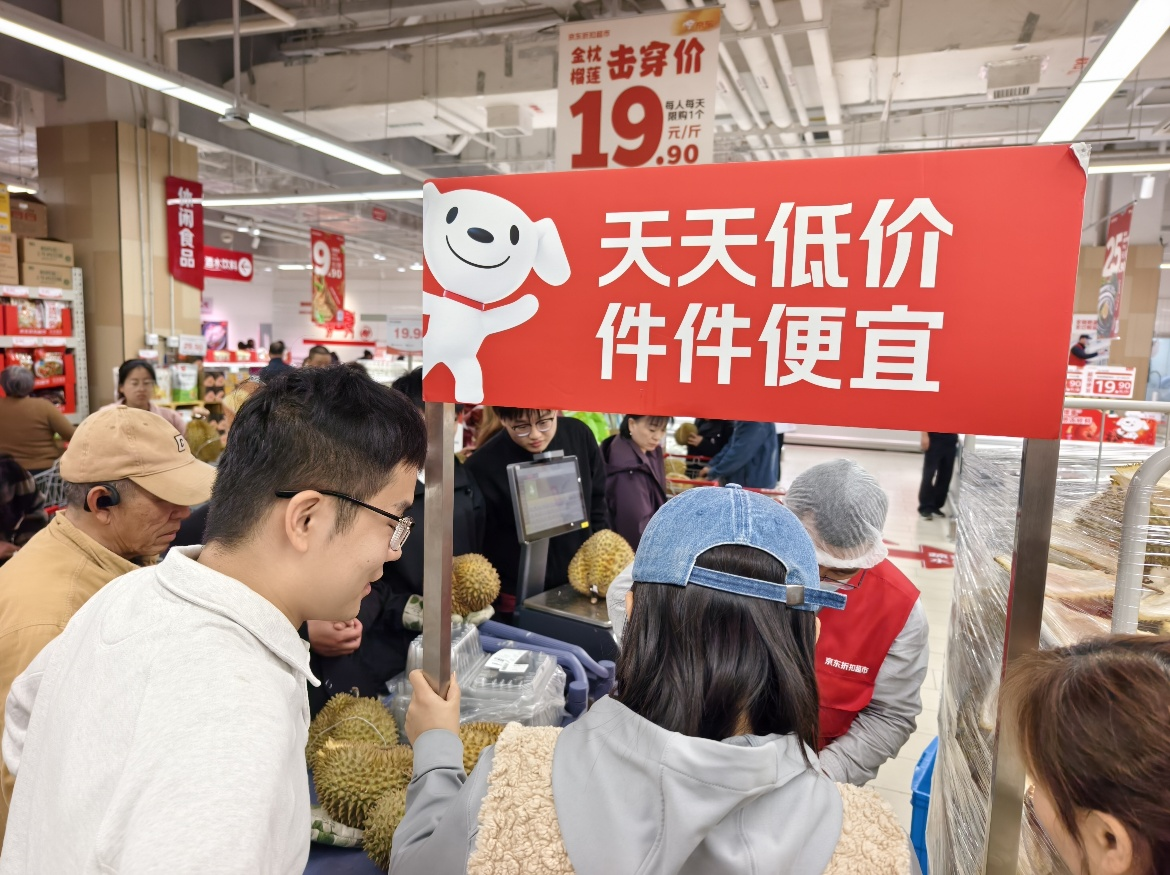
五一消费热的背后,是京东强大供应链带来的价格底气。假期首日,19.9元/斤的进口金枕榴莲售出近2万斤,各门店榴莲区域人头攒动。据门店工作人员介绍,当日多次紧急补货,仍供不应求。“外面都得二三十一斤,19.9元一斤这个价格在别处想都不敢想,果肉还特别饱满。”一位正在挑选榴莲的顾客笑着说。金枕榴莲的抢购热潮,为京东折扣超市五一档期打响了第一炮。全场6.9折起的冰品与主打性价比的自有品牌酒水也在五一首日表现亮眼。全场冰品销量环比激增,以一件也是批发价的超低价格吸引大量消费者购买;京鲜舫2.5元/听的精酿原浆白啤酒500ml、1.5元/听的全麦拉格啤酒330ml凭借极致性价比,稳居全店啤酒类销量前两名,深受消费者喜爱。
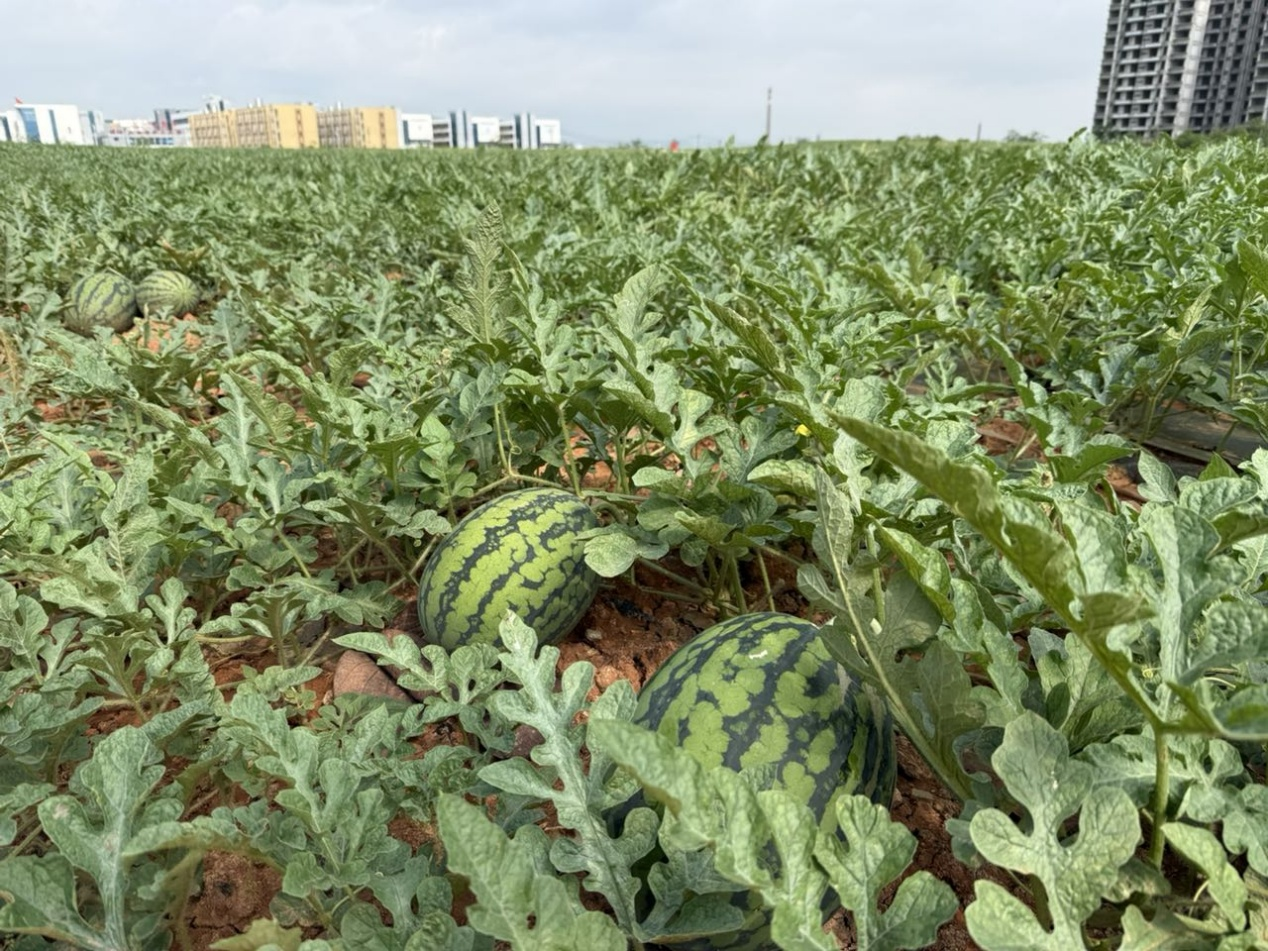
5月2日起,京东折扣超市北京、河北、江苏区域门店开售产地直采好物——广西南宁的甘美4K西瓜,成熟后直接从田间装车,运至各地大仓经过严格品控检查,筛选合格后统一分发至门店,最终以2.99元/斤击穿市场价回馈消费者。作为以高甜度和皮薄肉脆著称的优质西瓜品种,市面甘美4K西瓜售价往往超过5元/斤,而京东折扣超市产地直采价仅为市场均价的六折甚至更低,真正让消费者感受到产地直采的实惠。
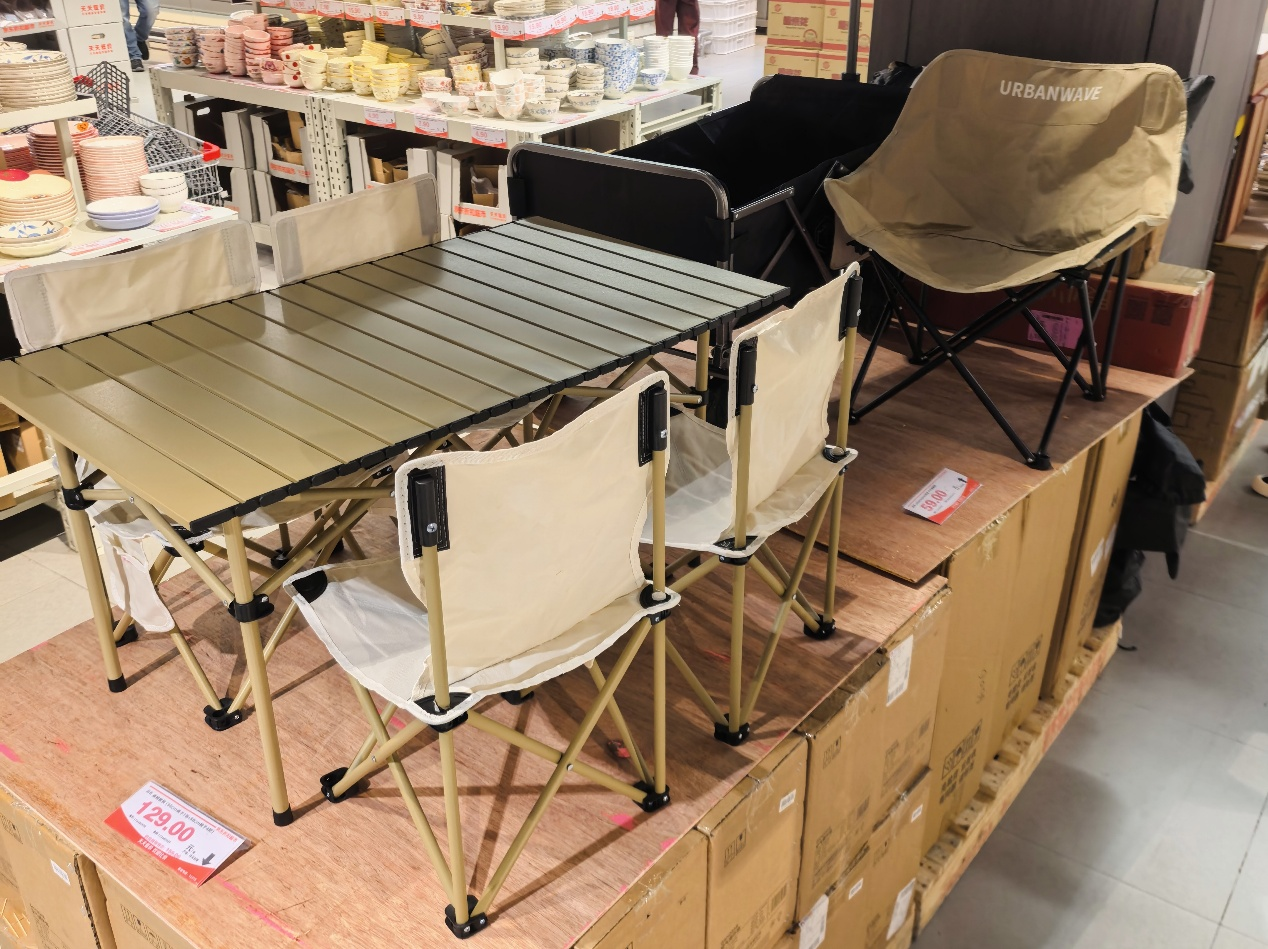
呼应五一假期露营出游热潮,京东折扣超市精准布局户外品类,全新上架家庭户外一桌四椅套装,携手源头工厂直供,到手仅129元,兼具快速安装、轻便易携等优势,上架不久便在多家门店热销售罄。对比传统商超同类多为一桌两椅配置、售价约170元,按同配置折算后,京东折扣超市价低至市面同类产品5折,实实在在让利于民。
从河北涿州、固安到北京门头沟,从江苏宿迁到安徽合肥、宿州,京东折扣超市全国十家门店以丰富的商品、实在的价格、贴心的服务,成为各地消费者五一囤货的优选之地。未来,京东折扣超市将持续深化 “天天低价” 的优势,让更多消费者享受到硬折扣带来的实惠与便捷,让每一笔消费都回归“只为商品价值买单”。

注:文/龚作仁,文章来源:Laborer,本文为作者独立观点,不代表亿邦动力立场。

【版权提示】亿邦动力倡导尊重与保护知识产权。未经许可,任何人不得复制、转载、或以其他方式使用本网站的内容。如发现本站文章存在版权问题,烦请提供版权疑问、身份证明、版权证明、联系方式等发邮件至run@ebrun.com,我们将及时沟通与处理。

已点赞

+1

{{ praise_text }}

好文章,值得被更多人看到

FAQ回顾

京东折扣超市五一期间有哪些促销活动?

五一期间,京东折扣超市全国十家门店推出消费满额抽奖活动,如满149元可抽最高500元超市提货卡。江苏宿迁门店还推出消费满额抽苏超宿迁队助威球衣活动,并凭苏超票根可免费领取啤酒或助威棒。

京东折扣超市五一期间哪些商品销售火爆?

19.9元/斤的进口金枕榴莲首日售出近2万斤,多次补货。广西甘美4K西瓜以2.99元/斤的产地直采价热销。此外,129元的家庭户外一桌四椅套装露营装备上架后迅速售罄。

京东折扣超市如何实现低价策略?

通过强大的供应链和产地直采模式降低成本,如甘美4K西瓜从广西田间直采,价格仅为市场均价的六折。同时,与源头工厂合作,使露营装备价格低至市面同类产品的5折。

广告

下一篇

跨境电商资源对接

《全球跨境电商服务商资源手册》第二期手册现已发布,触达更多资源,了解跨境服务商信息,欢迎点击链接下载。

了解详情

ChatGPT上新广告业务:增加CPC付费模式 推出自助投放工具

OpenAI宣布进一步扩展ChatGPT广告业务,为广告商提供新的广告购买和管理方式。

AI技术 Chatgpt AI 智能商业

2026-05-06 13:31:28