



• 亿邦公众号
    • APP下载

阳采集团受邀参加2026数智化采购发展报告开题研讨会

作者:龚作仁 文章来源:Laborer

2026-04-30 15:32

作者:龚作仁 文章来源:Laborer

2026-04-30 15:32

邦小白快读

EN
全文速览

文章重点报道了2026数智化采购发展报告开题研讨会,阳采集团分享了AI驱动供应链质量治理的实操干货。

1.事件概述:4月27日研讨会于北京举行,主题“生态进阶 价值跃升”,由中国物流与采购联合会等联合主办,汇聚央国企和供应商代表讨论数智化采购趋势。

2.AI应用进展:阳采集团从语言大模型优化商品数据管理(如自动聚类、分类、匹配),迈入新阶段使用CoT、SCP等技术,实现从认知到执行的智能化升级,聚焦质量治理能力建设。

3.实操案例:润滑油在不同应用场景(如风电风机vs普通设备)的质量要求差异巨大,需融合商品属性、使用场景和质量标准,AI抓取质量检测报告属性,推动静态标准向动态场景化管控升级。

4.落地关键点:AI见效需业务部门高质量需求输出、场景深度拆解及技术与业务联动,阳采已提升效率,未来将拓展更多应用场景。

AI在供应链质量治理中的应用为品牌商提供产品研发和消费趋势洞察。

1.品牌营销启示:阳采的AI技术优化商品质量管控,提升产品安全标准,强化品牌信誉,如润滑油案例显示场景化质量差异影响用户信任。

2.产品研发:强调商品属性需结合使用场景,启示品牌研发需考量动态应用需求,避免单一标准。

3.消费趋势:数智化采购趋势凸显质量安全为核心,消费者行为趋向高标准安全产品,阳采的AI实践可助力品牌把握需求变化。

4.技术应用:CoT、SCP等前沿技术推动AI从理解到执行,品牌可借鉴以提升供应链效率。

5.合作机会:研讨会促进行业交流,品牌可参与类似活动探索AI应用场景。

研讨会揭示数智化采购的增长机会和可学习点。

1.政策解读:官方组织主办活动,强调数字化建设以质量安全为重,提供政策风向。

2.市场机会:AI在采购中的落地(如动态质量管控)带来效率跃升,卖家可拓展数智化服务市场。

3.风险提示:质量管控难题如场景化标准缺失可能导致风险,需学习阳采的AI动态升级以规避。

4.可学习点:阳采经验显示AI成功需业务与技术联动,卖家应强化需求输出和场景拆解。

5.最新商业模式:探索AI应用场景(如供应链质量治理),未来合作方式包括参与行业研讨和联手推进智能化。

AI技术提供生产优化和数字化启示。

1.生产需求:阳采的AI优化海量商品数据管理(3200万SKU),启示工厂需高效数据治理以提升效率。

2.商业机会:推进数字化,AI应用如场景化质量管控可开创新市场,润滑油案例显示不同生产场景需差异化标准。

3.设计启示:结合商品属性、使用场景和质量标准,工厂可参考以优化产品设计。

4.数字化启示:分步AI建设(从语言模型到执行),工厂可逐步实施,阳采的落地成果提供实操案例。

5.未来合作:参与行业研讨,共享AI技术以筑牢供应链安全。

行业发展趋势和新技术解决方案聚焦客户痛点。

1.行业趋势:数智化采购是前沿方向,生态进阶价值跃升主题强调智能化应用。

2.新技术:CoT、SCP、Skill等使AI从自然语言理解升级为可执行应用,服务商可推广。

3.客户痛点:质量管控难题如场景化标准缺失,阳采指出润滑油案例中的差异。

4.解决方案:AI自动抓取质量属性并优化模型,实现全流程动态治理,服务商可借鉴提供类似服务。

5.实施建议:技术与业务深度联动是AI落地关键,服务商需强化需求分析和场景拆解。

商业对平台需求和平台做法提供启示。

1.平台需求:企业需AI优化采购管理,平台应整合技术如动态质量管控以提升服务。

2.最新做法:阳采的AI实践(如场景化执行)可借鉴,平台可实施类似CoT、SCP技术。

3.招商合作:研讨会聚集央国企和供应商,提供招商机会,平台可吸引企业参与生态建设。

4.运营管理:动态质量治理提升平台安全标准,避免静态风险,需强化技术与业务联动。

5.风向规避:强调质量安全为重,平台应规避标准僵化风险,推动场景化升级。

产业新动向和商业模式提供研究价值。

1.新动向:2026数智化采购报告开题,推进AI在供应链中的应用,阳采分享探索历程。

2.新问题:质量管控在场景化应用中的挑战,如润滑油案例揭示标准差异问题。

3.政策启示:数字化建设以安全为核心,政策可支持技术创新和标准动态化。

4.商业模式:AI驱动质量治理(如从语言模型到执行),研究者可分析阳采案例以探索新应用场景。

5.未来方向:生态进阶价值跃升主题,研究者可关注AI落地路径和行业合作模式。

声明:快读内容全程由AI生成,请注意甄别信息。如您发现问题,请发送邮件至 run@ebrun.com 。

我是 品牌商 卖家 工厂 服务商 平台商 研究者 帮我再读一遍。

Quick Summary

The article focuses on the kick-off seminar for the 2026 Digital-Intelligent Procurement Development Report, where Yangcai Group shared practical insights on AI-driven supply chain quality governance.

1. Event Overview: Held on April 27 in Beijing under the theme "Ecosystem Advancement, Value Leap," the seminar was co-organized by the China Federation of Logistics & Purchasing and brought together representatives from state-owned enterprises and suppliers to discuss digital-intelligent procurement trends.

2. AI Application Progress: Yangcai Group has advanced from using large language models to optimize product data management (e.g., automatic clustering, classification, and matching) to employing techniques like CoT and SCP, achieving an intelligent upgrade from cognition to execution with a focus on quality governance capabilities.

3. Practical Case: Lubricants require vastly different quality standards depending on the application scenario (e.g., wind turbines vs. general machinery). AI integrates product attributes, usage scenarios, and quality standards, extracting data from quality inspection reports to shift from static standards to dynamic, scenario-based management.

4. Key Success Factors: Effective AI implementation depends on high-quality requirements from business units, in-depth scenario analysis, and close collaboration between technical and operational teams. Yangcai has already improved efficiency and plans to expand into more application scenarios.

AI applications in supply chain quality governance offer brands insights for product development and consumer trends.

1. Marketing Implications: Yangcai's AI technology enhances product quality control and safety standards, strengthening brand credibility, as demonstrated by the lubricant case where scenario-specific quality differences impact user trust.

2. Product Development: Emphasizing the need to align product attributes with usage scenarios, brands should consider dynamic application requirements rather than relying on单一standards.

3. Consumer Trends: The shift toward digital-intelligent procurement highlights quality and safety as core priorities, with consumer behavior favoring high-standard products. Yangcai's AI practices can help brands adapt to these changes.

4. Technology Application: Advanced techniques like CoT and SCP enable AI to progress from understanding to execution, offering brands opportunities to improve supply chain efficiency.

5. Collaboration Opportunities: Industry seminars facilitate knowledge exchange, allowing brands to explore AI applications through participation in similar events.

The seminar revealed growth opportunities and key learnings in digital-intelligent procurement for sellers.

1. Policy Insight: Hosted by official organizations, the event underscores the priority of quality and safety in digitalization efforts, providing guidance on policy trends.

2. Market Opportunities: AI implementation in procurement, such as dynamic quality control, drives significant efficiency gains, opening up new markets for digital-intelligent services.

3. Risk Awareness: Challenges in quality governance, like the lack of scenario-specific standards, pose risks. Sellers can learn from Yangcai's AI-driven dynamic upgrades to mitigate these issues.

4. Key Learnings: Yangcai's experience shows that AI success requires close collaboration between business and technology teams, emphasizing the need for clear requirement definition and scenario analysis.

5. Emerging Business Models: Exploring AI applications in areas like supply chain quality governance presents future collaboration avenues, including participation in industry seminars and joint efforts to advance智能化.

AI technology offers insights for production optimization and digital transformation in manufacturing.

1. Production Needs: Yangcai's AI-driven management of vast product data (e.g., 32 million SKUs) highlights the importance of efficient data governance for factories to enhance operational efficiency.

2. Business Opportunities: Adopting digitalization and AI applications, such as scenario-based quality control, can create new markets. The lubricant case demonstrates the need for differentiated standards across various production scenarios.

3. Design Insights: Integrating product attributes, usage scenarios, and quality standards can guide factories in optimizing product design.

4. Digital Transformation: A phased AI implementation approach—from language models to execution—allows factories to adopt technology gradually, with Yangcai's practical案例serving as a reference.

5. Future Collaboration: Participating in industry seminars and sharing AI technologies can strengthen supply chain security and foster collaborative advancements.

Industry trends and new technology solutions address key customer pain points for service providers.

1. Industry Trends: Digital-intelligent procurement represents a cutting-edge direction, with the theme "Ecosystem Advancement, Value Leap" emphasizing intelligent applications.

2. New Technologies: Techniques like CoT, SCP, and Skill enable AI to evolve from natural language understanding to executable applications, offering推广opportunities for service providers.

3. Customer Pain Points: Quality governance challenges, such as the absence of scenario-specific standards, are illustrated by Yangcai's lubricant case study.

4. Solutions: AI automates the extraction of quality attributes and optimizes models for end-to-end dynamic governance, providing a blueprint for service providers to offer similar solutions.

5. Implementation Advice: Deep integration between technology and business operations is critical for AI success, requiring service providers to enhance需求analysis and scenario decomposition.

Business needs and platform strategies offer valuable insights for marketplace operators.

1. Platform Demand: Enterprises seek AI-optimized procurement management, prompting platforms to integrate technologies like dynamic quality control to enhance services.

2. Best Practices: Yangcai's AI initiatives, such as scenario-based execution, provide a model for platforms to adopt similar CoT and SCP techniques.

3. Partnership Opportunities: The seminar gathered state-owned enterprises and suppliers, creating avenues for招商. Platforms can attract participants to co-build ecosystems.

4. Operations Management: Dynamic quality governance elevates platform safety standards by mitigating static risks, necessitating strong technology-business alignment.

5. Risk Mitigation: Emphasizing quality and safety helps platforms avoid rigidity in standards, encouraging scenario-specific upgrades.

Industry developments and business models present research opportunities for scholars and analysts.

1. New Trends: The kick-off of the 2026 Digital-Intelligent Procurement Report advances AI integration in supply chains, with Yangcai sharing its exploratory journey.

2. Emerging Issues: Challenges in quality governance for scenario-based applications, such as standard variations highlighted in the lubricant case, warrant further study.

3. Policy Insights: Digitalization efforts centered on safety suggest policymakers can support technological innovation and dynamic standard-setting.

4. Business Models: AI-driven quality governance, transitioning from language models to execution, offers researchers a case study (e.g., Yangcai) to analyze new application scenarios.

5. Future Research Directions: The theme "Ecosystem Advancement, Value Leap" invites focus on AI implementation pathways and industry collaboration models.

Disclaimer: The "Quick Summary" content is entirely generated by AI. Please exercise discretion when interpreting the information. For issues or corrections, please email run@ebrun.com .

I am a Brand Seller Factory Service Provider Marketplace Seller Researcher Read it again.

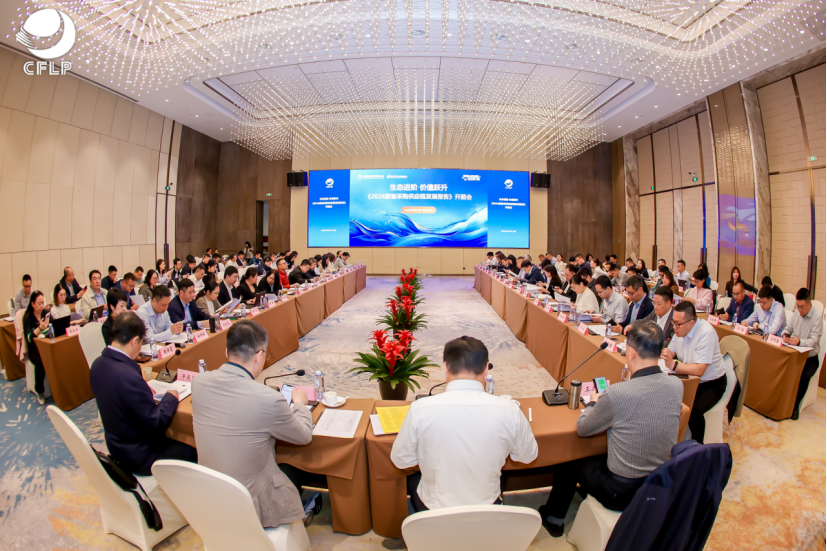
4月27日,2026年第2期采购供应链沙龙——2026数智化采购发展报告开题研讨会在北京举行。本次活动由中国物流与采购联合会公共采购分会、采购与供应链管理专业委员会与亿邦动力(亿邦智库)联合主办,中物联公共采购分会副秘书长宋翔主持。来自中国石化、中国石油、中海油、国铁物资、中国电信、中国移动、中广核、航天科工、中国兵工等数十家央国企代表,以及京东工业、京东政企、得力集实、阳采集团等供应商与服务商代表共百余人齐聚一堂,围绕“生态进阶 价值跃升”主题,深入研讨数智化采购的前沿趋势与实践路径。阳采集团数智战略官、总裁高级助理胡婧玥受邀出席,并系统分享了阳采以AI驱动供应链质量治理的探索历程与落地成果,引发了与会嘉宾的广泛关注与热烈讨论。
01.从语言大模型到场景化执行,AI建设迈入实操新阶段

阳采集团日常运营涉及高达3200万SKU的海量商品体系,供应链管理复杂度极高。在上一阶段的AI建设中,阳采重点围绕主数据治理展开攻关,依托自然语言大模型,实现了商品自动聚类、智能分类、精准匹配与编码梳理,并结合大模型补充商品属性,再由品控与品类专家复核确认,大幅优化了基础商品数据管理效率,完成了智能分类与赋码的关键一步。

自去年下半年起,阳采集团正式迈入AI应用的新阶段。依托CoT(思维链)、SCP、Skill(技能)、Flow(流程)等前沿技术,AI能力从自然语言理解升级为可落地、可执行、可实操的智能化应用,全面开启了“从认知到执行”的跨越。这一阶段的核心方向,是在品类管理的基础上,叠加质量治理能力建设。

02.破解场景化质量难题:让安全标准贴合真实应用

“商品属性并非单一固定标准,必须结合实际使用场景来判定质量等级与安全红线。”阳采集团在研讨中指出采购质量管控的核心痛点。以润滑油举例:同样是润滑油,应用于风电风机场景与应用于普通设备、常规发电机场景,其质量要求、安全等级和管控标准天差地别。只有将“商品属性+使用场景+质量标准”深度融合,才能真正守住供应链安全底线,实现精准质量管控。针对这一行业难题,阳采集团引入智能技术,自动从质量检测报告中抓取对应的质量属性,并对模型进行持续优化和迭代,让AI真正深入到质量治理的全流程,推动质量管控从静态标准向动态场景化升级。

“质量与安全,是现阶段数字化建设的重中之重。”胡婧玥在分享中强调,AI技术想要真正落地见效,离不开业务部门高质量的需求输出、业务场景的深度拆解,更需要技术与业务的双向联动、相互配合。阳采已明显感受到AI落地带来的效率跃升,后续仍有大量业务场景有待挖掘,也珍视此次与行业专家深度交流的机会,期待未来与各方共同拓展更多AI落地应用场景,协力推进数字化与智能化建设。

作为深耕供应链服务领域的创新力量,阳采集团一直以技术与场景深度融合为驱动,持续探索数智化采购的新边界。此次《2026数智化采购发展报告》开题研讨会上的分享,正是阳采在AI赋能质量治理与供应链安全方面交出的一份扎实答卷。未来,阳采将围绕“生态进阶 价值跃升”进行更多实践,携手行业伙伴,以数智力量筑牢供应链高质量发展的安全底座。

注:文/龚作仁,文章来源:Laborer,本文为作者独立观点,不代表亿邦动力立场。

【版权提示】亿邦动力倡导尊重与保护知识产权。未经许可,任何人不得复制、转载、或以其他方式使用本网站的内容。如发现本站文章存在版权问题,烦请提供版权疑问、身份证明、版权证明、联系方式等发邮件至run@ebrun.com,我们将及时沟通与处理。

已点赞

+1

{{ praise_text }}

好文章,值得被更多人看到

FAQ回顾

阳采集团在数智化采购领域有哪些核心探索?

阳采集团的核心探索包括:利用自然语言大模型进行商品主数据治理,实现智能分类与赋码;并基于CoT、SCP等技术,将AI应用从认知升级到执行,重点建设结合使用场景的供应链质量治理能力。

阳采集团如何利用AI解决采购质量管控难题?

阳采集团通过将“商品属性、使用场景、质量标准”深度融合来解决质量管控难题。例如,根据润滑油应用于风电风机或普通设备等不同场景,动态判定其质量等级与安全红线,并利用AI从检测报告中抓取质量属性进行持续优化。

2026数智化采购发展报告开题研讨会由谁主办?

该研讨会由中国物流与采购联合会公共采购分会、采购与供应链管理专业委员会与亿邦动力(亿邦智库)联合主办,吸引了数十家央国企及供应商代表参与,围绕“生态进阶 价值跃升”主题展开研讨。

广告

下一篇

跨境电商资源对接

《全球跨境电商服务商资源手册》第二期手册现已发布,触达更多资源,了解跨境服务商信息,欢迎点击链接下载。

了解详情

马可波罗:以三重壁垒 打造建陶行业差异化竞争新范式

当建筑陶瓷行业走过高速扩张的“黄金时代”,一场关于价值的深层重构正在发生。

马可波罗 未来零售

2026-04-30 14:12:04










