



• 亿邦公众号
    • APP下载

亿邦郑敏:品牌反内卷公式,科技X美学/同质化=品牌新竞争力

作者:郑雅 文章来源:亿邦动力

2026-04-25 15:19

作者:郑雅 文章来源:亿邦动力

2026-04-25 15:19

邦小白快读

EN
全文速览

文章核心干货是品牌反内卷公式和品牌内核的实操策略。

1. 品牌内核是“可信”,分为信任、信赖、信仰三个层次:信任是基础,确保产品可靠;信赖提升复购率;信仰是最高层次,建立用户忠诚。

2. 产品支点包括质量、功能和审美:质量取决于材料工艺和品质态度;功能靠科技创新实现突破;审美源于人类基因中的悦己和慕强两大源头。

3. 品牌反内卷公式为科技乘以美学除以同质化,等于品牌新竞争力,提供应对内卷的实操方法,强调通过科技和美学创新来减少同质化竞争。

此外,亿邦动力发布的报告强调新竞争力品牌发展理念,包括用户主权、全域增长和数字基因,可作为日常品牌建设的参考。

文章聚焦品牌营销和产品研发的干货内容。

1. 品牌内核“可信”的分层理论:信任是营销基础,需确保产品质量;信赖通过复购强化品牌渠道;信仰可提升品牌定价和用户粘性,应对价格竞争。

2. 产品研发关键点:功能需科技突破,满足消费趋势;审美源于悦己和慕强,反映用户行为观察,指导设计创新。

3. 反内卷公式科技×美学÷同质化=新竞争力,提供品牌营销策略,减少同质化以提升竞争力,结合消费趋势洞察。

报告还提出新竞争力品牌理念如用户主权和全域增长,启示产品研发需融合数字化。

文章提供机会提示和可学习点。

1. 反内卷公式作为事件应对措施:科技×美学÷同质化=新竞争力,帮助规避同质化风险,提示增长市场机会。

2. 消费需求变化:审美源头悦己和慕强揭示用户行为趋势,可作为新商业模式切入点,如强化产品功能创新。

3. 新竞争力品牌理念如用户主权和全域增长,提供合作方式启示,强调数字化基因可应对负面影响。

品牌可信分层(信任、信赖、信仰)带来正面影响,提升复购率,提示卖家学习点以规避风险。

文章重点在产品生产和设计需求。

1. 产品生产关键:质量取决于材料工艺和品质态度,需严格把控,避免问题,启示生产流程优化。

2. 设计需求聚焦功能和审美:功能靠科技创新,如材料突破;审美源于悦己和慕强,指导产品外观设计,满足商业机会。

3. 反内卷公式科技×美学÷同质化=新竞争力,提供推进数字化和电商的启示,如减少同质化以提升产品竞争力。

此外,品牌发展理念如数字基因,提示工厂整合电商元素以探索新机会。

文章强调行业发展趋势和新技术。

1. 行业趋势:品牌反内卷化成为新动向,科技×美学÷同质化=新竞争力,显示客户痛点同质化竞争加剧,需解决方案创新。

2. 新技术应用:科技在产品功能中的突破是核心趋势,服务商可开发相关技术工具;审美源头悦己和慕强揭示用户需求痛点,如个性化解决方案。

3. 新竞争力报告提出用户主权和全域增长,启示服务商提供数字化服务以应对客户痛点。

整体趋势指向融合科技和美学,减少同质化,为服务商提供发展方向。

文章揭示商业对平台的需求和启示。

1. 平台需求:品牌可信建设(信任、信赖、信仰)需要平台支持,如运营管理策略提升用户信任;反内卷公式提示平台应助力品牌减少同质化风险。

2. 平台做法:新竞争力理念如全域增长和用户主权,启示平台招商和运营管理策略需整合数字化基因。

3. 风向规避:同质化竞争是主要风险,平台可提供工具促进科技和美学创新以规避。

反内卷公式强调美学和科技,平台可由此开发新功能满足品牌需求。

文章分析产业新动向和商业模式。

1. 产业新动向:品牌反内卷趋势凸显,科技×美学÷同质化=新竞争力模型,反映新问题如同质化加剧。

2. 商业模式创新:可信分层理论(信任、信赖、信仰)提供新框架;报告提出发展理念如用户主权、全域增长和数字基因,启示政策法规建议。

3. 新竞争力品牌洞察揭示消费行为变化,如审美源头悦己和慕强,建议研究者深入探讨商业模式应用。

整体内容提供产业启示,推动研究政策法规的优化以支持新竞争力。

声明:快读内容全程由AI生成,请注意甄别信息。如您发现问题,请发送邮件至 run@ebrun.com 。

我是 品牌商 卖家 工厂 服务商 平台商 研究者 帮我再读一遍。

Quick Summary

The core takeaways are an anti-involution formula for brands and practical strategies for building brand essence.

1. Brand essence is "credibility," which operates on three levels: trust (foundational product reliability), reliance (boosting repurchase rates), and belief (peak customer loyalty).

2. Product pillars include quality, functionality, and aesthetics: quality depends on materials, craftsmanship, and commitment; functionality requires technological innovation; aesthetics stem from innate human drivers of self-pleasure and admiration for excellence.

3. The anti-involution formula is (Technology × Aesthetics) ÷ Homogenization = New Competitiveness, offering a practical method to combat market saturation by leveraging innovation in tech and design to differentiate.

Additionally, a report by Ebang emphasizes new competitiveness concepts like user sovereignty, omnichannel growth, and digital DNA, serving as a reference for daily brand building.

The article focuses on practical insights for brand marketing and product development.

1. The layered theory of brand credibility: trust as the marketing foundation requiring product quality; reliance strengthening brand channels through repurchases; belief enhancing pricing power and user stickiness to counter price wars.

2. Key R&D priorities: functionality driven by tech breakthroughs to meet consumer trends; aesthetics rooted in self-pleasure and admiration, informing design innovation through user behavior observation.

3. The anti-involution formula (Tech × Aesthetics ÷ Homogenization = New Competitiveness) provides a differentiation strategy, aligning with consumer trends to reduce homogeneous competition.

The report's new competitiveness concepts (e.g., user sovereignty, omnichannel growth) highlight the need to integrate digital elements into product development.

The article offers actionable opportunities and learnings.

1. The anti-involution formula as a risk-mitigation tool: Tech × Aesthetics ÷ Homogenization = New Competitiveness helps avoid saturation and identifies growth opportunities.

2. Consumer demand shifts: aesthetics driven by self-pleasure and admiration reveal behavioral trends, suggesting new business models (e.g., enhanced functionality).

3. New competitiveness concepts like user sovereignty and omnichannel growth inspire partnership strategies, with digital DNA mitigating market challenges.

The credibility framework (trust, reliance, belief) boosts repurchase rates, providing learnings to minimize risks.

The article highlights production and design requirements.

1. Production priorities: quality hinges on materials, craftsmanship, and rigorous standards, urging process optimization to prevent issues.

2. Design focuses: functionality via tech innovation (e.g., material breakthroughs); aesthetics guided by self-pleasure and admiration to meet commercial opportunities.

3. The anti-involution formula (Tech × Aesthetics ÷ Homogenization = New Competitiveness) advises reducing homogeneity through digital/e-commerce integration.

Concepts like digital DNA prompt factories to explore new opportunities by embedding e-commerce elements.

The article stresses industry trends and tech applications.

1. Trend: brand anti-involution gains traction; the formula Tech × Aesthetics ÷ Homogenization = New Competitiveness addresses client pain points in homogeneous markets.

2. Tech applications: functionality innovations represent key trends, enabling tool development; aesthetics rooted in self-pleasure/admiration reveal needs for personalized solutions.

3. New competitiveness concepts (user sovereignty, omnichannel growth) highlight demand for digital services to address client challenges.

The trend toward blending tech and aesthetics to reduce homogeneity guides service providers' strategic direction.

The article reveals platform demands and implications.

1. Platform needs: building brand credibility (trust, reliance, belief) requires operational support (e.g., trust-building strategies); the anti-involution formula suggests helping brands mitigate homogeneity risks.

2. Platform actions: new competitiveness concepts (omnichannel growth, user sovereignty) inform merchant recruitment and operations, integrating digital DNA.

3. Risk avoidance: homogeneity is a key threat; platforms can offer tools to foster tech and design innovation.

The formula's emphasis on aesthetics and tech guides feature development to meet brand needs.

The article analyzes industry shifts and business models.

1. Trend: anti-involution emerges, with the Tech × Aesthetics ÷ Homogenization = New Competitiveness model reflecting challenges like market saturation.

2. Model innovation: the credibility framework (trust, reliance, belief) offers a new lens; concepts like user sovereignty, omnichannel growth, and digital DNA inform policy recommendations.

3. Consumer insights (e.g., aesthetics driven by self-pleasure/admiration) suggest research avenues for business model applications.

The content provides industry implications, advocating policy optimizations to support new competitiveness.

Disclaimer: The "Quick Summary" content is entirely generated by AI. Please exercise discretion when interpreting the information. For issues or corrections, please email run@ebrun.com .

I am a Brand Seller Factory Service Provider Marketplace Seller Researcher Read it again.

【亿邦原创】4月24日,科技与美学·2026亿邦新竞争力品牌大会在上海召开,亿邦动力董事长、亿邦智库院长郑敏在会上发布了《2026新竞争力品牌洞察报告》。

郑敏指出,当下,品牌的内核是“可信”。“可信”的背后包含信任、信赖、信仰三个层次。进一步拆解来看,产品作为品牌的物理载体,质量、功能和审美构成了产品的支点。基于此,亿邦动力总结出品牌反内卷公式为,科技×美学/同质化=品牌新竞争力。

以下为演讲全文,经亿邦动力整理。

亿邦动力肯定要不断去感知和研究整个行业的变化。就在两年前的2024年,也是在这个会场,我们第一次发布了新竞争力品牌的报告。我们感受到了品牌的衰退和重生,正在当下这个周期并发。只不过在2024年的时候,当时我们只是初步捕捉到了“新竞争力品牌它新在哪?”我们认为它的发展理念是新的。当时我们提出新竞争力品牌应该有三大发展理念,第一是用户主权,第二是全域增长,第三是数字基因。

“研究”这件事特别有趣。越研究越觉得自己不懂,越研究越要问自己一些最本源朴实的问题。我们问自己,“到底什么是品牌?品牌的内核到底是什么?”经过了一些研究之后,我们认为品牌的内核是可信。如果在用户心中是可信的,就形成了品牌力。无论是产品还是人,还是企业,甚至一个组织。
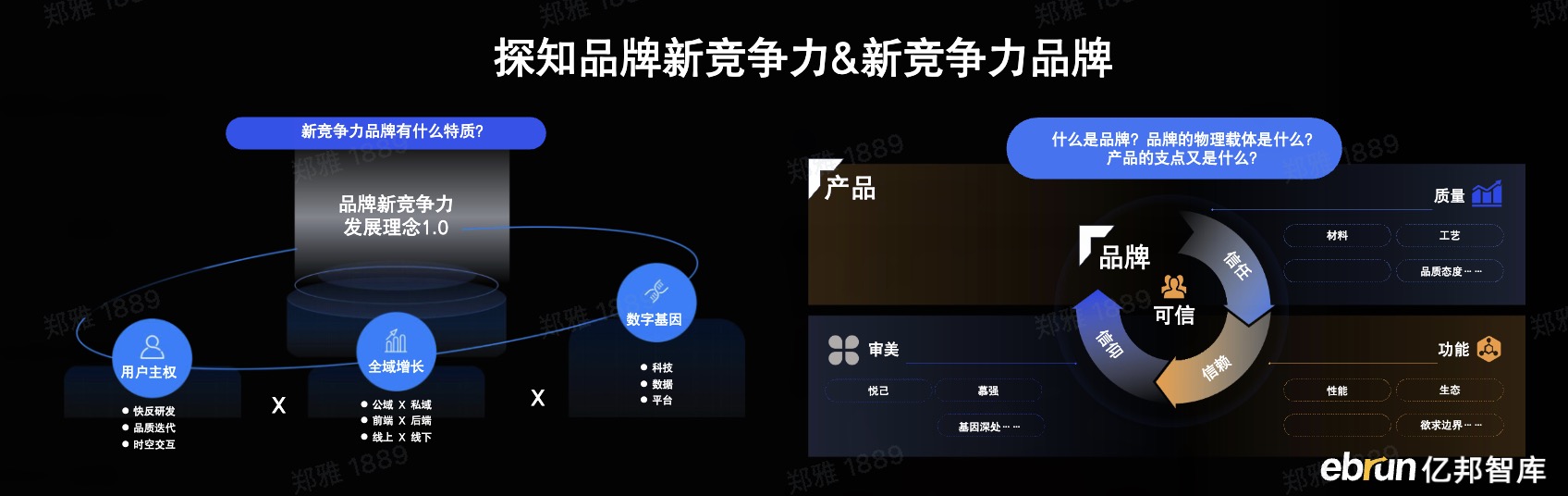
只不过“可信”是分层的,最基础的是信任,再高一层是信赖,有了信赖品牌就会有复购。更高层次是信仰。

品牌的物理载体是产品,那产品的支点又是什么?我们认为,产品的支点是“质量、功能和审美”。

质量方面,主要是材料和工艺,深层次是取决于品质态度,这个必须不能出问题。能持续大幅度拉大品牌优势的,我们认为,关键点在功能和审美。

如今,“功能”毫无疑问需要靠科技来实现突破。那什么是“美”呢?可能要追溯去研究人类学才行,从基因里面去找最原始的答案。我们找到了悦己和慕强这两大人类审美源头。
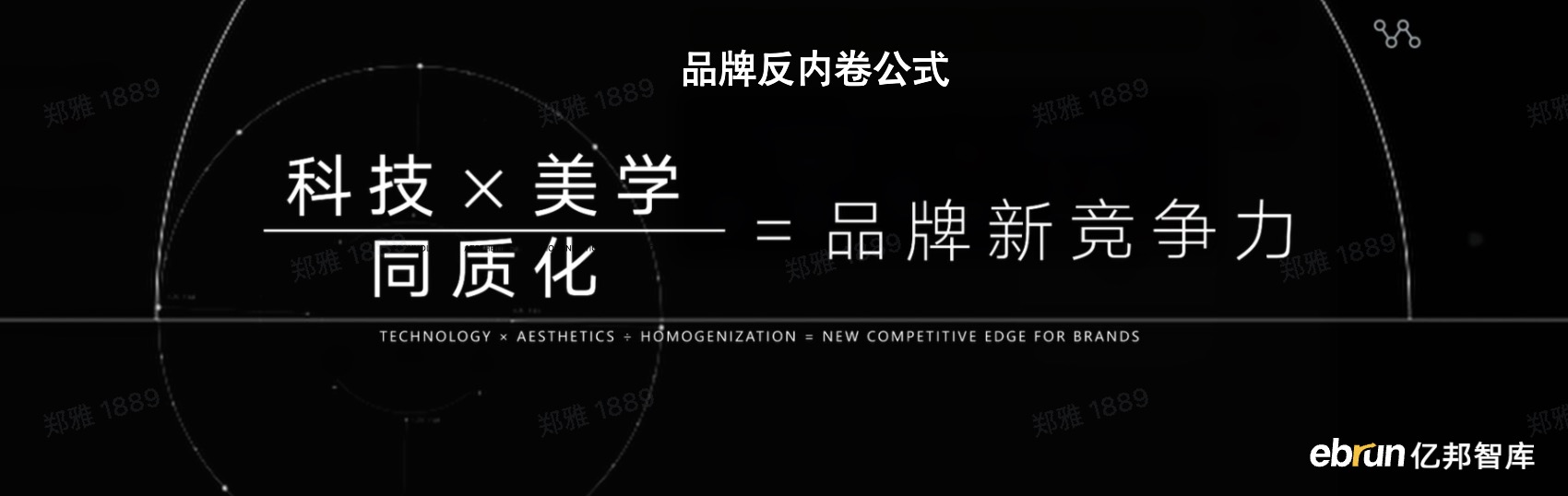
亿邦动力在此基础上,提出了品牌反内卷公式:科技乘以美学,除以同质化,等于品牌新竞争力。

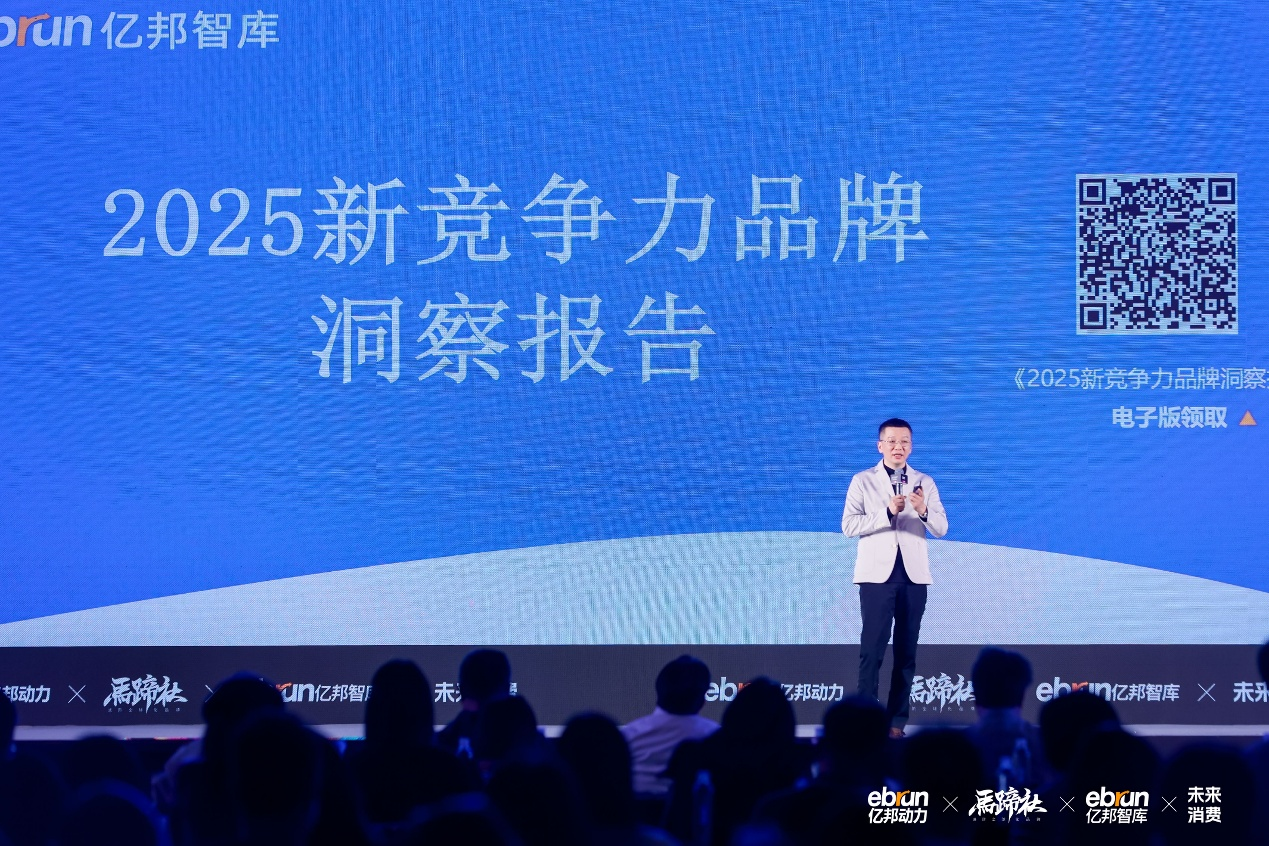
我们同事做了一些更细的研究,请大家扫码下载报告。
【版权提示】亿邦动力倡导尊重与保护知识产权。未经许可,任何人不得复制、转载、或以其他方式使用本网站的内容。如发现本站文章存在版权问题,烦请提供版权疑问、身份证明、版权证明、联系方式等发邮件至run@ebrun.com,我们将及时沟通与处理。

已点赞

+1

{{ praise_text }}

好文章,值得被更多人看到

FAQ回顾

什么是亿邦动力提出的品牌反内卷公式?

亿邦动力提出的品牌反内卷公式是:科技 × 美学 ÷ 同质化 = 品牌新竞争力。该公式强调通过科技创新和美学设计来提升产品功能与审美,并除以同质化问题,从而构建品牌新的竞争优势。

品牌的内核是什么?具体包含哪些层次?

根据亿邦动力的研究,品牌的内核是“可信”。这一内核分为三个层次:最基础的是“信任”,其次是“信赖”(能带来复购),最高层次是“信仰”。

构成产品支点的三个关键要素是什么?

产品作为品牌的物理载体,其三大支点是质量、功能和审美。质量是基础,功能和审美是持续拉开品牌优势的关键,其中功能依赖科技突破,审美则源于人类悦己和慕强的本能。

广告

下一篇

征集报名《品牌数字化服务商资源手册》

《品牌数字化服务商资源手册》展示数字化服务商风采,亿邦全年零售大会通发,触达更多资源,马上加入!

马上入驻

找钢网集团累计回购4000万港币 王东详解AI与国际化战略

王东发布《给股东的一封信》,系统阐述公司在AI应用、品种拓展、国际化及非钢业务四大方向的战略进展。











