



• 亿邦公众号
    • APP下载

AI+政务新体验:京东App上线市民服务

作者:龚作仁 文章来源:Laborer

2025-12-10 16:08

作者:龚作仁 文章来源:Laborer

2025-12-10 16:08

邦小白快读

EN
全文速览

京东App上线市民服务,覆盖广州、山西、江苏等多省市,提供一站式政务与生活服务,实现“办事不出门、服务在指尖”。

1. 入口便捷:用户打开京东App或京东金融App,搜索“京民通”或“市民服务”即可进入平台。

2. 高频政务办理:支持公积金查询、医保报销、社保缴纳、个税申报、育儿补贴申领、养老资格认证等事项。

3. 便民生活服务:聚合生活缴费、快递寄收、定点药店查询、旅游出行、求职就业等功能。

4. AI助手应用:引入“AI助手小彤”,基于JoyAI大模型,通过自然语言理解精准解答疑问,支持拍照识别和政策解读,提升效率。

5. 本地特色功能:例如北京用户可直接使用“北京市道路停车缴费”完成在线支付,拓展智慧出行场景。

总:服务深度对接各地政务系统,如广州“穗好办”入驻,实现全流程智能化,未来将持续拓展城市和领域。

京东通过市民服务强化品牌营销,推动数字生活与政务服务融合,提升用户粘性和品牌形象。

1. 品牌渠道建设:在京东App上线市民服务,覆盖多省市,聚合高频政务和生活服务,吸引用户通过搜索“京民通”进入平台。

2. 产品研发创新:引入AI智能助手“小彤”,基于自研JoyAI大模型,支持多模态交互如拍照识别和政策解读,降低操作门槛,增强用户体验。

3. 消费趋势响应:针对用户行为观察,提供一站式服务如停车缴费、求职就业等,满足数字化生活需求,提升品牌竞争力。

4. 品牌定价策略:通过免费或低成本服务(如公积金查询、生活缴费)建立用户信任,结合本地特色功能(如北京停车服务)差异化定价。

总:案例包括广州“穗好办”合作,展示品牌与政府深度对接,未来拓展将助力品牌在公共服务领域占据先机。

该服务带来政策解读和市场增长机会,提示可学习模式和合作方式。

1. 政策解读与机会:AI助手“小彤”一键生成政策解读和办理建议,降低公众理解门槛,卖家可借鉴此模式应对政策变化。

2. 增长市场:服务覆盖广州、山西、江苏等省市,逐步拓展,提供生活缴费、快递等便民服务,卖家可挖掘新消费需求如停车缴费、求职就业。

3. 可学习点:京东创新引入多模态交互(拍照识别、政策解读)和智能体矩阵(如万能博士),卖家可应用AI提升服务效率。

4. 合作方式:深度对接政务系统(如广州“穗好办”入驻),卖家可寻求与平台或政府合作,共享资源。

5. 风险提示:未来拓展需规避潜在技术或运营风险,如数据安全或服务覆盖不均。

总:正面影响包括提升办事效率,负面影响可能涉及竞争加剧,卖家应关注扶持政策如AI赋能,把握商业模式创新机会。

服务揭示产品设计需求和数字化启示,提供商业机会推进电商融合。

1. 产品生产需求:AI助手“小彤”基于JoyAI大模型,需要软硬件支持如自然语言处理系统,工厂可研发相关AI组件。

2. 商业机会:京东市民服务整合政务和生活功能(如停车缴费、健康管理),工厂可提供配套产品如智能设备或数据接口。

3. 数字化启示:服务深度对接政务系统(如广州案例),推动电商与公共服务融合,工厂可学习此模式推进自身数字化。

4. 电商推进:通过App平台聚合服务(如搜索“京民通”进入),工厂可借鉴构建线上渠道,覆盖民生需求。

总:案例中多模态交互如拍照识别,提示工厂关注技术应用,未来拓展将带来更多生产设计机会。

行业趋势指向AI驱动,新技术解决客户痛点,提供智能解决方案。

1. 行业发展趋势:京东市民服务推动政务服务与数字生活深度融合,覆盖多省市,未来拓展将强化AI赋能公共服务。

2. 新技术应用:引入JoyAI大模型支持“AI助手小彤”,具备自然语言理解,实现多模态交互如拍照识别和政策解读。

3. 客户痛点解决:针对政务复杂和政策难懂问题,服务提供一键生成解读和办理建议,降低用户门槛。

4. 解决方案:构建智能体矩阵(如AI医生、数字社工),覆盖全场景民生需求如健康管理、财富规划,确保“问得清、找得准、办得快”。

总:案例包括广州全流程智能化服务,展示技术整合优势,服务商可借鉴此模式应对行业痛点。

平台需求聚焦服务覆盖和运营管理,最新做法包括AI应用和风险规避。

1. 平台最新做法:京东App上线市民服务,覆盖广州、山西、江苏等省市,用户搜索“京民通”进入,提供政务和生活功能。

2. 招商与运营:深度对接政务系统(如广州“穗好办”入驻),通过AI助手“小彤”提升效率,支持多模态交互如拍照识别。

3. 运营管理:构建智能体矩阵(如万能博士、AI医生),协同覆盖全场景需求,确保服务高效。

4. 风向规避:未来持续拓展城市和领域,需规避数据安全或覆盖不均风险,通过AI赋能构建普惠生态。

总:平台需求包括用户便捷入口和本地特色功能(如北京停车服务),京东做法展示招商合作模式。

产业新动向涉及AI赋能公共服务,揭示新问题和政策启示。

1. 产业新动向:京东市民服务推动政务服务与数字生活融合,覆盖多省市,构建一站式智能平台。

2. 新问题:如何确保普惠高效(如降低操作门槛),案例中AI助手“小彤”通过政策解读和拍照识别解决理解障碍。

3. 政策法规启示:服务深度对接政府系统(如广州案例),助力构建数字政务生态,研究者可探讨法规建议如数据隐私保护。

4. 商业模式:创新引入智能体矩阵(如数字社工、财富管家),覆盖全场景民生需求,未来拓展将深化AI应用。

总:代表企业京东展示AI技术(JoyAI大模型)驱动服务升级,研究者可分析此模式对公共服务的长期影响。

声明:快读内容全程由AI生成,请注意甄别信息。如您发现问题,请发送邮件至 run@ebrun.com 。

我是 品牌商 卖家 工厂 服务商 平台商 研究者 帮我再读一遍。

Quick Summary

JD.com has launched a Citizen Services platform within its app, now available in provinces and cities including Guangzhou, Shanxi, and Jiangsu. This initiative offers one-stop access to government and lifestyle services, enabling users to "handle affairs without leaving home, with services at their fingertips."

1. Easy Access: Users can open the JD.com App or JD Finance App, search for "Jing Min Tong" or "Citizen Services," and enter the platform directly.

2. High-Frequency Government Services: The platform supports services such as provident fund inquiries, medical insurance reimbursement, social security payments, individual tax declarations, childcare subsidy applications, and pension eligibility verification.

3. Convenient Lifestyle Services: It aggregates functions like utility bill payments, courier sending/receiving, designated pharmacy searches, travel bookings, and job hunting.

4. AI Assistant Application: The platform features "AI Assistant Xiao Tong," powered by JD's proprietary JoyAI large language model. It uses natural language understanding to answer queries accurately, supports photo recognition for document processing and policy interpretation, and improves efficiency.

5. Localized Features: For example, users in Beijing can directly use the "Beijing Road Parking Payment" feature for online payments, expanding smart mobility scenarios.

Summary: The service is deeply integrated with local government systems, such as Guangzhou's "Sui Hao Ban" platform, enabling fully intelligent, end-to-end processes. Future plans include expanding to more cities and service domains.

JD.com is strengthening its brand marketing through the Citizen Services platform, driving the integration of digital living and government services to enhance user stickiness and brand image.

1. Brand Channel Development: By launching Citizen Services on the JD App across multiple provinces and cities, and aggregating high-frequency government and lifestyle services, JD attracts users to enter the platform via searches for "Jing Min Tong."

2. Product R&D Innovation: The introduction of the AI smart assistant "Xiao Tong," based on the self-developed JoyAI model, supports multimodal interactions like photo recognition and policy interpretation, lowering the barrier to use and improving the user experience.

3. Responding to Consumer Trends: Observing user behavior, JD provides one-stop services like parking payments and job hunting to meet digital living demands, thereby enhancing brand competitiveness.

4. Brand Pricing Strategy: JD builds user trust through free or low-cost services (e.g., provident fund queries, bill payments), combined with differentiated pricing for localized features like Beijing's parking service.

Summary: Partnerships, such as the one with Guangzhou's "Sui Hao Ban," demonstrate deep integration with government systems. Future expansion will help the brand gain a first-mover advantage in the public services sector.

This service presents opportunities for policy interpretation and market growth, highlighting learnable models and potential cooperation methods.

1. Policy Interpretation & Opportunity: The AI assistant "Xiao Tong" can generate instant policy explanations and handling suggestions, lowering the public's comprehension barrier. Sellers can learn from this model to adapt to policy changes.

2. Growth Markets: The service covers provinces and cities like Guangzhou, Shanxi, and Jiangsu and is gradually expanding. It offers convenient services like bill payments and courier services, allowing sellers to tap into new consumer demands such as parking payments and job hunting.

3. Learnable Aspects: JD's innovative use of multimodal interaction (photo recognition, policy interpretation) and its intelligent agent matrix (e.g., "Universal Doctor") demonstrate how sellers can apply AI to improve service efficiency.

4. Cooperation Methods: Deep integration with government systems (e.g., Guangzhou's "Sui Hao Ban") suggests sellers can seek partnerships with platforms or governments to share resources.

5. Risk Warning: Future expansion requires mitigating potential technical or operational risks, such as data security or uneven service coverage.

Summary: Positive impacts include increased operational efficiency, while potential negatives involve increased competition. Sellers should focus on supportive policies, like AI empowerment, to seize opportunities for business model innovation.

The service reveals product design needs and offers digitalization insights, presenting commercial opportunities to advance e-commerce integration.

1. Product Production Demand: The AI assistant "Xiao Tong," based on the JoyAI model, requires supporting hardware and software like natural language processing systems, presenting opportunities for factories to develop related AI components.

2. Commercial Opportunities: JD's Citizen Service integrates government and lifestyle functions (e.g., parking payments, health management), creating demand for complementary products like smart devices or data interfaces that factories can supply.

3. Digitalization Insights: The deep integration with government systems (e.g., the Guangzhou case) promotes the fusion of e-commerce and public services, a model factories can learn from to advance their own digital transformation.

4. E-commerce Advancement: By aggregating services on an app platform (accessible via searching "Jing Min Tong"), JD demonstrates a model factories can emulate to build online channels covering public needs.

Summary: The use of multimodal interaction, like photo recognition, highlights the importance of technological application. Future expansion will bring more product design and production opportunities.

Industry trends point towards AI-driven solutions that address customer pain points with intelligent offerings.

1. Industry Development Trend: JD's Citizen Service promotes the deep integration of government services and digital living across multiple provinces and cities. Future expansion will strengthen AI's role in empowering public services.

2. New Technology Application: The service utilizes the JoyAI model to power "AI Assistant Xiao Tong," which features natural language understanding and enables multimodal interactions like photo recognition and policy interpretation.

3. Solving Customer Pain Points: It addresses complexities in government procedures and difficult-to-understand policies by providing instant explanations and handling suggestions, lowering the user barrier.

4. Solution Offering: JD is building an intelligent agent matrix (e.g., AI Doctor, Digital Social Worker) to cover full-scenario public needs like health management and financial planning, ensuring services are "clearly queryable, accurately findable, and quickly executable."

Summary: Cases like Guangzhou's fully intelligent service demonstrate the advantages of technological integration. Service providers can learn from this model to address industry pain points.

Platform needs focus on service coverage and operational management, with recent practices involving AI application and risk mitigation.

1. Latest Platform Practices: JD.com has launched Citizen Services on its app, covering cities and provinces like Guangzhou, Shanxi, and Jiangsu. Users can access it by searching "Jing Min Tong," gaining access to government and lifestyle functions.

2. Merchant Attraction & Operations: The platform achieves deep integration with government systems (e.g., Guangzhou's "Sui Hao Ban"). It uses the AI assistant "Xiao Tong" to improve efficiency, supporting multimodal interactions like photo recognition.

3. Operational Management: JD is building an intelligent agent matrix (e.g., Universal Doctor, AI Doctor) that works collaboratively to cover full-scenario user demands, ensuring high service efficiency.

4. Risk Mitigation: As the service expands to more cities and domains, risks like data security and uneven coverage must be mitigated. AI empowerment is key to building an inclusive ecosystem.

Summary: Key platform requirements include user-friendly access and localized features (e.g., Beijing's parking service). JD's approach demonstrates effective merchant attraction and partnership models.

New industry movements involve AI empowering public services, revealing new research questions and policy implications.

1. Industry New Direction: JD's Citizen Service promotes the integration of government services and digital living across multiple provinces and cities, building a one-stop intelligent platform.

2. New Research Questions: How to ensure services are both inclusive and efficient (e.g., by lowering operational barriers)? The case of AI assistant "Xiao Tong" addresses comprehension obstacles through policy interpretation and photo recognition.

3. Policy & Regulation Implications: Deep integration with government systems (e.g., the Guangzhou case) helps build a digital government ecosystem. Researchers can explore related regulatory suggestions, such as data privacy protection frameworks.

4. Business Model: JD innovates by introducing an intelligent agent matrix (e.g., Digital Social Worker, Wealth Manager) to cover full-scenario public needs. Future expansion will deepen AI application.

Summary: Leading enterprise JD.com demonstrates how AI technology (the JoyAI model) drives service upgrades. Researchers can analyze the long-term impact of this model on public service delivery.

Disclaimer: The "Quick Summary" content is entirely generated by AI. Please exercise discretion when interpreting the information. For issues or corrections, please email run@ebrun.com .

I am a Brand Seller Factory Service Provider Marketplace Seller Researcher Read it again.

近日,京东App正式上线市民服务,首批服务覆盖广州、山西(全省)、江苏(全省)等多个省市,其余城市陆续接入中,致力于为广大居民提供便捷、智能、高效的“一站式”线上政务服务与生活服务体验。
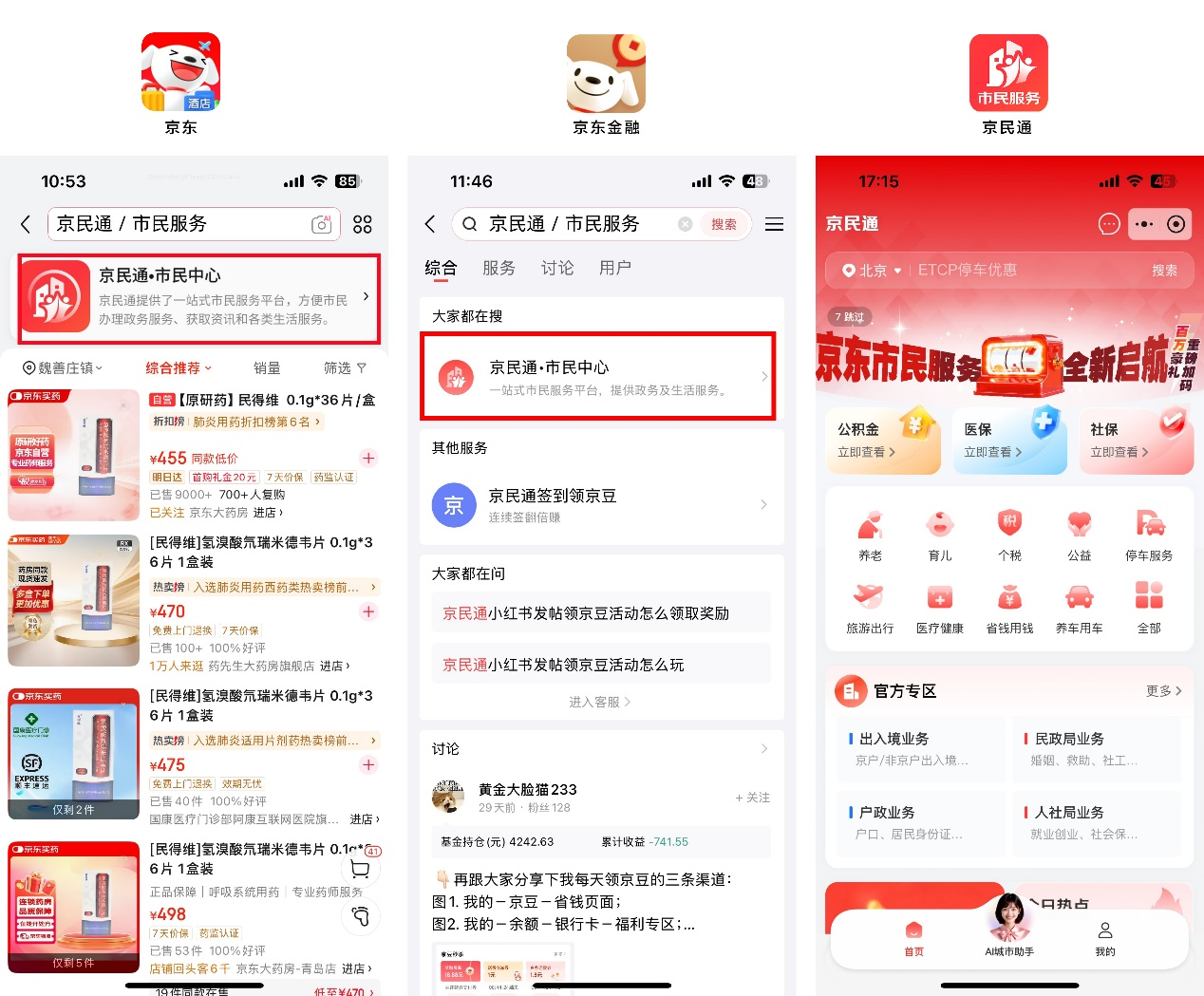
即日起,用户只需打开京东App或京东金融App,在首页搜索“京民通”或“市民服务”即可一键进入,轻松办理公积金查询、医保报销、社保缴纳、个税申报、育儿补贴申领、养老资格认证等高频政务事项。同时,平台还聚合了生活缴费、快递寄收、定点药店查询、旅游出行、求职就业等多元便民服务,真正实现“办事不出门、服务在指尖”。

这一服务能力背后,是京东“京民通”市民服务深度对接各地政务系统,推动政务服务与数字生活深度融合。例如在广州,“穗好办”官方服务已入驻市民服务,通过专属市民服务智能体,实现社保缴费明细、医保参保状态查询、生育津贴支付、出入境预约等全流程智能化服务。
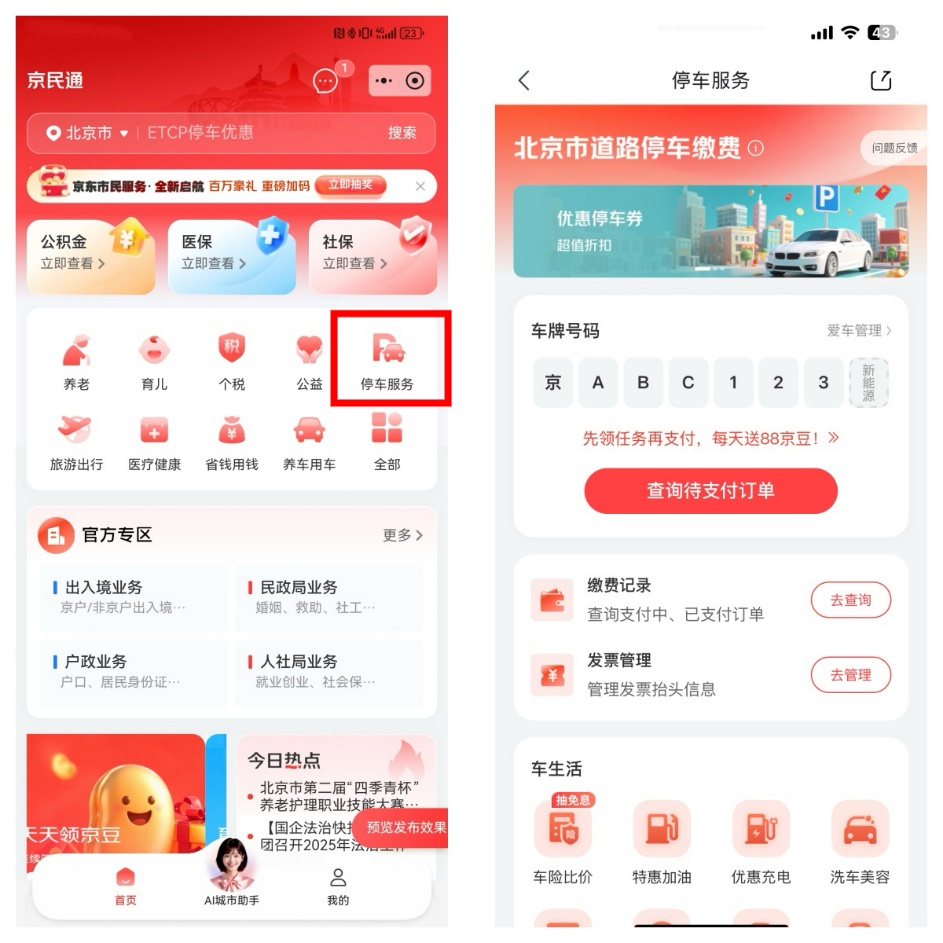
值得一提的是,部分城市还推出了极具本地特色的便民功能。在北京,市民可通过京东App市民服务直接使用“北京市道路停车缴费”功能——登录京东App,搜索“京民通”,进入小程序后点击“停车服务”,即可完成路边停车费用的在线缴纳,进一步拓展城市智慧出行场景。

为进一步提升用户体验,京东App上线的市民服务创新引入AI智能助手“AI助手小彤”,通过AI驱动服务升级,显著提升办事效率、降低操作门槛。该AI智能助手基于京东全自研的JoyAI大模型,具备强大的自然语言理解与生成能力,能够以拟人化、场景化的方式精准解答用户各类疑问,并根据用户需求智能推荐匹配的服务路径。

“AI助手小彤”还全面支持多模态交互:

· 拍照识别:用户可对纸质材料、证件、票据、食品包装等进行拍照,系统自动完成文字提取,并结构化呈现关键信息;
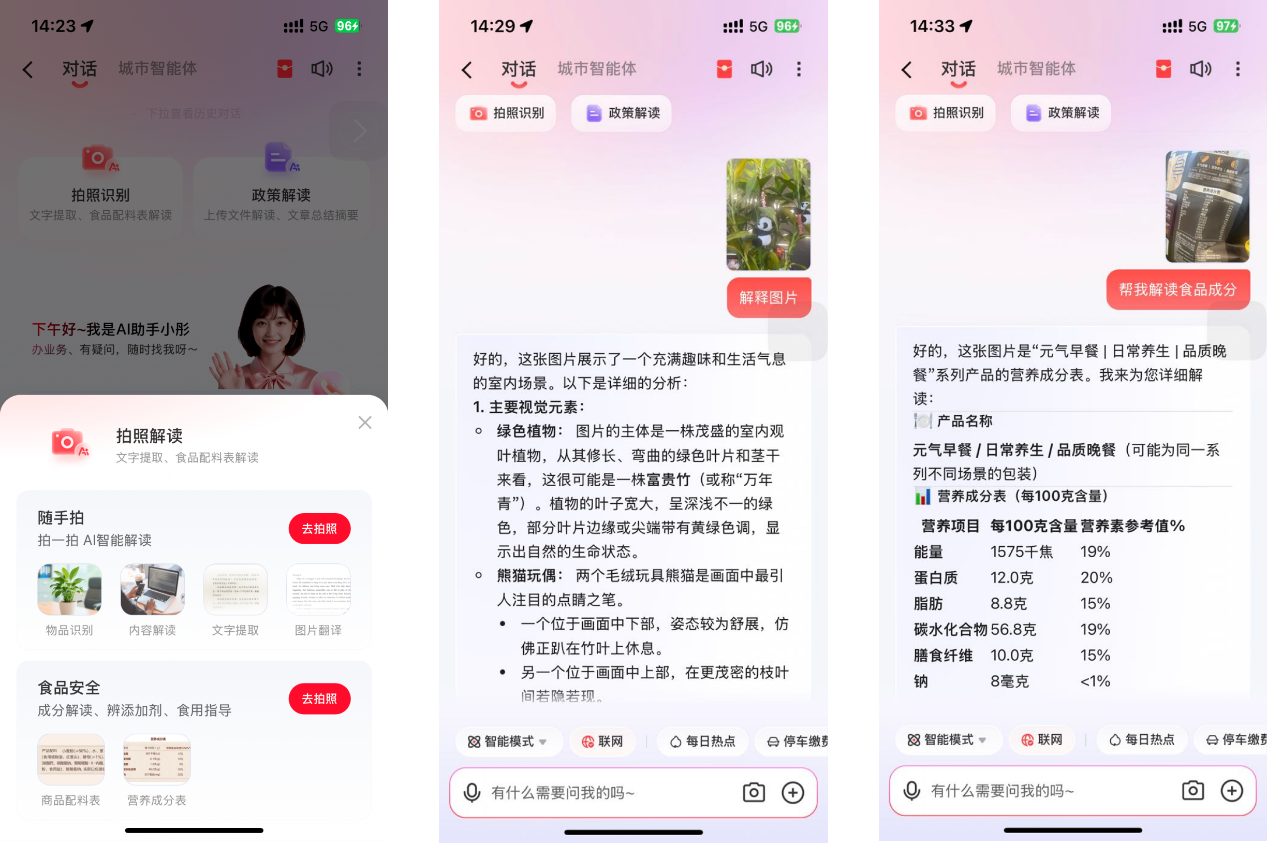
· 政策解读:用户上传政府公告、办事指南等图片或文档,“AI助手小彤”可一键生成通俗易懂的政策解读、要点摘要和办理建议,大幅降低公众理解门槛。
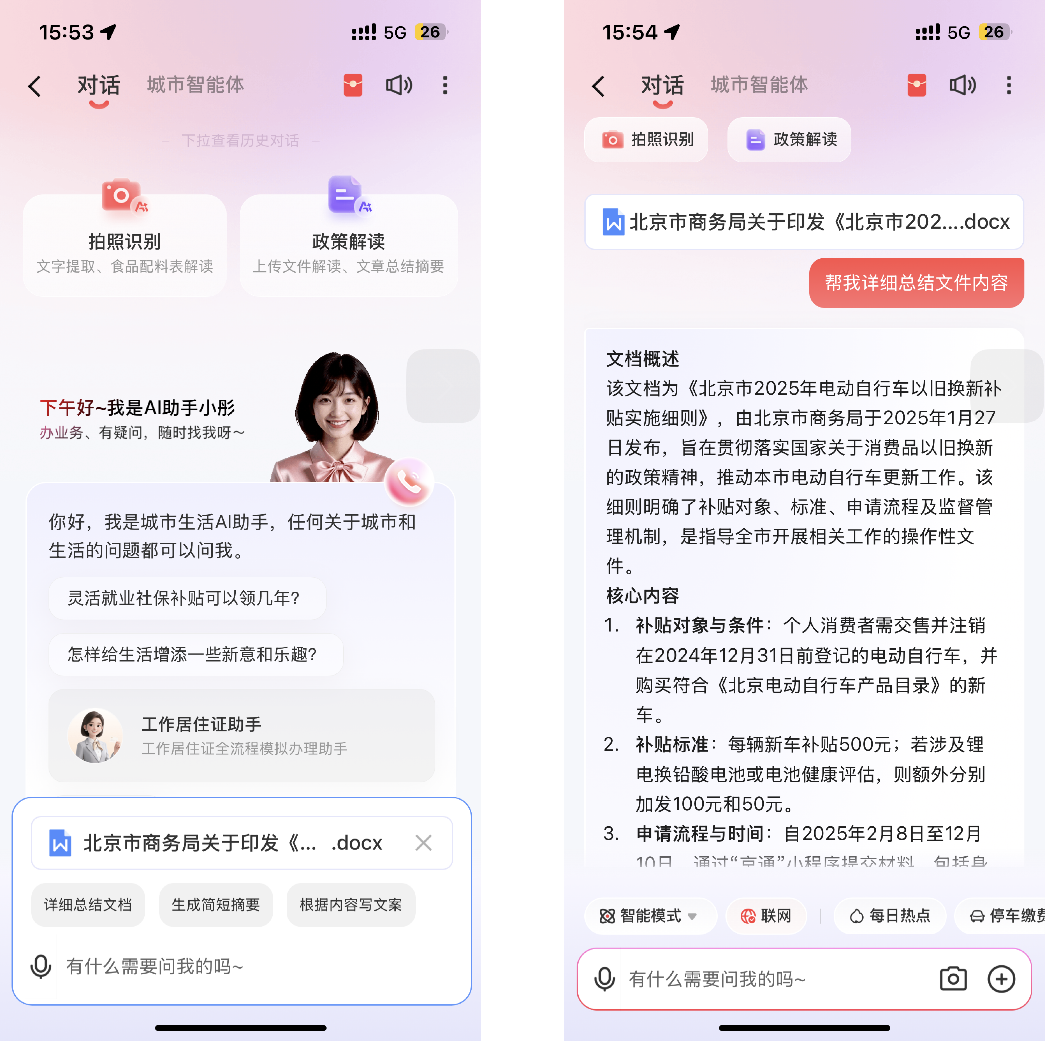
在此基础上,京东App上线的市民服务还构建了多元的城市智能体矩阵,包括万能博士、AI医生大为、数字社工小马、工作居住证助手、财富管家京小贝等。这些智能体协同工作,覆盖从政务服务、生活缴费、出行停车、健康管理到就业安居、财富规划等全场景民生需求,真正实现“问得清、找得准、办得快”。

未来,该市民服务还将持续拓展服务城市与覆盖领域,深入更多民生场景,以AI赋能公共服务,助力各地政府构建更加普惠、高效、智能的数字政务生态,让每一位市民都能享受到触手可及的美好生活服务。

注:文/龚作仁,文章来源:Laborer,本文为作者独立观点,不代表亿邦动力立场。

【版权提示】亿邦动力倡导尊重与保护知识产权。未经许可,任何人不得复制、转载、或以其他方式使用本网站的内容。如发现本站文章存在版权问题,烦请提供版权疑问、身份证明、版权证明、联系方式等发邮件至run@ebrun.com,我们将及时沟通与处理。

已点赞

+1

{{ praise_text }}

好文章,值得被更多人看到

FAQ回顾

京东App市民服务如何进入和使用?

用户打开京东App或京东金融App,在首页搜索“京民通”或“市民服务”即可进入,可办理公积金查询、医保报销、社保缴纳、个税申报等高频政务事项及生活缴费服务。

京东市民服务有哪些AI功能?

内置AI助手小彤,基于京东JoyAI大模型,支持拍照识别证件材料、政策文档解读,并能智能推荐服务路径,覆盖政务、健康、出行等民生场景。

京东市民服务目前覆盖哪些地区?

首批已覆盖广州、山西全省、江苏全省,北京支持道路停车缴费等特色功能,其他城市正陆续接入中。

广告

下一篇

跨境电商资源对接

《全球跨境电商服务商资源手册》第二期手册现已发布,触达更多资源,了解跨境服务商信息,欢迎点击链接下载。

了解详情

京东超市“疯狂动物城”关键词搜索量环比增长225% 周边IP商品成交额环比增长140%

迪士尼动画电影《疯狂动物城2》在国内热映,带动周边IP商品的销售爆发。数据显示,京东超市“疯狂动物城”关键词搜索量环比增长225%,商品成交额环比增长140%,销量环比增长230%。










