



• 亿邦公众号
    • APP下载

亚马逊第三方卖家销量占比已达62% 成为平台收入增长重要来源

作者:韩笑 文章来源:亿邦动力

2025-02-24 17:37

作者:韩笑 文章来源:亿邦动力

2025-02-24 17:37

邦小白快读

EN
全文速览

亚马逊第三方卖家增长显著,数据亮点丰富。

1. 2024年第四季度第三方卖家销量占比达62%,创历史新高,表明平台依赖度提升。

2. 2024年卖家服务收入1561亿美元,占公司总营收24.48%,接近四分之一,成为核心增长点。

3. 历史趋势显示持续上升:1999年开放入驻,2005年起份额增长,2013至2016年连续季度增长,从2005年约25%增至当前高位。

未来预测显示更大潜力。

1. 第三方卖家服务和广告收入总和将在三年内超过自营零售收入,暗示平台模式主导。

2. 广告收入高速增长:过去五年增5倍,十年增超50倍,2024年达562亿美元同比增长19.8%,提供营销机会。

实操中需注意风险。

1. 卖家经营成本上涨问题突出,费用占销售额比例攀升,影响实际盈利。

平台渠道和消费趋势提供品牌机会。

1. 第三方卖家销量占比62%表明平台流量集中,利于品牌营销和渠道建设,可借力提升曝光。

2. 广告收入增长数据(五年5倍、十年50倍)体现用户行为转向在线广告,指导品牌定价和竞争策略。

产品研发启示来自需求变化。

1. 平台从“万物商店”扩展品类,反映了消费趋势多样化,品牌可针对用户需求开发新品。

2. 卖家成本上涨问题间接影响品牌,需在定价中考虑平台费用风险。

平台增长带来明确机会。

1. 销量占比62%和收入1561亿美元显示市场扩展,提供增长空间。

2. 预测第三方服务收入三年内超越自营,强调商业模式机会,可学习平台趋势。

消费需求变化和风险需应对。

1. 广告收入高速增长暗示营销工具重要性,助力应对需求变化。

2. 经营成本上涨风险明显,费用比例攀升要求制定应对措施,如优化运营降本。

扶持与合作方式启示。

1. 亚马逊开放入驻历史展示合作模式,卖家可借平台招商政策寻求扶持。

亚马逊平台提供生产和商业机会。

1. 第三方卖家销量占比62%增长趋势,表明产品需求量大,工厂可瞄准卖家供应链。

2. 平台从自营转向服务模式,启示推进数字化电商,工厂可集成生产设计满足需求。

数字化启示和成本风险。

1. 广告收入爆发式增长反映电商营销机会,工厂需数字化支持卖家。

2. 卖家成本上涨问题可能压缩利润,工厂需开发高效生产方案降本。

行业发展趋势和客户痛点突出。

1. 第三方卖家占比62%和收入增长显示平台服务需求增,服务商可针对卖家提供解决方案。

2. 广告收入五年5倍增长体现新技术应用趋势,如数字营销工具开发。

痛点导向解决方案。

1. 卖家经营成本上涨作为主要痛点,服务商需开发降费工具或咨询方案。

2. 预测未来服务收入主导,启示服务商紧跟行业创新。

平台最新做法和招商成功。

1. 第三方卖家销量62%体现招商策略成效,1999年开放入驻扩展品类至“万物商店”。

2. 卖家服务收入1561亿美元占24.48%,证明运营管理模型有效,收入增长显著。

需求和问题需规避风险。

1. 商业对平台需求大,但卖家成本上涨问题突出,需政策调整规避卖家流失风险。

2. 广告收入增长展示平台营销功能,可加强招商吸引力。

产业新动向和商业模式演变。

1. 新动向:第三方卖家占比62%主导平台,商业模式从自营转向服务,收入结构变化显著。

2. 新问题:卖家成本持续上涨,费用比例攀升,引发政策法规监管需求。

启示和政策建议。

1. 历史趋势(1999年开放至当前增长)提供产业启示,如电商平台整合模式研究。

2. 预测服务收入超越自营,提示研究方向在新商业模式可持续性。

声明:快读内容全程由AI生成,请注意甄别信息。如您发现问题,请发送邮件至 run@ebrun.com 。

我是 品牌商 卖家 工厂 服务商 平台商 研究者 帮我再读一遍。

Quick Summary

Amazon's third-party seller ecosystem shows remarkable growth with key highlights.

1. Third-party sellers accounted for 62% of total unit sales in Q4 2024, a record high indicating increased platform reliance.

2. Seller services revenue reached $156.1 billion in 2024, comprising 24.48% of Amazon's total revenue—nearly a quarter—and solidifying its role as a core growth driver.

3. Historical trends reveal sustained expansion: since opening to third parties in 1999, their share grew steadily from around 25% in 2005 to current peaks, with consistent quarterly gains between 2013 and 2016.

Future projections suggest even greater potential.

1. Combined revenue from seller services and advertising is expected to surpass Amazon's first-party retail sales within three years, signaling a shift toward a platform-dominated model.

2. Advertising revenue surged 5x over five years and over 50x in a decade, hitting $56.2 billion in 2024 (up 19.8% YoY), highlighting marketing opportunities for sellers.

Operational risks require attention.

1. Rising operating costs for sellers are a pressing issue, with fees consuming a growing share of sales and squeezing profitability.

Platform dynamics and consumer trends present strategic opportunities for brands.

1. Third-party sellers' 62% sales share reflects concentrated traffic, enabling brands to leverage the platform for visibility and channel expansion.

2. Advertising revenue growth (5x in five years, 50x in a decade) signals shifting user behavior toward digital ads, informing brand pricing and competitive strategies.

Product development insights emerge from demand shifts.

1. Amazon's evolution into an "everything store" with expanded categories mirrors diversified consumer trends, guiding brands to innovate based on user needs.

2. Rising seller costs indirectly impact brands, necessitating pricing strategies that account for platform fee risks.

Platform growth offers clear opportunities for sellers.

1. The 62% sales share and $156.1 billion seller revenue reflect market expansion, creating room for growth.

2. Projections that third-party service revenue will exceed first-party sales within three years underscore the viability of this business model.

Adapting to demand shifts and risks is critical.

1. Rapid advertising growth emphasizes the importance of marketing tools to navigate changing consumer behavior.

2. Soaring operating costs require mitigation strategies, such as operational optimizations to reduce expenses.

Support and collaboration pathways are evident.

1. Amazon's history of welcoming third parties since 1999 illustrates partnership models, suggesting sellers can leverage platform policies for support.

Amazon's platform unlocks production and commercial opportunities for manufacturers.

1. Third-party sellers' 62% sales share signals strong product demand, positioning factories to supply these sellers.

2. Amazon's pivot from first-party retail to service-oriented models highlights the need for factories to embrace e-commerce integration and design-led production.

Digitalization insights and cost risks are key considerations.

1. Explosive advertising growth reflects e-commerce marketing potential, urging factories to provide digital support to sellers.

2. Rising seller costs may compress margins, necessitating efficient production solutions to reduce expenses.

Industry trends and client pain points highlight service opportunities.

1. Third-party sellers' 62% sales share and revenue growth indicate rising demand for platform-related services, creating avenues for tailored solutions.

2. Advertising revenue's 5x growth over five years points to tech adoption trends, such as digital marketing tool development.

Pain point-driven solutions are essential.

1. Escalating seller operating costs represent a primary challenge, urging service providers to develop fee-reduction tools or consulting services.

2. Projections of service revenue dominance emphasize the need for providers to align with industry innovations.

Platform strategies and merchant recruitment successes are evident.

1. Third-party sellers' 62% sales share demonstrates effective recruitment since 1999, with category expansion fueling the "everything store" vision.

2. Seller service revenue of $156.1 billion (24.48% of total) validates the operational model and underscores revenue growth.

Addressing demand and risks is crucial for sustainability.

1. High merchant demand coexists with rising costs, necessitating policy adjustments to prevent seller attrition.

2. Advertising revenue growth enhances the platform's appeal, strengthening recruitment incentives.

Industry shifts and business model evolution offer research avenues.

1. New trends: Third-party sellers' 62% dominance marks a transition from first-party retail to service-oriented models, reshaping revenue structures.

2. Emerging issues: Persistent seller cost inflation and fee ratios highlight regulatory and policy scrutiny needs.

Implications and policy recommendations arise from historical patterns.

1. Long-term trends (from 1999's platform opening to current growth) provide insights into e-commerce integration models.

2. Projections of service revenue overtaking retail sales suggest research directions on sustainable business models.

Disclaimer: The "Quick Summary" content is entirely generated by AI. Please exercise discretion when interpreting the information. For issues or corrections, please email run@ebrun.com .

I am a Brand Seller Factory Service Provider Marketplace Seller Researcher Read it again.

【亿邦原创】据Marketplace Pulse最新调研数据,2024年第四季度,亚马逊平台第三方卖家贡献了平台62%的商品销量,创下历史新高。同时,亚马逊最新财报显示,2024年卖家服务收入达到1561亿美元,占公司总营收的24.48%,首次接近四分之一。
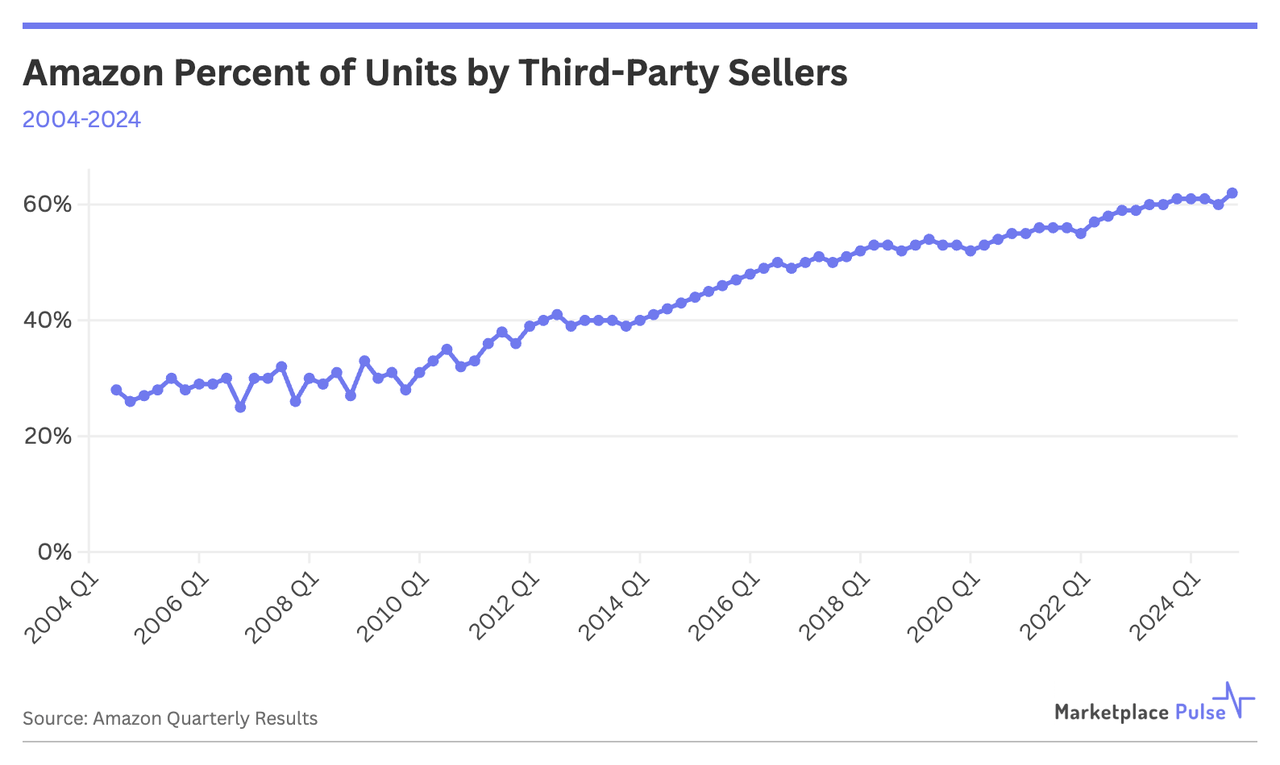
亚马逊第三方平台业务的占比新高来自于过去多年来的积累:1999年,亚马逊首次开放第三方卖家入驻,通过不断扩展商品品类打造“万物商店”;从2005年起,亚马逊第三方卖家销售份额整体呈上升趋势;2013至2016年间,第三方卖家的销售份额连续11个季度持续增长1个百分点;如今,第三方卖家销量份额已从2005年约四分之一的份额增长到接近总量的三分之二。

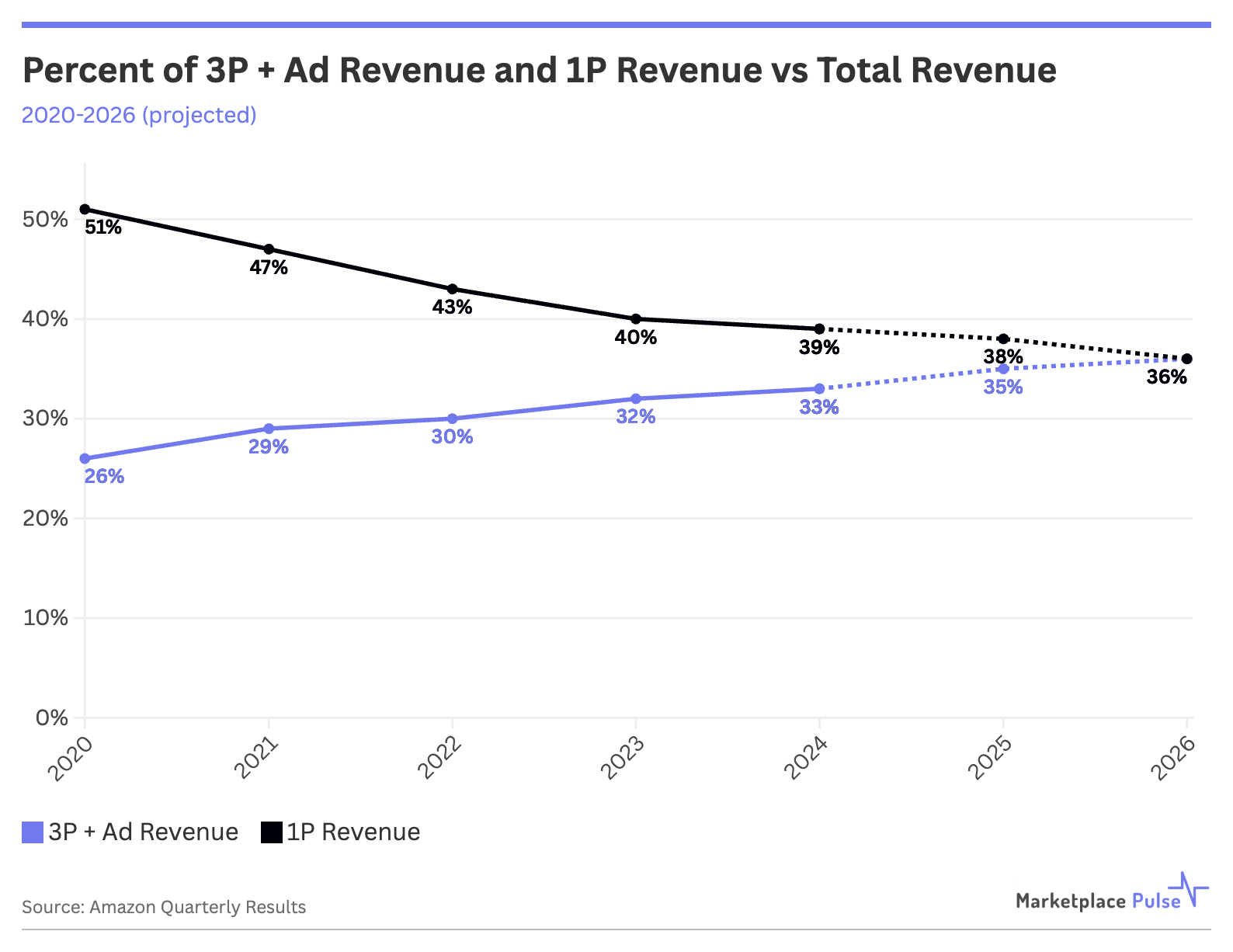
据Marketplace Pulse预测,按照目前的发展趋势,亚马逊第三方卖家服务的收入和广告收入的总和将在三年内超过自营零售业务的收入占比。

第三方卖家服务费已成为亚马逊重要的收入增长点。同时,亚马逊的广告收入也在逐年上涨:过去五年,亚马逊广告业务增长了5倍,十年间更是增长超50倍,2024年的广告收入已经达到562亿美元,同比增长19.8%。

但另一方面,亚马逊卖家也面临着经营成本不断上涨的问题,比如,很多卖家表示,每年支付给亚马逊的费用占销售额的比例都在攀升。

【版权提示】亿邦动力倡导尊重与保护知识产权。未经许可,任何人不得复制、转载、或以其他方式使用本网站的内容。如发现本站文章存在版权问题,烦请提供版权疑问、身份证明、版权证明、联系方式等发邮件至run@ebrun.com,我们将及时沟通与处理。

已点赞

+1

{{ praise_text }}

好文章,值得被更多人看到

FAQ回顾

亚马逊第三方卖家销量占比是多少?

2024年第四季度,亚马逊第三方卖家贡献了平台62%的商品销量,创下历史新高,相比2005年约25%的份额大幅提升。

亚马逊卖家服务收入达到多少?

2024年亚马逊卖家服务收入达到1561亿美元,占公司总营收的24.48%,首次接近四分之一,成为重要收入增长点。

亚马逊第三方卖家面临哪些经营挑战?

亚马逊卖家面临经营成本不断上涨问题,很多卖家表示每年支付给亚马逊的费用占销售额的比例持续攀升。

广告

下一篇

跨境电商资源对接

《全球跨境电商服务商资源手册》第二期手册现已发布,触达更多资源,了解跨境服务商信息,欢迎点击链接下载。

了解详情

关于微信接入DeepSeek 我们帮你研究了两大隐秘商机

要知道,中国对于AI的热情可是全世界第一。任何有关AI的消息放出来,咱们都是最兴奋的,反倒是欧美人非常淡定。

未来零售 AI技术 AI 智能商业

2025-02-24 17:35:11










