• 亿邦公众号
    • APP下载

营业利润暴跌73.1%!资生堂发布2024年业绩数据

作者:张从容 文章来源:亿邦动力

2025-02-13 17:03

作者:张从容 文章来源:亿邦动力

2025-02-13 17:03

邦小白快读

EN
全文速览

资生堂2024年业绩显示利润大幅下滑,但部分区域销售额微增。

1.营业利润暴跌73.1%至75.75亿日元,核心营业利润下降8.7%至363.59亿日元,净亏损108.13亿日元,为近五年最低水平。

2.净销售额同比增长1.8%至9905.86亿日元,日本、中国、亚太、美洲、EMEA五大地区销售额均增长,其中EMEA增长最快达13.4%,中国首次微增0.8%结束三年倒退。

3.旅游零售和其他业务销售额分别下跌18.6%和31.5%,需关注潜在风险。

品牌可借鉴中国市场的复苏和利润增长趋势。

1.品牌营销启示:中国地区核心营业利润连续三年同比增长,2024年增长76.1%,显示营销策略可能有效,可优化本地化推广。

2.消费趋势观察:中国销售额首次微增结束三年倒退,表明消费者行为可能改善;日本增长9.2%强劲,EMEA增长13.4%突出,反映不同区域消费偏好差异。

3.品牌渠道和定价:中国与日本销售额差距扩大至338.24亿日元,提示渠道建设需强化;旅游零售下跌18.6%可能影响定价策略,需调整分销网络。

卖家可把握增长市场机会并警惕风险。

1.增长市场和机会提示:EMEA地区销售额增长13.4%最高,亚太增长6.5%,提供新兴市场潜力;中国首次微增0.8%结束三年倒退,核心营业利润增长76.1%,可作为可学习点。

2.风险提示:营业利润暴跌73.1%,旅游零售下跌18.6%和其他业务下跌31.5%,显示高波动性风险;整体利润为近年最低,需制定应对措施。

3.消费需求变化:中国连续倒退后微增,表明需求可能回暖,卖家可探索合作方式如区域分销。

工厂可关注生产需求基于区域销售表现。

1.产品生产需求:日本销售额增长9.2%强劲,EMEA增长13.4%突出,可能增加产品订单需求;中国首次微增0.8%结束三年倒退,核心营业利润增长76.1%,提示生产优化机会。

2.商业机会:旅游零售下跌18.6%可能转向其他渠道,工厂可探索电商启示;地区差异如中国利润增长,可推动设计需求调整。

3.推进数字化启示:整体利润下滑,尤其营业利润暴跌73.1%,可能加速效率提升需求,如数字化生产流程。

行业趋势显示利润下滑和区域差异,服务商可解决客户痛点。

1.行业发展趋势:整体营业利润暴跌73.1%为近五年最低,核心营业利润下降8.7%,反映行业下行趋势;中国地区利润增长76.1%突出,显示复苏动向。

2.客户痛点:利润大幅下滑和旅游零售下跌18.6%构成主要痛点,服务商需提供解决方案如成本优化服务。

3.新技术应用:区域销售差异如EMEA增长13.4%与中国微增0.8%,可能推动数据分析技术需求,以识别市场机会。

平台需关注商业需求增长和风险规避。

1.商业对平台需求:日本销售额增长9.2%和EMEA增长13.4%强劲,平台可加强招商吸引品牌;中国首次微增0.8%结束三年倒退,核心营业利润增长76.1%,提示平台运营支持需求。

2.平台最新做法和风险规避:营业利润暴跌73.1%和旅游零售下跌18.6%为高风险点,平台需优化运营管理如风控机制;整体利润下滑,可调整招商策略。

3.风向规避:中国与日本销售额差距扩大至338.24亿日元,平台可监控区域动态以规避市场波动。

产业新动向包括中国复苏和利润问题,研究者可分析商业模式启示。

1.产业新动向:中国地区销售额首次微增0.8%结束三年倒退,核心营业利润增长76.1%,显示市场复苏;营业利润暴跌73.1%为近五年最低,揭示新问题。

2.政策法规启示:整体利润下滑和旅游零售下跌18.6%,可能推动政策建议如行业扶持;地区差异如EMEA增长13.4%突出,可研究区域政策影响。

3.商业模式分析:中国与日本销售额差距扩大,提示商业模式调整;核心营业利润连续下降,可探讨创新模式如数字化整合。

声明:快读内容全程由AI生成,请注意甄别信息。如您发现问题,请发送邮件至 run@ebrun.com 。

我是 品牌商 卖家 工厂 服务商 平台商 研究者 帮我再读一遍。

Quick Summary

Shiseido's 2024 results show a significant profit decline, though some regions saw slight sales growth.

1. Operating profit plunged 73.1% to ¥7.575 billion, core operating profit fell 8.7% to ¥36.359 billion, and the company reported a net loss of ¥10.813 billion, marking its weakest performance in nearly five years.

2. Net sales increased 1.8% year-on-year to ¥990.586 billion. Sales grew across all five major regions—Japan, China, Asia Pacific, Americas, and EMEA—with EMEA posting the fastest growth at 13.4%. China saw a slight 0.8% increase, ending a three-year decline.

3. Travel retail and other business segments dropped 18.6% and 31.5% respectively, highlighting potential risks that require attention.

Brands can draw insights from the recovery and profit growth trends in the Chinese market.

1. Marketing Insights: China's core operating profit has grown year-on-year for three consecutive years, surging 76.1% in 2024, indicating effective marketing strategies and opportunities for optimizing localized promotions.

2. Consumer Trends: China's sales saw a slight 0.8% increase, ending a three-year decline, suggesting improving consumer behavior. Japan's strong 9.2% growth and EMEA's standout 13.4% increase reflect varying regional preferences.

3. Channel & Pricing Strategy: The sales gap between China and Japan widened to ¥33.824 billion, signaling a need for stronger channel development. The 18.6% drop in travel retail may impact pricing strategies, requiring adjustments to distribution networks.

Sellers can capitalize on growth market opportunities while remaining cautious of risks.

1. Growth Markets & Opportunities: EMEA led with 13.4% sales growth, followed by Asia Pacific's 6.5% increase, highlighting emerging market potential. China's 0.8% growth after three years of decline, coupled with a 76.1% rise in core operating profit, offers valuable lessons.

2. Risk Warnings: A 73.1% plunge in operating profit, along with an 18.6% drop in travel retail and a 31.5% decline in other businesses, indicates high volatility. With overall profits at a multi-year low, contingency plans are essential.

3. Shifting Demand: China's slight growth after consecutive declines suggests a potential demand recovery, presenting opportunities for sellers to explore partnerships such as regional distribution.

Factories should align production with regional sales performance.

1. Production Demand: Strong sales growth in Japan (9.2%) and EMEA (13.4%) may increase product orders. China's 0.8% growth after a three-year decline and a 76.1% surge in core operating profit signal opportunities for production optimization.

2. Business Opportunities: The 18.6% decline in travel retail may shift demand to other channels, prompting factories to explore e-commerce adaptations. Regional variations, such as China's profit growth, could drive design adjustments.

3. Digitalization Push: The overall profit decline, particularly the 73.1% drop in operating profit, may accelerate efficiency improvements, such as adopting digital production processes.

Industry trends point to profit declines and regional disparities, creating opportunities for service providers to address client pain points.

1. Industry Trends: Operating profit fell 73.1% to a five-year low, while core operating profit dropped 8.7%, reflecting a sector-wide downturn. China's 76.1% profit growth stands out, indicating a recovery trend.

2. Client Pain Points: Sharp profit declines and an 18.6% drop in travel retail are major concerns, requiring solutions like cost optimization services.

3. Technology Applications: Regional sales disparities—such as EMEA's 13.4% growth versus China's 0.8% increase—may drive demand for data analytics to identify market opportunities.

Platforms should focus on commercial demand growth and risk mitigation.

1. Commercial Demand: Strong sales growth in Japan (9.2%) and EMEA (13.4%) presents opportunities for platforms to attract brands. China's 0.8% growth after a three-year decline and a 76.1% rise in core operating profit highlight the need for platform operational support.

2. Platform Strategies & Risk Mitigation: The 73.1% operating profit plunge and 18.6% travel retail decline are high-risk areas, requiring optimized operations such as risk control mechanisms. Overall profit declines may necessitate adjustments in merchant recruitment strategies.

3. Market Volatility Management: The widening sales gap between China and Japan (¥33.824 billion) underscores the need for platforms to monitor regional dynamics to mitigate market fluctuations.

Industry developments include China's recovery and profit challenges, offering insights for business model analysis.

1. Industry Trends: China's sales grew 0.8%, ending a three-year decline, while core operating profit surged 76.1%, signaling market recovery. The 73.1% operating profit plunge—the lowest in five years—reveals underlying issues.

2. Policy Implications: Overall profit declines and an 18.6% drop in travel retail may prompt policy recommendations, such as industry support. Regional disparities, like EMEA's 13.4% growth, warrant study on policy impacts.

3. Business Model Analysis: The widening sales gap between China and Japan suggests a need for business model adjustments. The consecutive decline in core operating profit calls for exploring innovations like digital integration.

Disclaimer: The "Quick Summary" content is entirely generated by AI. Please exercise discretion when interpreting the information. For issues or corrections, please email run@ebrun.com .

I am a Brand Seller Factory Service Provider Marketplace Seller Researcher Read it again.

【亿邦原创】日前,资生堂发布2024年业绩数据。财报数据显示,资生堂集团2024年净销售额为9905.86亿日元,同比增长1.8%;核心营业利润为363.59亿日元,同比下降8.7%;营业利润为75.75亿日元,同比下降73.1%;归属于母公司所有者的利润为-108.13亿日元。

整体来看,2024年,资生堂集团的营业利润迎来近五年来(2020年到2024年)的最低,核心营业利润、税前利润、综合收益总额、归属于母公司所有者的利润,为近4年来(2021年到2024年)的最低。

从地区来看,资生堂集团在日本、中国、亚太、美洲、EMEA五大地区的2024年销售额均有所增长,分别同比增长9.2%、0.8%、6.5%、7.5%、13.4%;旅游零售和其他业务销售额,分别同比下跌18.6%和31.5%。
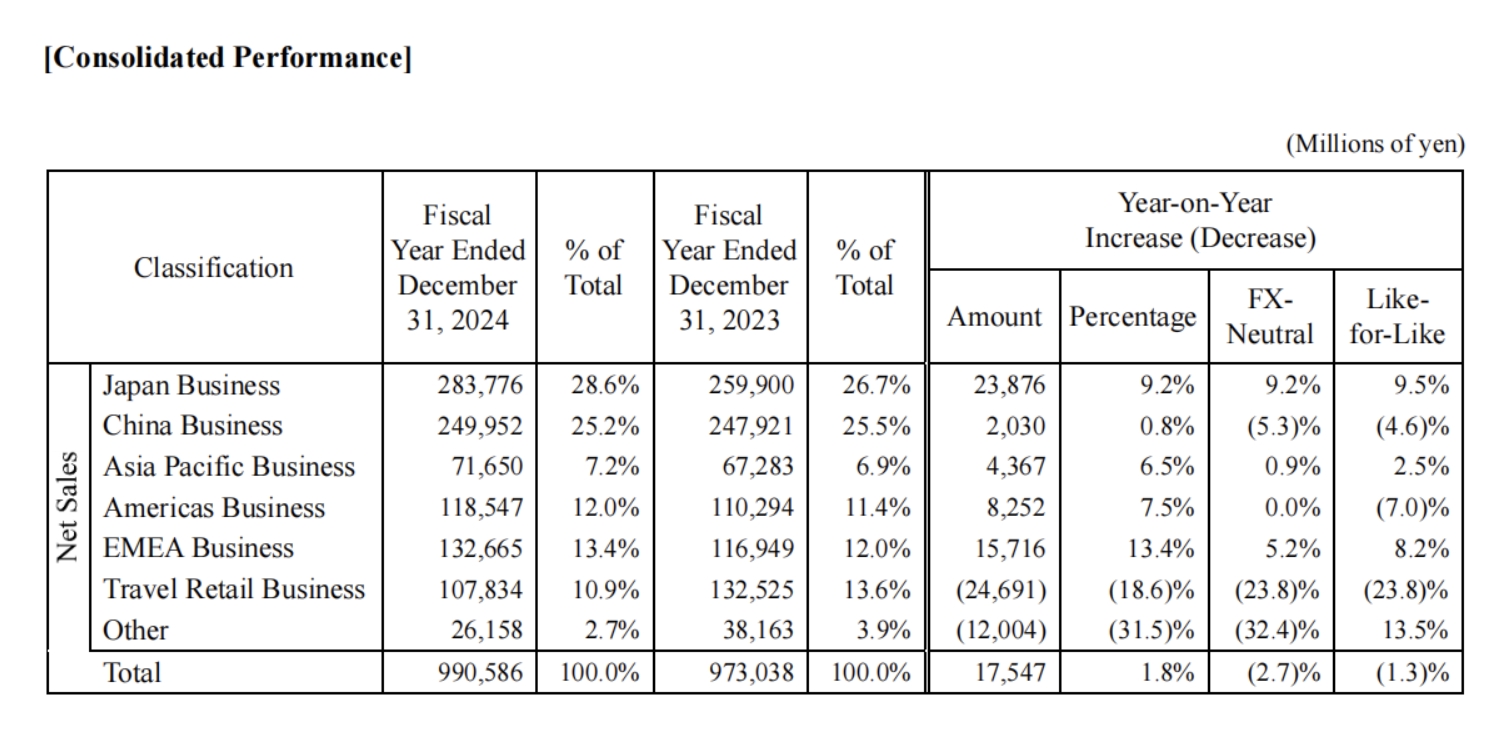
值得注意的是,资生堂集团在中国地区销售额增长在五大地区中增长最缓慢。然而,这已经是资生堂集团在中国地区连续三年(2021年到2023年)倒退后的首次微增。同时,资生堂集团在中国地区的核心营业利润连续三年同比增长,2024年同比增长76.1%。

同时,作为资生堂集团的第二大市场,中国地区的销售额和第一大市场日本地区的销售额的差距,由2023年的119.79亿日元增至2024年的338.24亿日元。

亿邦持续追踪报道该情报,如想了解更多与本文相关信息,请扫码关注作者微信。

【版权提示】亿邦动力倡导尊重与保护知识产权。未经许可,任何人不得复制、转载、或以其他方式使用本网站的内容。如发现本站文章存在版权问题,烦请提供版权疑问、身份证明、版权证明、联系方式等发邮件至run@ebrun.com,我们将及时沟通与处理。

已点赞

+1

{{ praise_text }}

好文章,值得被更多人看到

FAQ回顾

资生堂2024年营业利润是多少?

资生堂集团2024年营业利润为75.75亿日元,同比下降73.1%,创下2020年以来的最低水平。

资生堂在中国市场的业绩表现如何?

资生堂中国区2024年销售额同比增长0.8%,为连续三年下滑后的首次增长;核心营业利润同比增长76.1%,已连续三年增长。

资生堂2024年各地区销售额增长情况如何?

日本、中国、亚太、美洲、EMEA五大地区销售额分别增长9.2%、0.8%、6.5%、7.5%、13.4%,但旅游零售业务下跌18.6%。

广告

下一篇

征集报名《品牌数字化服务商资源手册》

《品牌数字化服务商资源手册》展示数字化服务商风采,亿邦全年零售大会通发,触达更多资源,马上加入!

马上入驻

TCL焕新背后:一个AI破局的制造业创新样本

通过对工业过程的动态建模和优化、多系统智能协同以及构建AI能力平台,TCL用Al重构了工业软件、智能装备和制造等多个业务闭环,实现Al技术的共享和复用。