



• 亿邦公众号
    • APP下载

工业品赴美上市第一股:震坤行拟募资2亿美元

作者:张睿 文章来源:亿邦动力

2023-03-08 19:32

作者:张睿 文章来源:亿邦动力

2023-03-08 19:32

邦小白快读

EN
全文速览

本文核心披露了国内头部一站式MRO采购服务平台震坤行赴美上市的核心关键信息,主要干货如下

1. 震坤行基本信息:2014年成立于上海,是国内MRO行业累计融资额最高的企业,本次拟募资2亿美元,计划在纽交所上市,由高盛和华兴担任承销商。

2. 行业发展情况:国内MRO采购市场规模随企业数字化转型快速增长,从2016年的2万多亿增长到2022年超3万亿,预计2027年将接近4万亿,年复合增长率5.8%,赛道增长空间充足。

3. 核心运营数据:2022年震坤行净收入83.15亿元,调整后净亏损6.26亿元,拥有1730万个SKU、5.8万家客户,库存周转稳定在33.4天到38.4天,目前采用双平台分层运营模式。

本文为MRO品类相关品牌商提供了行业趋势、渠道合作等多方面干货,具体如下

1. 消费趋势端:随着国内企业数字化转型推进,一站式MRO采购需求快速增长,市场规模持续扩大,不仅大型企业有稳定需求,广大小微企业的分散采购需求也未被充分满足,存在大量市场机会。

2. 渠道合作机会:震坤行已经搭建了自营+开放平台的双渠道模式,开放平台入驻供应商已经超过2400家,GMV占比逐年提升,2022年已经达到15.4%,品牌商可以入驻拓展客户。同时震坤行正在提升原厂直采比例,减少分销商环节,给原厂品牌带来了更多合作空间。

3. 用户特征:当前MRO核心需求集中在机械电子、能源、资源、汽车等行业,大客户留存率极高,GMV排名前500的客户中91%在三年后仍保持合作,深耕大客户价值空间巨大。

本文为MRO领域的卖家提供了赛道机会、运营经验以及风险提示等干货,具体内容如下

1. 赛道机会:中国MRO采购市场规模已经突破3万亿元,未来5年复合增长率达到5.8%,大中小微不同层级客户都存在未被满足的一站式采购需求,赛道增长空间充足,新卖家仍有切入机会。

2. 可借鉴的运营经验:可以参考震坤行的分层运营模式,打造双平台分别覆盖大型企业和小微企业,采用自营+开放平台结合的模式,开放平台毛利率可达100%,是重要的盈利增长方向;同时针对小微企业采用现金结算,可以有效改善平台现金流,降低坏账风险。

3. 风险提示:当前MRO行业头部企业仍处于亏损阶段,前期需要大量投入供应链建设和数字化研发,卖家需要提前做好成本控制,震坤行从大客户切入再下沉中小微的路径,可以降低初期市场拓展风险,值得参考。

本文为MRO上游生产工厂提供了市场需求、商业机会以及数字化转型相关干货,具体如下

1. 产品需求端:当前MRO市场覆盖备件、化学品、制造零件、通用耗材等多品类,一站式采购平台对SKU的丰富度要求极高,头部平台已经拥有超1730万个SKU,不同品类的工厂都有对接大平台的合作机会。

2. 商业机会:当前头部MRO平台正在优化供应链,提升从原厂直接采购的比例,减少分销商中间环节,一方面可以降低平台采购成本,另一方面也给工厂带来了直接对接大B端渠道的机会,工厂还可以入驻震坤行开放平台,享受平台提供的履约、售后等配套服务,降低自身运营成本。

3. 数字化启示:MRO采购数字化已经成为行业趋势,工厂自身的MRO采购也可以通过对接数字化平台降低采购成本、提升周转效率,震坤行的数字化库存管理模式,也值得生产工厂借鉴,优化自身的库存周转水平。

本文为MRO行业相关服务商提供了行业发展趋势、客户痛点以及市场机会等干货,具体内容如下

1. 行业发展趋势:随着国内企业数字化转型推进,MRO采购的平台化、数字化转型加速,头部企业已经完成多轮融资,头部玩家震坤行即将成为国内工业品赴美上市第一股,上市后会带动整个行业的资本化发展,行业整体扩容会带来大量第三方服务需求。

2. 行业核心痛点:MRO行业本身SKU繁多,供应链管理、履约配送的复杂度高,不同规模客户需求差异大,小微企业需求分散存在账期风险,大客户需要定制化的数字化采购解决方案,这些痛点都需要专业服务商提供解决方案。

3. 市场机会:物流仓储、数字化SaaS、资本服务等领域都存在机会,震坤行目前大量采用第三方物流,也对外开放仓储租赁服务,同时行业内玩家都有融资、上市、咨询等需求,行业发展会给服务商带来大量业务增量。

本文为工业品类B2B采购平台提供了震坤行的运营经验、行业需求等干货,具体内容如下

1. 客户拓展策略可借鉴:震坤行采用从大型跨国企业切入的路径,这类客户更熟悉一站式MRO采购模式,更容易打开市场,做大客户做出口碑、搭建好供应链能力后,再向下拓展中小微企业,有效降低了初期市场拓展的风险。

2. 运营模式值得参考:采用双品牌分层运营,分别用震坤行和工邦邦覆盖大型企业和小微企业,满足不同层级客户的需求;同时采用自营+开放平台结合的模式,自营做规模,开放平台提毛利,开放平台客户仍可享受统一的履约售后,兼顾了规模和用户体验。

3. 供应链运营经验:通过数字化技术优化SKU管理、库存周转,库存周转长期稳定在33-38天,采用供应商直发加自有仓配结合的模式,超55%的GMV由供应商直发,有效降低了自身的库存成本和运营压力,值得同行平台参考。

本文为研究中国MRO电商产业的研究者提供了最新产业动向、头部企业一手数据以及商业模式资料,具体干货如下

1. 最新产业动向:中国MRO数字化采购赛道近年来快速发展,资本持续加码,头部企业震坤行即将成为国内工业品MRO赛道赴美上市第一股,上市事件会对整个行业起到示范效应,带动更多行业玩家进入资本市场,推动行业整体加速整合发展。

2. 代表性商业模式分析:震坤行的双平台双模式是当前国内MRO行业的代表性商业模式,双品牌分层覆盖大中小微全层级客户,自营+开放平台结合,既通过自营做大规模,又通过开放平台提升整体毛利率,针对小微企业的工邦邦采用现金结算,有效改善了平台整体现金流,模式设计值得深入研究。

3. 产业核心问题:当前头部MRO平台仍然处于亏损状态,虽然震坤行近年亏损持续收窄,但行业仍然处于跑马圈地阶段,需要持续投入供应链和数字化研发,可持续盈利模式仍待验证,这是当前产业需要研究解决的核心问题。

声明:快读内容全程由AI生成,请注意甄别信息。如您发现问题,请发送邮件至 run@ebrun.com 。

我是 品牌商 卖家 工厂 服务商 平台商 研究者 帮我再读一遍。

Quick Summary

This article discloses key details about the planned U.S. IPO of Zhenkunhang, China's leading one-stop MRO procurement service platform, with key takeaways below:

1. Company overview: Founded in Shanghai in 2014, Zhenkunhang is the most heavily funded company in China's MRO industry. It plans to list on the New York Stock Exchange, raise up to $200 million, and be underwritten by Goldman Sachs and China Renaissance.

2. Industry outlook: China's MRO procurement market has grown rapidly amid corporate digital transformation, expanding from more than 2 trillion yuan in 2016 to over 3 trillion yuan in 2022. It is projected to approach 4 trillion yuan by 2027, with a 5.8% compound annual growth rate, indicating substantial room for growth.

3. Key operating metrics: In 2022, Zhenkunhang posted net revenue of 8.315 billion yuan, with an adjusted net loss of 626 million yuan. It operates 17.3 million SKUs, serves 58,000 clients, maintains an inventory turnover between 33.4 and 38.4 days, and currently uses a two-platform tiered operating model.

This article shares insights on industry trends and channel cooperation opportunities for MRO brand owners, as outlined below:

1. Consumption trends: Driven by domestic corporate digital transformation, demand for one-stop MRO procurement is growing rapidly, and the overall market size continues to expand. While large enterprises maintain steady demand, the fragmented procurement needs of a large number of micro, small and medium-sized enterprises (MSMEs) remain largely unmet, leaving abundant market opportunities.

2. Channel cooperation opportunities: Zhenkunhang has built a dual-channel model combining self-operation and an open platform, which already hosts more than 2,400 third-party suppliers. The open platform's share of total GMV has grown year over year, reaching 15.4% in 2022, making it a viable channel for brands to expand their customer base. The platform is also increasing its direct sourcing from original manufacturers, cutting out distributor middlemen and creating more direct cooperation opportunities for brand owners.

3. User characteristics: Core MRO demand is concentrated in the machinery, electronics, energy, natural resources and automotive industries. Customer retention for large clients is extremely high: 91% of the top 500 clients by GMV remain active after three years, meaning there is huge value in deepening relationships with large clients.

This article provides insights into track opportunities, operational best practices and risk alerts for MRO sellers, detailed below:

1. Track opportunities: China's MRO procurement market has exceeded 3 trillion yuan in size and will maintain a 5.8% compound annual growth rate over the next five years. Unmet demand for one-stop procurement exists across all client segments from large enterprises to MSMEs, creating abundant room for growth and entry opportunities for new sellers.

2. Actionable operational insights: Sellers can reference Zhenkunhang's tiered operating model: a two-platform structure that separately serves large enterprises and MSMEs, combining self-operation with an open platform. The open platform can achieve 100% gross margin, making it a key driver of profit growth. In addition, requiring cash payments from MSME buyers significantly improves platform cash flow and reduces bad debt risk.

3. Risk alerts: Leading MRO companies are still unprofitable, as the industry requires massive upfront investment in supply chain development and digital R&D. Sellers should plan for cost control in advance. Zhenkunhong's go-to-market path—starting with large clients before expanding down to MSMEs—reduces early market expansion risk and is a worthwhile reference.

This article shares insights on market demand, business opportunities and digital transformation for upstream MRO manufacturing factories, detailed below:

1. Product demand: The MRO market covers a wide range of categories including spare parts, chemicals, manufacturing components and general consumables. One-stop platforms require extremely high SKU variety, with the leading platform already holding more than 17.3 million SKUs. Factories across all product categories have opportunities to partner with large platforms.

2. Business opportunities: Leading MRO platforms are currently optimizing their supply chains by increasing the share of direct sourcing from original manufacturers and cutting out distributor middlemen. This reduces the platforms' procurement costs while giving factories direct access to large B-end channels. Factories can also join Zhenkunhang's open platform to access built-in fulfillment and after-sales services, reducing their own operating costs.

3. Digital takeaways: Digitalized MRO procurement is an established industry trend. Factories can lower their own MRO procurement costs and improve inventory turnover by connecting to digital platforms. Zhenkunhang's data-driven inventory management model is also a useful reference for factories to optimize their own inventory turnover.

This article outlines industry trends, core pain points and market opportunities for MRO industry service providers, detailed below:

1. Industry growth trends: Driven by domestic corporate digital transformation, the platformization and digital upgrade of MRO procurement is accelerating. Leading industry players have completed multiple rounds of financing, and Zhenkunhang will become the first Chinese industrial goods company to list on a U.S. exchange. Its IPO will drive capitalization across the industry, and overall market expansion will create strong demand for third-party services.

2. Core industry pain points: The MRO industry inherently involves massive SKU variety, high complexity in supply chain management and fulfillment delivery, and widely varying demand across different client sizes. MSMEs have fragmented demand and credit risk, while large clients require customized digital procurement solutions. All of these pain points call for specialized solutions from professional service providers.

3. Market opportunities: Opportunities exist in logistics and warehousing, digital SaaS, capital services and other fields. Zhenkunhang relies heavily on third-party logistics and also opens up its warehousing space for external leasing. Meanwhile, industry players across the board have demand for financing, IPO advisory and consulting services, so industry growth will bring substantial business increments for service providers.

This article shares Zhenkunhang's operating experience and insights into industry demand for B2B industrial goods procurement platforms, detailed below:

1. Referential customer acquisition strategy: Zhenkunhang entered the market by targeting large multinational corporations, which are already familiar with the one-stop MRO procurement model and make initial market penetration easier. After building reputation with large clients and establishing solid supply chain capabilities, the company expanded downward to MSMEs, effectively reducing early-stage market expansion risk.

2. Referential operating model: The company uses two separate brands for tiered operations: Zhenkunhang serves large enterprise clients while Gongbangbang serves MSMEs, meeting the needs of all client segments. It also combines a self-operated model with an open platform: self-operation drives scale, while the open platform lifts overall gross margin, and open platform clients still receive unified fulfillment and after-sales service, balancing scale with user experience.

3. Supply chain operating insights: Zhenkunhang uses digital technology to optimize SKU management and inventory turnover, maintaining a stable inventory turnover of 33 to 38 days. It combines direct shipment from suppliers with in-house warehousing and fulfillment, with over 55% of GMV fulfilled via direct supplier shipment, effectively reducing the platform's own inventory costs and operating pressure. This model is a strong reference for peer platforms.

This article provides the latest industry updates, first-party data on leading players and business model materials for researchers studying China's MRO e-commerce industry, detailed below:

1. Latest industry developments: China's digital MRO procurement track has grown rapidly in recent years, with sustained capital inflow. Leading player Zhenkunhang is set to become the first Chinese MRO company to list in the U.S., which will set an industry-wide precedent, encourage more players to tap capital markets and accelerate overall industry consolidation.

2. Analysis of a representative business model: Zhenkunhang's dual-platform, dual-model structure is a representative business model for China's MRO industry. Its two separate brands tier to cover all client segments from large enterprises to MSMEs, combining self-operation and an open platform: self-operation builds scale, while the open platform lifts overall gross margin. Its MSME-focused brand Gongbangbang uses cash settlement to significantly improve the platform's overall cash flow, making the model's design worthy of in-depth study.

3. Core industry question: Leading MRO platforms are still unprofitable. While Zhenkunhang's loss has narrowed steadily in recent years, the industry is still in a land-grab phase that requires continuous investment in supply chain development and digital R&D. A sustainable profitability model has yet to be validated, and this is the core issue the industry needs to research and resolve.

Disclaimer: The "Quick Summary" content is entirely generated by AI. Please exercise discretion when interpreting the information. For issues or corrections, please email run@ebrun.com .

I am a Brand Seller Factory Service Provider Marketplace Seller Researcher Read it again.

中国MRO企业终于走向二级市场。

文丨张睿

【亿邦原创】工业用品采购服务平台震坤行于3月7日晚,向美国证券交易委员会(SEC)提交上市申请,计划在纽交所上市,股票代码为“ZKH”,高盛和华兴担任承销商。

震坤行招股书中尚未公布拟发行股份数及价格,但是其备案费计算表(Calculation of Filing Fee Table)显示,募资总额预计为2亿美元。

震坤行成立于2014年,总部位于上海,为能源、建筑、汽车等行业客户提供一站式MRO采购和履约解决方案。招股书显示,2022年震坤行净收入为83.15亿元人民币(12.06亿美元),调整后净亏损为6.261亿元人民币(9080万美元)。

MRO意为维护、维修和运营(Maintenance、Repair & Operations)所需物料,随着中国企业的数字化转型以及电商化采购的发展,一站式MRO采购需求快速增长,CIC灼识咨询报告显示,中国MRO采购服务的市场规模从2016年的20747亿元增长到2022年的30041亿元,预计到2027年将达到39766亿元,与2022年相比复合年增长率为5.8%。

中国MRO行业的代表性企业有震坤行、京东工业、鑫方盛、西域、工品一号等,过去五年,这些企业在一级市场获得多轮风险投资,其中震坤行累计融资金额超过60亿,居行业之首,其投资方包括中国国有企业结构调整基金、云锋基金、中投海外、钟鼎资本、腾讯、老虎基金、经纬中国等。

可以预见,震坤行上市对于中国MRO行业将起到示范和带头作用,其公开的招股书也使我们能够更详细地了解MRO企业的商业模式。

01

“震坤行”和“工邦邦”双平台

震坤行旗下包括两个MRO平台:面向大型企业的“震坤行”(ZKH)及面向小微企业的“工邦邦”(GBB)。

“震坤行”平台又包括两种收入模式:产品销售模式和市场模式。

产品销售模式:向供应商采购产品,管理库存,并向客户销售,亦可以理解为“自营”模式。2022年,来自震坤行平台产品销售收入为72.77亿元,在净收入中所占比例为87.5%。

市场模式:供应商通过震坤行平台向客户销售产品,并向震坤行支付销售佣金,亦可以理解为“平台”模式。市场模式于2019年6月推出,截至2022年12月31日,有2400多家供应商,累计售出约220万个SKU,GMV达到14.44亿元。

市场模式对GMV的贡献从2020年的6.1%增加到2021的10.7%,并在2022年进一步增加到15.4%。2022年市场模式收入为1.80亿元,在净收入中所占比例为0.6%。

招股书提到,市场模式下的客户仍然可以无缝地获得震坤行的履行服务和售后服务。

面向小微企业的“工邦邦”平台上线于2018年12月,目前为产品销售模式,2022年工邦邦平台收入为8.10亿元,在净收入中所占比例为8.7%。

值得一提的是,工邦邦满足了微型企业分散的MRO采购需求,对震坤行来说意味着以低运营资本要求的经济高效方式扩大了规模,而且由于工邦邦平台使用现金结算,不存在账期,对震坤行公司整体现金流有积极影响。
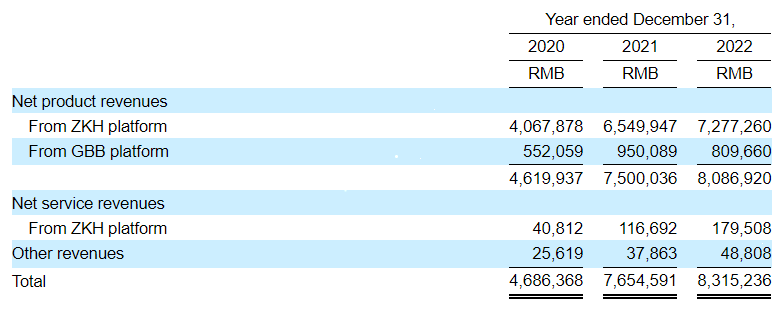
此外,其他收入主要包括提供经营租赁服务产生的收入,比如某些类型的机械和设备、测试和维修服务以及仓储和物流服务。

02

1730万SKU,5.8万家客户

截至2022年12月31日,震坤行产品覆盖了五大产品类别、32个产品线、约1730万个SKU,来源于21000多家供应商。

五类产品指,备件、化学品、制造零件、通用耗材和办公用品。震坤行有一个专门的产品团队进行市场研究和SKU选择。

震坤行的客户数量,从2020年的3万多家增加到2021的5.2多家,到2022年进一步增加到5.8万多家,包括4万多名ZKH客户和1.7万多名GBB客户。

2022年客均消费16.16万元(23429美元),为震坤行贡献GMV超过100万元以上的客户数量,2020年至2022年分别为630家、1100家、1200家。2020年GMV排名前500的客户,平均支出从2020年的590万元增加到2021的970万元,并在2022年进一步增加到1010万元;2020年GMV排名前500的客户中,约91%在2022年与震坤行进行了交易。

从客户所属行业看,在2022年的前500名客户中,GMV行业贡献值分别为:机械和电子行业24%,能源行业22%,资源行业21%(包括钢铁和有色金属、化工、建筑材料和矿产),建筑行业5%(包括建筑和基础设施),汽车行业12%,其他行业16%。

关于客户策略,招股书提到,从大型公司开始,特别是中国的跨国公司,因为这些公司更熟悉一站式MRO采购服务,在此基础上,扩大产品线,建立供应链和履行能力,完善客户体验,再进一步将客户覆盖范围扩大到中小型企业(SME)和微型企业。同时,震坤行的服务范围从产品销售扩展到整个价值链的全套交易服务,包括产品采购和选择、交易、库存管理和端到端履行。

03

83.15亿元净收入,15.8%毛利润

2020年至2022年,震坤行的GMV分别约为50亿元、86亿元和94亿元,复合年增长率为37.3%;净收入则分别为46.86亿元、76.55亿元和83.15亿元。

收入成本主要由产品购买、入境运输费用、库存减记构成。2020年至2022年,震坤行的收入成本分别为40亿元、66亿元、70亿元,分别占各年总净收入的85.5%、86.4%和84.2%。
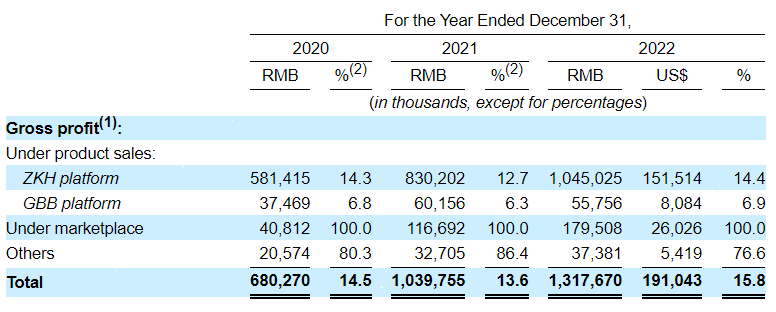
从毛利水平看,震坤行过去三年的毛利率分别为14.5%、13.6%和15.8%。值得注意的是,在市场模式下,成本几乎可以忽略不计,毛利率达到100%。

招股书提到,从2021年底开始,震坤行通过采取一系列措施优化毛利率,包括但不限于:(i)加强毛利率管理,包括价格调整;(ii)与更多MRO产品的原始制造商合作,增加直接从他们那里采购的产品比例(相对于从分销商那里采购的),以降低总体产品采购成本。

震坤行的运营费用来自履约费用、销售费用、研发费用以及一般行政费用,毛利润减去运营费用之后,震坤行2020年至2022年运营亏损分别为3.998亿元、11.104亿元、6.857亿元,对应的运营利润率(运营亏损占净收入的百分比)分别为-8.5%、-14.5%和-8.2%,亏损收窄的原因是毛利润的增加以及劳动力优化和成本控制。

2020年到2022年,震坤行净亏损分别3.971亿元、10.941、7.311亿元,排除因发行F系列可转换票据而产生的股份补偿费用和利息费用的影响,调整后净亏损分别为3.052亿元、9.108亿元和6.261亿元。

04

30个配送中心,33.4天周转

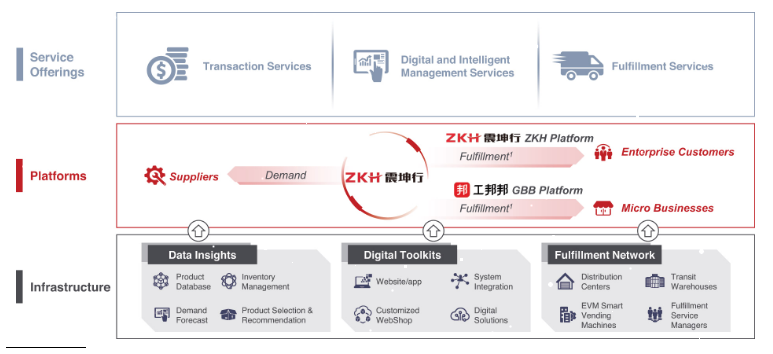
震坤行定位为MRO采购服务平台,为客户提供一站式MRO采购和管理服务,并为行业价值链上的参与者提供数字化和履行解决方案,引领MRO行业的数字化转型,以降低成本和提高效率。

根据招股书,其服务模式可总结为三个:

一站式MRO采购和管理服务,包括匹配生产和采购计划、产品预筛选、智能推荐和库存优化,帮助客户确定最适合的产品;

数字化MRO采购解决方案,为ZKH客户和GBB客户提供各种数字采购接口和解决方案,这些功能实现了完全数字化和定制化的MRO交易体验;

端到端

服务,截至2022年12月31日,震坤行全国配送网络由30个配送中心、90个中转仓库和大约3600台EVM智能自动售货机组成。震坤行有260多名履行服务经理,837名仓

库和配送人员。

数字化能力是一站式MRO采购和管理服务的核心能力,震坤行数字化包括三方面:

数据洞察。基于交易量提炼出产品、定价和市场趋势见解,包括SKU管理、定价系统、智能库存管理系统。利用库存水平优化模型,震坤行的库存周转天数在2020年、2021和2022年保持在33.4天到38.4天的相对稳定范围内。

用于交易过程的数字工具。震坤行开发了一套交易渠道和接口,即MRP系统集成、打卡、API连接、定制WebShop以及其他基于SaaS的采购管理工具,以促进透明、高效和数字化的MRO采购。供应商也通过一套数字解决方案集成到震坤行平台中,以实现联合库存管理,提高销售效率。

履行网络。采用了数字化和轻资产的方法,并向仓储和物流网络输出技术。为了优化订单履行效率和库存管理,灵活地采用第三方物流,从供应商直接发货到客户。2022年,超过55%的订单GMV由供应商直接向客户发货。供应商也可以选择在震坤行仓库中租用空间,并使用震坤行提供的物流服务来装运存储在仓库中的产品。
05

7轮融资,腾讯持股9.4%

2020年10月,震坤行工业超市获得3.15亿美元E轮股权融资,由云锋基金领投,中国国有企业结构调整基金(“国调基金”)、中投海外联合领投,普洛斯建发基金、建发新兴投资跟投,老股东钟鼎资本、元生资本、腾讯、老虎基金、经纬中国、君联资本、同创伟业持续跟投,华兴资本担任本轮融资的独家财务顾问。

该笔融资是中国工业用品领域最大一笔单轮融资。

2022年初,震坤行完成一轮非公开的融资,亿邦动力获悉,金额接近3亿美元。(点击阅读《数十亿巨款砸来!资本抢占最后一个独角兽高地》查看更多详细内容)

截至上市前,震坤行已经完成7轮融资,累计融资额约为60亿人民币,成为工业品领域募资金额最多的公司。
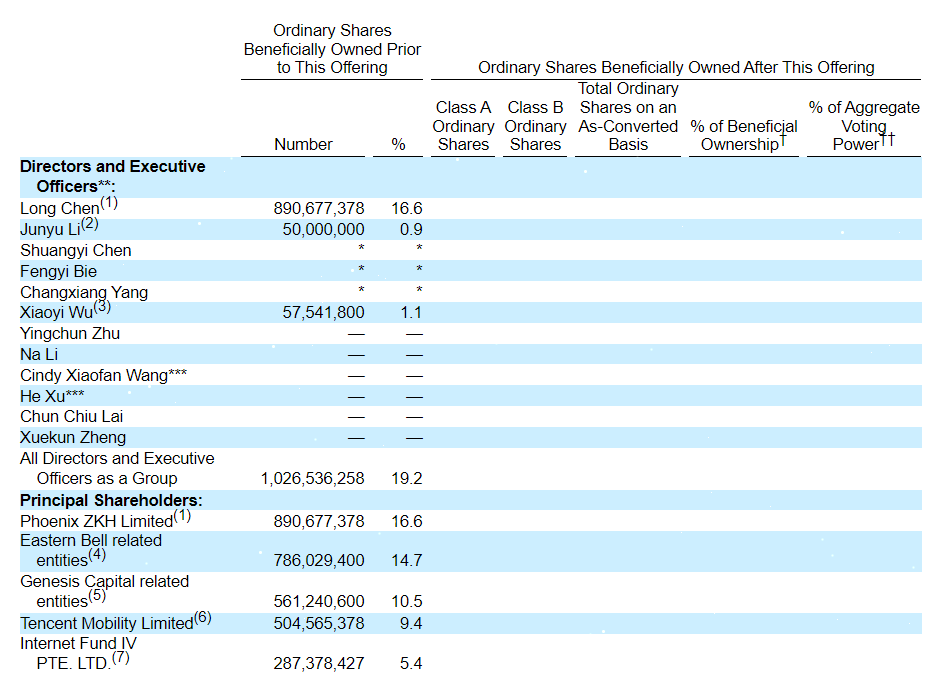
招股书显示,震坤行董事会主席兼首席执行官陈龙作为个人股东持有16.6%普通股,以及通过Phoenix ZKH Limited持有16.6%普通股,但通过管理层股东的各持股实体授权,陈龙持有总投票权的50%以上。

钟鼎资本、元生资本、及腾讯分别持股14.7%、10.5%、9.4%。

【版权提示】亿邦动力倡导尊重与保护知识产权。未经许可,任何人不得复制、转载、或以其他方式使用本网站的内容。如发现本站文章存在版权问题,烦请提供版权疑问、身份证明、版权证明、联系方式等发邮件至run@ebrun.com,我们将及时沟通与处理。

已点赞

+1

{{ praise_text }}

好文章,值得被更多人看到

FAQ回顾

震坤行是什么公司?

震坤行是成立于2014年的工业用品采购服务平台,总部位于上海,为能源、建筑、汽车等行业提供一站式MRO采购和履约解决方案。2022年净收入83.15亿元,拥有5.8万多家客户。

震坤行上市募资多少?

震坤行向美国SEC提交上市申请,计划在纽交所上市,股票代码ZKH,预计募资总额为2亿美元,高盛和华兴资本担任承销商。

中国MRO行业市场规模有多大?

根据CIC灼识咨询报告,中国MRO采购服务市场规模从2016年20747亿元增长至2022年30041亿元,预计2027年达39766亿元,复合年增长率5.8%。

广告

下一篇

征集报名《品牌数字化服务商资源手册》

《品牌数字化服务商资源手册》展示数字化服务商风采,亿邦全年零售大会通发,触达更多资源,马上加入!

马上入驻

AI绘画惹怒Z世代 网易LOFTER新功能遭创作者抵制

该事件的起因是LOFTER最新上线AI绘画功能,数秒即可生成一张图片。用户认为此举破坏了跟他们跟LOFTER之间的信任,有悖于LOFTER“鼓励原创内容”的口号。

未来零售 网易科技

2023-03-08 15:32:28










