• 亿邦公众号
    • APP下载

林清轩孙来春:2027年计划新增80至100家线下门店

作者:张从容 文章来源:亿邦动力

2026-09-20 16:23

作者:张从容 文章来源:亿邦动力

2026-09-20 16:23

邦小白快读

EN
全文速览

这篇内容披露了国货护肤品牌林清轩的最新经营动态,能为普通消费者提供实用的消费参考信息。

1. 线下到店参考:2026年上半年林清轩共有638家门店,今年全年将净增100家线下门店,2027年计划再新增80至100家;10月8日位于香港本地居民聚集区的黑金形象店将完成装修开业,后续品牌还会在雅加达、柬埔寨、新加坡等地布局专卖店。目前国内新一线城市、三线城市的门店数量最多、营收贡献最高,这些区域的消费者到店体验、选购产品会更便捷。

2. 产品选购提醒:品牌此前曾推出主打“细胞自噬”概念的产品,因专业术语过于晦涩、普通消费者难以理解,最终销量不及预期;目前最新一代抗皱产品已将核心传播概念升级为“细胞基因级抗皱”,提醒大家选购护肤产品时不必为听不懂的专业营销概念买单,可重点关注实际功效是否匹配自身需求。

林清轩披露的渠道策略、营销经验与增长数据,能为品牌经营提供可参考的实操方向。

1. 渠道建设参考:线下采取稳步扩张策略,2026年上半年净增门店84家,今年净增100家、2027年计划新增80-100家;出海阶段规避“出口转内销”的伪出海模式,香港首店不选游客聚集的铜锣湾、尖沙咀,转而选址本地居民聚集区,后续同步布局东南亚多国市场;国内市场重点深耕新一线、三线城市,两类城市门店数最多、营收贡献最高,其中三线城市营收同比增长25.53%,增速高于新一线城市;线上重点发力抖音直销渠道,上半年抖音营收5.95亿元,同比增长72.49%,带动线上直销整体营收同比增长50.09%。

2. 营销避坑提示:消费者对过于专业晦涩的产品概念接受度低,此前品牌主打“细胞自噬”概念,因用户认知门槛高导致产品销量不及预期,后续已将抗皱产品传播概念升级为更易感知的“细胞基因级抗皱”,提示品牌做概念传播要贴合大众认知,避免自嗨式营销。

林清轩的渠道增长数据与运营踩坑经验,能为各渠道卖家提供机会提示与避坑参考。

1. 高增长机会提示:渠道维度上,抖音等内容电商的线上直销赛道增长潜力最大,林清轩上半年抖音渠道营收达5.95亿元,同比增速72.49%,远高于线下门店19.57%的营收增速;区域维度上,三线城市消费升级趋势明显,林清轩三线城市营收同比增长25.53%,高于新一线城市19.67%的增速,是线下布局的高价值市场。

2. 经验借鉴与风险提示:布局海外市场时要规避“出口转内销”的伪出海模式,林清轩香港门店选址本地居民聚集区,核心瞄准真实本地客群的经营思路值得参考;做产品营销时要避免过度使用消费者难以理解的专业术语,林清轩曾因“细胞自噬”概念认知门槛高导致产品销量不及预期,是所有卖家都需要警惕的营销误区。

林清轩披露的扩张节奏与产品迭代方向,能给供应链上下游工厂提供需求参考与发展启示。

1. 产品端生产需求:品牌核心抗皱产品线正在迭代升级,传播概念从消费者难以理解的“细胞自噬”升级为更易感知的“细胞基因级抗皱”,对应供应链端需要匹配相关功效的配方研发、包装设计、生产落地需求,避免生产概念过于晦涩、脱离大众认知的产品。

2. 渠道扩张带来的合作机会:品牌正处于门店快速扩张期,2026年上半年已净增84家门店,今年净增100家、2027年计划新增80-100家;10月将开出香港黑金形象店,后续还将布局雅加达、柬埔寨、新加坡等东南亚市场专卖店,将释放大量店装物料、产品备货、周边配套的供应链合作需求。

3. 电商适配启示:品牌线上直销渠道尤其是抖音渠道增速超70%,供应链端需要适配内容电商快反、小批量多批次的备货需求,匹配线上渠道的高增长节奏。

林清轩展现出的经营痛点与渠道增长路径,能为各类零售、电商服务商提供业务方向参考。

1. 行业趋势判断:国货美妆品牌正进入线上线下协同、国内海外同步布局的发展阶段,线下稳步加密国内门店,线上则以抖音等内容电商为核心增长极,林清轩上半年抖音渠道营收占线上直销总营收的6成以上,同比增速达72.49%,未来品牌对内容运营、直播服务、达人对接等电商服务的需求会持续提升。

2. 客户痛点与服务机会:当前品牌普遍存在两大核心痛点,一是出海时容易陷入“出口转内销”的伪出海误区,缺乏落地本地客群的本地化运营服务;二是产品营销容易出现专业概念脱离大众认知的问题,需要服务商提供用户调研、营销内容转化的相关服务,帮助品牌把专业功效转化为消费者易懂的传播点,避免因认知差导致产品动销不畅。

林清轩披露的渠道增长数据与布局策略,能为线上线下各类商业平台提供招商与运营参考。

1. 招商方向参考:线下商业平台可关注三线城市的中高端消费增长潜力,林清轩在三线城市的门店营收同比增长25.53%,增速高于新一线城市,线下综合体可重点在三线城市招引同类中高端国货护肤品牌,匹配当地消费升级需求;线上内容电商平台对美妆品牌的增长拉动效应显著,林清轩在抖音渠道的营收增速超70%,平台可针对性招引功效型国货护肤品牌,打造高增长品类标杆。

2. 运营与风向规避提示:平台需要引导入驻品牌务实经营,一方面提醒品牌开展跨境业务时避免“出口转内销”的伪出海玩法,扎实做好本地用户运营;另一方面要引导品牌在产品宣传时避免使用过于晦涩、消费者难以理解的专业概念,减少因认知差导致的消费体验不佳、产品动销差问题,提升平台整体经营效率。

林清轩最新披露的经营数据与战略布局,为国货美妆产业研究提供了鲜活的微观企业案例。

1. 产业新动向观察:当前国货美妆品牌正在形成线上线下协同、国内国际双布局的发展模式,线下端采取稳步加密门店的策略,重点布局新一线与三线城市,其中三线城市营收增速高于新一线城市,展现出下沉市场中高端消费的增长潜力;线上端以抖音等内容直销渠道为核心增长引擎,增速远超线下渠道;海外布局阶段摒弃“出口转内销”的伪出海模式,香港首店选址本地居民聚集区,尝试深耕真实海外本地市场,代表了国货出海的新路径。

2. 行业共性问题总结:案例反映出当前国货美妆品牌普遍存在科技传播与大众认知衔接不足的问题,林清轩此前使用研发端专业术语“细胞自噬”作为产品传播概念,因脱离普通消费者认知体系导致产品销量不及预期,这类专业概念大众化转化不足的问题,是值得产业研究持续关注的共性命题。

声明:快读内容全程由AI生成,请注意甄别信息。如您发现问题,请发送邮件至 run@ebrun.com 。

我是 品牌商 卖家 工厂 服务商 平台商 研究者 帮我再读一遍。

Quick Summary

This article shares the latest operational updates from Chinese domestic skincare brand Forest Cabin, providing practical reference for everyday consumers.

1. In-store shopping guidance: Forest Cabin operated 638 stores nationwide in the first half of 2026. It plans to add a net 100 new offline stores for the full year, followed by another 80 to 100 new locations in 2027. On October 8, the brand will open its upgraded black-gold flagship store in a local residential neighborhood in Hong Kong, with future standalone store plans for Jakarta, Cambodia, Singapore and other Southeast Asian markets. Currently, the brand has the largest store footprint and generates the highest revenue in China’s new first-tier and third-tier cities, making in-store trial and purchase most convenient for consumers in these regions.

2. Product selection note: The brand previously launched a product line marketed around the concept of "autophagy," which underperformed expectations because the highly technical jargon was inaccessible to average consumers. Its latest generation of anti-wrinkle products has updated the core marketing narrative to "cell gene-level anti-wrinkle." Shoppers are advised not to pay a premium for confusing technical marketing claims, and to focus instead on whether a product’s actual benefits align with their personal needs.

Forest Cabin’s disclosed channel strategy, marketing lessons and growth data offer actionable takeaways for brand operators.

1. Channel construction insights: The brand is pursuing a steady offline expansion strategy, adding a net 84 stores in H1 2026, targeting 100 net new stores for the full year, and planning 80–100 more locations in 2027. For its international expansion, it is avoiding the "fake globalization" tactic of building token overseas presences solely to boost domestic brand cachet. Its first Hong Kong store is located in a local residential area rather than tourist-heavy districts like Causeway Bay or Tsim Sha Tsui, with a concurrent rollout planned across multiple Southeast Asian markets. Domestically, it is prioritizing new first-tier and third-tier cities, where it has the largest store count and highest revenue contribution; notably, third-tier city revenue grew 25.53% year-over-year, outpacing growth in new first-tier cities. Online, it is focusing heavily on direct sales via Douyin, where H1 revenue reached RMB 595 million, up 72.49% year-over-year, driving a 50.09% overall increase in online direct sales revenue.

2. Marketing pitfall alert: Consumers have low acceptance of overly specialized, inaccessible product concepts. The brand’s earlier focus on "autophagy" as a core marketing claim underperformed due to high cognitive barriers for users, leading it to later reframe its anti-wrinkle product narrative around the more intuitive "cell gene-level anti-wrinkle" concept. This serves as a reminder that brand messaging must align with general public understanding to avoid self-indulgent, ineffective marketing.

Forest Cabin’s channel growth data and operational missteps provide opportunity cues and risk-avoidance guidance for sellers across all channels.

1. High-growth opportunity signals: Across channels, direct sales on content e-commerce platforms like Douyin carry the strongest growth potential. Forest Cabin generated RMB 595 million in Douyin revenue in H1, up 72.49% year-over-year, far outpacing the 19.57% revenue growth of its offline store network. Regionally, third-tier cities show clear consumption upgrading momentum: Forest Cabin’s third-tier city revenue grew 25.53% year-over-year, outpacing the 19.67% growth in new first-tier cities, marking these markets as high-value targets for offline expansion.

2. Lessons and risk warnings: When entering overseas markets, sellers should avoid the "fake globalization" model of launching token overseas presences to market back to domestic consumers. Forest Cabin’s choice to locate its Hong Kong store in a local residential area, with a core focus on serving genuine local customers, is a useful reference. For product marketing, sellers should avoid overusing technical jargon that consumers cannot easily understand; Forest Cabin’s underperformance from using the high-barrier "autophagy" concept is a common marketing pitfall all sellers should guard against.

Forest Cabin’s disclosed expansion pace and product iteration direction offer demand visibility and development takeaways for upstream and downstream supply chain factories.

1. Product-side production demand: The brand’s core anti-wrinkle product line is undergoing iteration, with its marketing narrative shifting from the consumer-inaccessible concept of "autophagy" to the more intuitive "cell gene-level anti-wrinkle" claim. This will require the supply chain to support corresponding formula R&D, packaging design, and production execution aligned with proven, marketable efficacy, avoiding investment in products tied to overly obscure concepts disconnected from mass consumer understanding.

2. Partnership opportunities from channel expansion: The brand is in a rapid store expansion phase, having added a net 84 stores in H1 2026, targeting 100 net new stores for the full year, and planning 80–100 additional locations in 2027. It will open its black-gold Hong Kong flagship in October, followed by standalone stores across Southeast Asian markets including Jakarta, Cambodia and Singapore, generating large-scale supply chain demand for store fit-out materials, product inventory, and supporting peripheral goods.

3. E-commerce adaptation takeaways: The brand’s online direct sales channels, particularly Douyin, are growing at over 70% annually. Supply chain partners will need to support the fast-response, small-batch, multi-turn inventory model required by content e-commerce to keep pace with this high-growth online channel.

Forest Cabin’s demonstrated operational pain points and channel growth path offer business direction references for all types of retail and e-commerce service providers.

1. Industry trend assessment: Chinese domestic beauty brands are entering a phase of integrated online-offline development and simultaneous domestic and global expansion. Offline, brands are steadily densifying their domestic store networks; online, content e-commerce platforms like Douyin are serving as core growth engines. Forest Cabin’s Douyin channel accounted for over 60% of its total online direct sales revenue in H1, growing 72.49% year-over-year, indicating sustained rising demand for e-commerce services including content operation, live streaming support, and influencer coordination.

2. Client pain points and service opportunities: Brands currently face two core common pain points. First, they often fall into the "fake globalization" trap during overseas expansion, lacking localized operation services to build genuine local customer bases. Second, product marketing frequently relies on technical concepts disconnected from mass consumer understanding, creating demand for consumer research and marketing content localization services that help brands translate technical efficacy claims into accessible messaging, and prevent poor product sell-through caused by cognitive gaps.

Forest Cabin’s disclosed channel growth data and layout strategy provide investment attraction and operational guidance for online and offline commercial platforms.

1. Merchant acquisition direction: Offline commercial platforms should note the mid-to-premium consumption growth potential in third-tier cities. Forest Cabin’s third-tier store revenue grew 25.53% year-over-year, outpacing growth in new first-tier cities, indicating that offline complexes should prioritize recruiting comparable mid-to-premium domestic skincare brands in third-tier markets to match local consumption upgrading demand. Online content e-commerce platforms deliver significant growth lift for beauty brands: Forest Cabin’s Douyin revenue grew at over 70% year-over-year, so platforms can target efficacy-focused domestic skincare brands for recruitment to build high-growth category benchmarks.

2. Operations and risk guidance: Platforms should guide onboarded brands toward pragmatic operations. On one hand, platforms should warn brands against "fake globalization" tactics in cross-border business, encouraging solid local user operation. On the other hand, platforms should guide brands to avoid overly obscure, consumer-unintelligible technical claims in product marketing, reducing poor consumer experience and weak sell-through caused by cognitive gaps, and improving overall platform operating efficiency.

Forest Cabin’s newly released operational data and strategic layout provide a timely micro-level case for research on China’s domestic beauty industry.

1. Emerging industry trends: Domestic Chinese beauty brands are developing a model of integrated online-offline growth and dual domestic-international market presence. Offline, brands are pursuing steady store network densification, with a focus on new first-tier and third-tier cities; notably, third-tier city revenue growth is outpacing that of new first-tier cities, highlighting the mid-to-premium consumption growth potential in lower-tier markets. Online, direct sales via content platforms such as Douyin are serving as the core growth engine, with growth rates far exceeding offline channels. For overseas expansion, brands are abandoning the "fake globalization" model of building token overseas presences for domestic marketing value: Forest Cabin’s first Hong Kong store is located in a local residential area, representing a new approach of pursuing genuine penetration of overseas local markets.

2. Summary of common industry challenges: The case reflects a widespread gap across domestic beauty brands between technical scientific messaging and mass consumer understanding. Forest Cabin previously used the R&D-side technical term "autophagy" as a core product marketing concept, which led to underperformance because it fell outside ordinary consumers’ cognitive framework. This challenge of translating specialized technical concepts into accessible public messaging is a shared industry issue that merits ongoing industrial research attention.

Disclaimer: The "Quick Summary" content is entirely generated by AI. Please exercise discretion when interpreting the information. For issues or corrections, please email run@ebrun.com .

I am a Brand Seller Factory Service Provider Marketplace Seller Researcher Read it again.

【亿邦原创】9月18日,南京CAME大会上,林清轩创始人孙来春称,品牌今年净增100家线下门店,明年计划新增80至100家。2026年半年报显示,2026年上半年,林清轩共有638家门店,净增长84家。

财报显示,林清轩将在香港开设黑金形象店。在此次分享中,孙来春称,10月8日香港门店将完成装修。团队并未选择将门店开在铜锣湾、尖沙咀等地,而是选址本地居民聚集区,以避免“出口转内销”的伪出海模式。同时,集团计划在雅加达、柬埔寨、新加坡等地布局专卖店。

从财报数据看,林清轩在各类城市的门店数量均有所增加。其中新一线城市门店数最多(202家),同比增加31家;其次是三线城市(164家),同比增加18家。
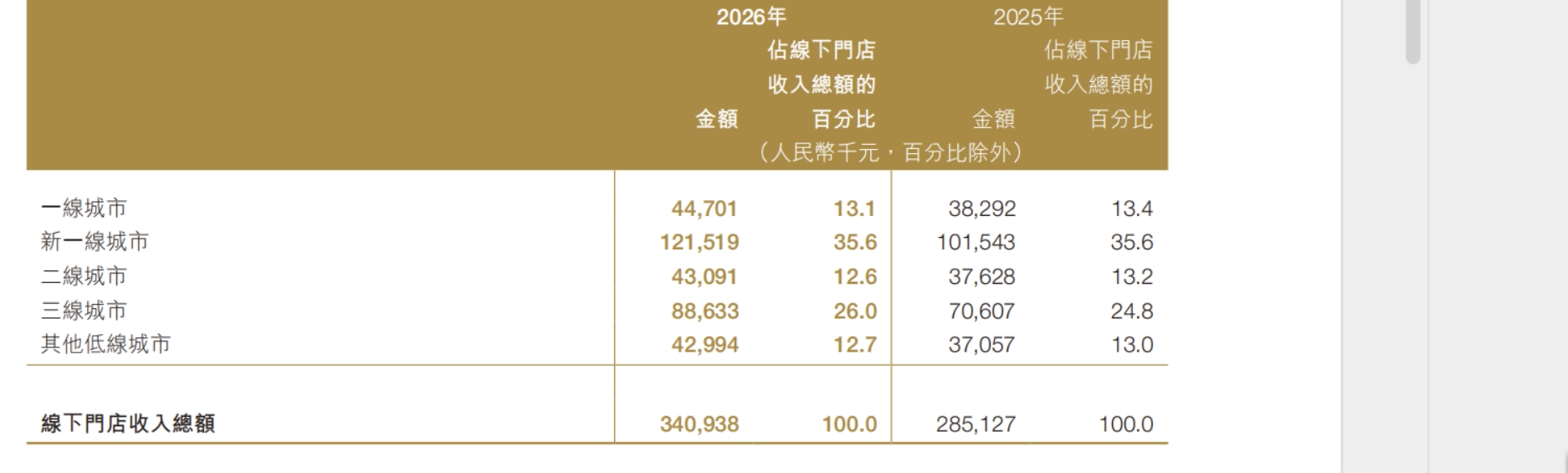
从城市维度来看,同样是新一线城市和三线城市收入占比最高、收入增长最多:2026年上半年,新一线城市营收1.22亿元,同比增长19.67%;三线城市营收0.89亿元,同比增长25.53%。

从渠道来看,2026年上半年林清轩线下门店营收3.41亿元,同比增长19.57%;线上直销营收9.26亿元,同比增长50.09%。在线上直销渠道中,抖音营收最高、同比增长最快:营收5.95亿元,同比增长72.49%。

值得注意的是,在此次分享中,孙来春提及,团队曾推出“细胞自噬”概念,但因消费者无法理解该专业术语,产品销量不及预期。最新一代产品,林清轩将“细胞级抗皱”的核心概念升级为“细胞基因级抗皱”。

亿邦持续追踪报道该情报,如想了解更多与本文相关信息,请扫码关注作者微信。

本文首发于 亿邦动力 官方网站

【版权提示】亿邦动力倡导尊重与保护知识产权。未经许可,任何人不得复制、转载、或以其他方式使用本网站的内容。如发现本站文章存在版权问题,烦请提供版权疑问、身份证明、版权证明、联系方式等发邮件至run@ebrun.com,我们将及时沟通与处理。

已点赞

+1

{{ praise_text }}

好文章,值得被更多人看到

FAQ回顾

林清轩2027年线下门店拓展规划是怎样的?

林清轩2027年计划新增80至100家线下门店,内地各层级城市门店同步扩张,同时将在香港开设黑金形象店,并计划在雅加达、柬埔寨、新加坡等地布局海外专卖店。

2026年上半年林清轩各渠道营收表现如何?

2026年上半年,林清轩线下门店营收3.41亿元,同比增长19.57%;线上直销营收9.26亿元,同比增长50.09%,其中抖音渠道营收5.95亿元,同比增长72.49%,为线上营收最高渠道。

林清轩香港门店的选址逻辑是什么?

林清轩香港黑金形象店预计2026年10月8日完成装修,团队未选择铜锣湾、尖沙咀等游客集中区域,而是选址本地居民聚集区,避免陷入“出口转内销”的伪出海模式。

林清轩最新一代抗皱产品的核心宣传概念是什么?

林清轩此前推出的“细胞自噬”概念因过于专业、消费者难以理解导致销量不及预期,最新一代产品将核心抗皱宣传概念从“细胞级抗皱”升级为“细胞基因级抗皱”。

广告

下一篇

征集报名《品牌数字化服务商资源手册》

《品牌数字化服务商资源手册》展示数字化服务商风采,亿邦全年零售大会通发,触达更多资源,马上加入!

马上入驻

具身智能机器人累计量产超15000台 智身科技获中东资本领投数亿元融资

截至2026年6月,智身科技具身智能机器人累计量产突破15000台,单月产能较去年月均电力、石化、消防、安防、应急、教育等多个行业,并与500余家生态伙伴建立合作。