• 亿邦公众号
    • APP下载

摩根士丹利上调今年中国人形机器人出货量预期至5万台

作者:亿邦AI 文章来源:亿邦动力

2026-06-25 13:56

作者:亿邦AI 文章来源:亿邦动力

2026-06-25 13:56

邦小白快读
EN
全文速览

本文梳理了当前中国人形机器人行业的最新发展动态与市场前景,核心干货如下

1. 市场增长远超预期,摩根士丹利年内两次上调今年中国人形机器人出货量预期,从最初的1.4万台上调至5万台,预测到2030年行业市场规模将达150亿美元,年出货量达到44.6万台。

2. 行业落地速度快于预期,中国已将相关核心技术纳入未来五年发展优先级,各地给相关初创企业提供场地土地补贴,银行配套优惠贷款,目前人形机器人已经在工厂、便利店、餐厅、无人零售、商业服务等多个场景落地。

3. 全球竞争格局中中国企业占据领先位置,2025年全球人形机器人出货量前五名均为中国企业,美国特斯拉的人形机器人最早要到2027年底才会面向公众发售,普通关注科技新趋势的读者可以重点跟踪国内产业链核心企业的发展动态。

本文为人形机器人领域的品牌商提供了市场趋势、政策环境、竞争格局等多维度参考信息,核心干货如下

1. 行业增长与消费趋势明确,中国人形机器人市场增长远超预期,2030年市场规模预计达到150亿美元,落地场景已经从工业端的工厂、物流拓展到C端的无人零售、互动商业服务领域,需求增长明确,落地速度快于预期,市场空间广阔。

2. 政策环境整体利好,中国已经将具身智能纳入未来五年发展优先级,各地为相关初创企业提供土地、办公场地补贴,银行配套优惠贷款,产业发展支持力度大。

3. 供应链与竞争层面,当前中国企业在全球占据领先位置,国内核心供应链已经成熟,核心部件供应商稳定,品牌商可以依托国内供应链加快扩产落地,布局海外的品牌商可以参考头部企业做法,通过区域多元化布局降低地缘政治带来的风险。

本文为人形机器人行业相关卖家梳理了最新的政策环境、市场机会与风险提示,核心干货如下

1. 政策层面扶持力度大,中国已经将具身智能纳入未来五年发展优先级,各地为人形机器人相关企业提供土地、办公场地补贴,银行也配套了优惠贷款条款,整体政策环境利好行业发展,卖家可以充分利用政策红利降低运营成本。

2. 市场增长机会明确,当前行业增长速度远超预期,摩根士丹利年内两次上调出货量预期,今年出货量已经上调至5万台,预计2030年市场规模达150亿美元,人形机器人已经在工厂、物流、零售、餐饮、商业服务等多场景落地,增量需求明确。

3. 风险与应对提示,当前行业布局海外面临地缘政治不确定性、贸易紧张局势的阻力,卖家可以参考头部企业的应对方式,通过区域多元化布局降低单一市场依赖,同时严格遵守运营所在地的监管规则,规避合规风险。

本文为想要引入人形机器人升级生产,或是想要切入人形机器人赛道的工厂,提供了多方面干货信息,核心内容如下

1. 商业机会明确,当前中国人形机器人行业落地速度远超预期,市场增量空间巨大,摩根士丹利预测2030年行业年出货量将达44.6万台,市场规模升至150亿美元,工厂无论是切入产业链供应,还是引入人形机器人升级自身生产,都有明确的增长机会。

2. 生产升级需求明确,当前中国工厂的自动化、机器人部署规模已经超过全球其他任何地区,人形机器人在工厂场景已经实现落地应用,引入人形机器人符合工厂数字化、自动化升级的大趋势,能够有效提升生产效率。

3. 产业转型启示方面,国内人形机器人供应链已经发展成熟,核心部件供应稳定,工厂推进自动化数字化升级的配套支撑完善,想要切入赛道的工厂可以对接国内头部整机品牌商,切入供应链分享行业增长红利。

本文为人形机器人行业相关服务商梳理了最新行业发展趋势、客户痛点与机会方向,核心干货如下

1. 行业发展趋势明确,中国人形机器人行业增长速度远超预期,摩根士丹利年内两次上调出货量预期,预测2030年市场规模将达150亿美元,大量国内企业正加快扩产步伐,拓展国内外市场,对相关配套服务的需求正在快速增长。

2. 核心技术方向清晰,人形机器人的核心技术支撑是具身智能,也就是人工智能嵌入机器人等物理系统的技术形态,已经被纳入中国未来五年发展优先级,相关技术研发、技术落地服务的需求会持续上涨。

3. 客户痛点与服务机会,当前国内人形机器人企业出海的核心痛点是地缘政治不确定性带来的风险,以及海外合规经营的需求,服务商可以针对性开发多元化市场布局咨询、海外合规服务等产品,同时还可以对接地方政策,为初创企业提供政策申报、场地融资对接等配套服务,抓住行业增长红利。

本文为布局人形机器人赛道的平台商梳理了行业动向、企业需求与风险规避方向,核心干货如下

1. 招商机会明确,当前中国人形机器人行业增长远超预期,大量产业链优质企业正处于扩张发展阶段,有上市、合作扩张的需求,目前已经有核心供应链企业在A股上市,出海企业在港交所挂牌,平台可以围绕整机厂商、核心部件供应商、出海服务商等不同主体开展针对性招商,挖掘优质标的。

2. 企业核心需求清晰,国内初创人形机器人企业有政策对接、配套资源对接的需求,出海企业有合规服务、多市场资源对接的需求,平台可以围绕这些需求优化运营服务,对接地方政府的扶持政策,帮助入驻企业争取土地、补贴、贷款等相关优惠,提升平台吸引力。

3. 风向规避方面,平台需要提示入驻企业关注地缘政治风险与海外监管风险,可以引导企业通过多元化布局降低风险,平台自身也可以建立相应的风险评估体系,优化对出海企业的服务管理,规避潜在风险。

本文为人形机器人产业研究者提供了最新的产业数据、竞争格局、发展新问题等多方面研究素材,核心干货如下

1. 产业最新动向明确,当前中国人形机器人产业落地速度远超市场预期,摩根士丹利年内两次上调今年出货量预期,从最初1.4万台上调至5万台,预测2030年产业规模将达150亿美元,目前已经实现工厂、物流、零售、餐饮、商业服务等多场景落地,中国企业在全球占据领先位置,2025年全球出货量前五名均为中国企业。

2. 产业发展驱动机制清晰,政策层面中国将具身智能纳入未来五年发展优先级,地方政府与金融机构都出台了配套扶持措施,加上国内供应链成熟度高,共同支撑产业快速发展,和美国发展路径形成了鲜明对比。

3. 产业出现新问题值得研究,当前中国企业出海面临地缘政治不确定性、贸易紧张局势的阻力,而美国在AI技术普及层面明显落后于中国,全球人形机器人产业竞争格局出现新变化,研究者可以围绕这些新动向、新问题,开展产业发展路径、国际竞争等方向的深入研究,总结相关发展启示。

声明:快读内容全程由AI生成,请注意甄别信息。如您发现问题,请发送邮件至 run@ebrun.com 。

我是 品牌商 卖家 工厂 服务商 平台商 研究者 帮我再读一遍。

Quick Summary

This article sorts out the latest development and market outlook of China's humanoid robot industry, with key takeaways as follows:

1. Market growth has far outpaced expectations. Morgan Stanley has upgraded its 2024 shipment forecast for humanoid robots in China twice this year, from an initial 14,000 units to 50,000 units. It projects the industry will reach a market size of $15 billion and annual shipments of 446,000 units by 2030.

2. Commercialization is progressing faster than expected. China has listed core related technologies as a development priority for the next five years. Local governments offer land and facility subsidies to targeted startups, and banks provide preferential loans. Humanoid robots have already been deployed in multiple scenarios including factories, convenience stores, restaurants, unmanned retail and commercial services.

3. Chinese companies hold a leading position in the global competitive landscape. Chinese firms will claim the top five spots in global humanoid robot shipments by 2025. US-based Tesla's humanoid robot will not be available to the public until at least the end of 2027. Readers interested in new tech trends should closely follow developments of leading domestic companies along the industrial chain.

This article provides multi-dimensional insights covering market trends, policy environment and competitive landscape for brand operators in the humanoid robot sector, with key takeaways as follows:

1. Industry growth and consumer demand trends are well-defined. China's humanoid robot market has grown far faster than expected, with a projected $15 billion market size by 2030. Use cases have expanded from industrial scenarios such as manufacturing and logistics to consumer-facing segments including unmanned retail and interactive commercial services. Demand growth is clear, commercialization is ahead of schedule, and the market has ample room for expansion.

2. The overall policy environment is supportive. China has listed embodied intelligence as a development priority for the next five years. Local governments offer land and office subsidies to targeted startups, and banks provide preferential loans, delivering strong support for industrial development.

3. In terms of supply chain and competition, Chinese companies currently lead globally, and the domestic core supply chain is mature with stable core component suppliers. Brands can leverage the domestic supply chain to accelerate capacity expansion and commercial deployment. Brands planning to expand globally can follow the lead of top domestic players to reduce geopolitical risks via diversified regional布局.

This article sorts out the latest policy environment, market opportunities and risk reminders for sellers related to the humanoid robot industry, with key takeaways as follows:

1. The industry benefits from strong policy support. China has listed embodied intelligence as a development priority for the next five years. Local governments offer land and office subsidies to humanoid robot-related companies, and banks provide preferential loan terms, creating a favorable overall policy environment for industry growth. Sellers can fully leverage policy dividends to cut operating costs.

2. Market growth opportunities are clear. The current industry growth rate has far exceeded expectations. Morgan Stanley has upgraded its 2024 shipment forecast twice this year, raising the full-year projection to 50,000 units, and expects the market to reach $15 billion by 2030. Humanoid robots have already been deployed across multiple scenarios including factories, logistics, retail, catering and commercial services, with clear incremental demand.

3. Risk and response reminders: Overseas expansion currently faces headwinds from geopolitical uncertainty and trade tensions. Sellers can reference strategies used by leading industry players to reduce reliance on any single market via diversified regional布局, and strictly comply with regulatory rules in operating regions to avoid compliance risks.

This article provides practical insights for factories looking to introduce humanoid robots for production upgrades, or enter the humanoid robot industry, with key content as follows:

1. Commercial opportunities are clear. China's humanoid robot industry is commercializing much faster than expected, with huge incremental market space. Morgan Stanley projects annual shipments will reach 446,000 units and the market size will hit $15 billion by 2030. Factories, whether looking to enter the industrial supply chain or adopt humanoid robots to upgrade their own production, all face clear growth opportunities.

2. Demand for production upgrades is well-defined. China already has more automation and robot deployments in factories than any other region in the world. Humanoid robots have already achieved commercial application in factory scenarios. Adopting humanoid robots aligns with the general trend of digital and automated upgrading for factories, and can effectively improve production efficiency.

3. For industrial transformation insights, the domestic humanoid robot supply chain is already mature with stable supplies of core components, providing sound supporting infrastructure for factories推进 automated and digital upgrades. Factories aiming to enter the industry can partner with leading domestic complete machine brands to join the supply chain and share the industry's growth dividends.

This article sorts out the latest industry trends, customer pain points and opportunity directions for service providers in the humanoid robot industry, with key takeaways as follows:

1. Industry development trends are clear. China's humanoid robot industry has grown far faster than expected. Morgan Stanley has upgraded its 2024 shipment forecast twice this year, and projects the market will reach $15 billion by 2030. A large number of domestic companies are accelerating capacity expansion and entering markets at home and abroad, driving rapid growth in demand for related supporting services.

2. Core technology directions are clear. The core technical foundation of humanoid robots is embodied intelligence — the integration of artificial intelligence into physical systems such as robots — which China has listed as a development priority for the next five years. Demand for related R&D and technology commercialization services will continue to rise.

3. On customer pain points and service opportunities: The core pain point for domestic humanoid robot companies expanding overseas is risk from geopolitical uncertainty, paired with demand for overseas compliance operations. Service providers can develop targeted products such as diversified market expansion consulting and overseas compliance services. They can also leverage local policies to provide supporting services for startups including policy application assistance and facility and financing matchmaking, to capture growth dividends from the expanding industry.

This article sorts out industry trends, corporate demand and risk mitigation directions for platform operators布局 the humanoid robot track, with key takeaways as follows:

1. Investment and recruitment opportunities are clear. China's humanoid robot industry has grown far faster than expected, and a large number of high-quality companies along the industrial chain are in an expansion phase, with demand for IPOs and cooperative expansion. Core supply chain companies have already listed on the A-share market, and global expansion-focused players have listed on the Hong Kong Stock Exchange. Platforms can carry out targeted recruitment around different market participants including complete machine manufacturers, core component suppliers and overseas expansion service providers to source high-quality assets.

2. Core corporate demands are clear. Domestic humanoid robot startups have demand for policy matchmaking and access to supporting resources, while global expansion-focused companies need compliance services and access to resources across multiple markets. Platforms can optimize their operating services around these demands, connect with local government support policies, and help resident enterprises secure preferential treatment including land, subsidies and loans, to improve platform attractiveness.

3. On risk mitigation: Platforms need to remind resident enterprises to pay attention to geopolitical risks and overseas regulatory risks, and can guide companies to reduce risks via diversified布局. Platforms themselves can also build dedicated risk assessment systems to optimize service management for global expansion-focused enterprises and avoid potential risks.

This article provides up-to-date research materials including industrial data, competitive landscape and emerging development issues for humanoid robot industry researchers, with key takeaways as follows:

1. The latest industry trends are well-defined. China's humanoid robot industry is commercializing much faster than market expectations. Morgan Stanley has upgraded its 2024 shipment forecast twice this year, raising the projection from an initial 14,000 units to 50,000 units, and projects the industry will reach a $15 billion market size by 2030. Humanoid robots have already been deployed across multiple scenarios including factories, logistics, retail, catering and commercial services. Chinese companies lead globally, and will claim all top five spots in global humanoid robot shipments by 2025.

2. The driving mechanism of industrial development is clear. On the policy side, China has listed embodied intelligence as a development priority for the next five years, and local governments and financial institutions have introduced supporting measures. Combined with the high maturity of the domestic supply chain, these factors jointly support the industry's rapid growth, creating a clear contrast with the development path of the US.

3. New industry problems have emerged that are worthy of research. Chinese companies expanding overseas currently face headwinds from geopolitical uncertainty and trade tensions, while the US lags far behind China in AI technology adoption. The global humanoid robot industry is seeing new shifts in its competitive landscape. Researchers can conduct in-depth research on industrial development paths and international competition centered on these new trends and issues, to draw actionable development insights.

Disclaimer: The "Quick Summary" content is entirely generated by AI. Please exercise discretion when interpreting the information. For issues or corrections, please email run@ebrun.com .

I am a Brand Seller Factory Service Provider Marketplace Seller Researcher Read it again.

2026年6月24日,摩根士丹利年内第二次上调中国人形机器人市场出货量预期,今年出货量预期从此前的2.8万台提升至5万台,接近翻倍。今年1月,该机构给出的初始预期仅为1.4万台,本次已是年内第二次对该数据作出翻倍调整。

摩根士丹利测算,今年中国人形机器人市场规模将达20亿美元,到2030年市场规模将升至150亿美元,年出货量达到44.6万台。上述预测仅包含对外销售的产品,不覆盖原型机、预购测试品或企业内部使用的产品。

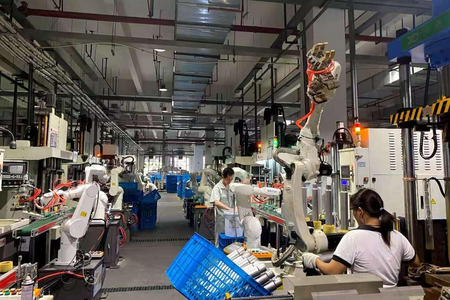
摩根士丹利股票分析师盛中在当日发布的报告中提及,商业验证、政策支持及供应链反馈都显示中国人形机器人落地速度快于预期。中国已将具身智能纳入未来五年发展优先级,具身智能是人工智能嵌入机器人等物理系统的技术形态,各地为相关初创企业提供土地、办公场地补贴,银行也配套优惠贷款条款。国内厂商正加快扩产步伐,人形机器人已在工厂、便利店、餐厅等场景落地应用。

研究机构Omdia数据显示,2025年全球人形机器人出货量约1.3万台,出货量排名前五的企业均来自中国,美国企业Figure AI位列第七,特斯拉排在第九位。特斯拉首席执行官埃隆·马斯克此前透露,旗下Optimus人形机器人最早2027年底才会面向公众发售。

麦肯锡大中华区主席、高级合伙人乔·恩盖在世界经济论坛大连年会期间提及,人形机器人有望成为关注中国科技发展的投资者的下一个重要赛道。当前中国工厂的自动化及机器人部署规模已经超过全球其他任何地区。摩根士丹利供应链实地调研结果显示,除工厂、物流场景外,人形机器人还在无人零售店、互动商业服务领域加快落地。

摩根士丹利将上海证券交易所上市公司绿的谐波的12个月目标价从269元上调至464元,判断其是人形机器人行业增长的主要受益者。这家总部位于苏州的企业为优必选、银河通用等国内人形机器人厂商供应精密机器人部件,盛中在报告中提及,受益于稳定的出货量及优质客户资源,绿的谐波今年全球市场份额可达40%,长期份额保持在25%左右。

国内机器人企业也在加快海外布局。2026年6月25日在香港交易所挂牌交易的上海企业仙工智能,自2021年起拓展海外市场,2025年海外收入占总营收的18%,业务覆盖超过65个国家。该公司首席运营官范靖提及,地缘政治不确定性及贸易紧张局势是当前行业面临的主要阻力,企业正通过区域多元化降低单一市场依赖,同时严格遵守运营所在地的监管规则。

芝加哥全球事务委员会美国外交政策与国际秩序高级研究员苏珊娜·诺塞尔近期发布的文章中提及,如果华盛顿仅将竞争视为突破技术能力指标的竞赛,其可能在发明层面领先,但在影响全球AI应用场景及应用方式层面落后。美国AI技术体系的推广行动无法快速提升普及率,难以跟上中国的发展速度。

【版权提示】亿邦动力倡导尊重与保护知识产权。未经许可,任何人不得复制、转载、或以其他方式使用本网站的内容。如发现本站文章存在版权问题,烦请提供版权疑问、身份证明、版权证明、联系方式等发邮件至run@ebrun.com,我们将及时沟通与处理。

已点赞

+1

{{ praise_text }}

好文章,值得被更多人看到

广告

下一篇

蚂蚁阿福一分钱可领体脂秤 !“AI助手”免费指导体重管理

6月25日,蚂蚁阿福发起的“科学减重1亿斤”健康行动正式上线。除了9.9元快递费,全国网友实付1分钱就能拿到手,参与科学减重。

未来零售

2026-06-25 13:04:08