• 亿邦公众号
    • APP下载

一个人就是一家公司:AI智能助手Singclaw正在成为OPC的“数字合伙人”

作者:龚作仁 文章来源:Laborer

2026-06-03 18:22

作者:龚作仁 文章来源:Laborer

2026-06-03 18:22

邦小白快读

EN
全文速览

本文梳理了AI智能体当前的发展情况,提炼了核心行业趋势,也给普通用户想要借助AI创业或提升效率提供了干货参考。

1. 行业已经走出前期的概念炒作,从单纯聊模型、算法转向垂直场景智能体落地,AI智能体方向并没有过时,只是进入了理性创造业务价值的新阶段。

2. 当前行业有三个核心真相:OPC一人公司在AI赋能下从小众走向主流,普通人也可以依托AI工具成为超级个体,轻资产撬动商业价值;通用智能体能力正在被大模型厂商吸收整合;垂直领域智能体迎来真正的爆发期。

3. 已经有落地的成熟产品,比如面向电商和超级个体的Singclaw,可以帮用户完成复杂数据分析、自动执行运营SOP,普通用户可以借助这类工具打破人效天花板,开启轻资产创业。

本文给品牌商揭示了AI赋能下的商业新趋势,指明了品牌运营、产品研发的新方向,有较高的参考价值。

1. 商业和消费趋势变化:AI赋能下,OPC一人公司从小众走向主流,越来越多拥有核心技能的超级个体独立运作,品牌可以拓展和这类超级个体的合作,开辟新的营销渠道,降低组织运营成本。

2. AI布局方向:通用AI能力已经成为基础设施,品牌不用盲目投入通用大模型研发,应当聚焦自身业务痛点,布局能嵌入自身业务工作流的垂直AI智能体,提升运营效率。

3. 产品研发方向:当前垂直AI智能硬件受到资本和市场追捧,品牌可以借鉴这个思路,围绕用户具体场景开发“智能延伸”类产品,贴合用户需求,抓住新的消费增长点。

本文给广大尤其是电商领域的卖家梳理了AI时代的行业变化,点明了新的增长机会,也给出了风险提示和可学习的方向。

1. 行业机会变化:AI赋能打破了人效天花板,一人公司模式成为主流,卖家可以走轻资产运营模式,不用依托庞大组织架构就能撬动较大商业价值,降低运营成本和风险。

2. 可利用的工具落地:针对电商运营数据繁杂、SOP执行繁琐的痛点,已经有Singclaw这类垂直AI智能体落地,它可以完成复杂的数据分析和转化洞察,还能自动完成Web端的运营SOP流转,能有效提升运营效率,卖家可以借助这类工具提升人效。

3. 风险提示:不要盲目投入通用大模型研发或跟风追通用AI热点,通用能力已经被头部大模型厂商覆盖,卖家应当聚焦能落地嵌入自身业务流的垂直AI工具,聚焦业务价值,规避概念泡沫风险。

本文给各类生产工厂指明了AI时代的新商业机会,也给出了推进数字化和电商转型的启示,贴合工厂发展需求。

1. 产品生产设计新机会:当前垂直AI智能硬件迎来爆发期,这类产品将AI智能体封装进特定交互场景,成为人体器官的智能延伸,受到资本市场高度关注,包括智能胸针、智能眼镜、智能戒指、AI录音笔等多个品类,工厂可以围绕这类需求布局研发生产,抓住新的市场增长点。

2. 商业新机会:AI赋能下OPC一人公司成为主流,大量超级个体诞生,催生了对轻量化AI工具、随身智能硬件的大量需求,工厂可以针对这个新兴群体开发适配的产品,开辟新的客户群体。

3. 数字化转型启示:工厂推进数字化不用盲目追求大而全的通用系统,应当参考AI行业的发展思路,聚焦贴合自身生产、业务流程的垂直数字化方案,提升数字化落地效果,更好服务生产。

本文给AI及相关行业服务商梳理了当前行业发展趋势,明确了客户核心痛点,指明了可行的解决方案方向,参考价值很高。

1. 行业发展趋势:AI智能体已经走过前期的概念炒作阶段,进入理性落地创造业务价值的阶段,现在通用智能体能力已经被头部大模型厂商吸收整合,垂直细分场景的AI智能体迎来爆发期,这是服务商接下来的核心赛道。

2. 客户核心痛点:当前客户不缺高智商的通用大模型,缺的是能落地干活、无缝嵌入业务工作流、自动完成具体任务的AI,现有通用大模型只有“大脑”没有“手脚”,无法满足处理真实订单、发货、客诉这类具体业务的需求。

3. 可行解决方案:服务商可以选择“依托现有通用大模型能力,聚焦垂直场景落地”的路径,不用在通用大模型上重复造轮子,专注给AI装上“手脚”,打磨细分领域智能体,达到执行可靠、结果可信、生产可用的交付标准,满足客户真实需求。

本文给AI相关平台商梳理了当前行业发展动向,明确了市场对平台的新需求,提示了发展方向和风险规避要点。

1. 市场需求变化:AI赋能下OPC一人公司已经从小众走向主流,成为越来越重要的市场主体,这类主体对轻量、能嵌入业务流程的垂直AI工具和服务有大量需求,平台可以围绕这个新兴群体调整运营和服务方向,吸引新的客户群体。

2. 平台生态布局方向:平台不用盲目跟风投入通用大模型研发,通用能力已经被头部厂商覆盖,当前垂直领域AI智能体迎来爆发,平台可以重点引入垂直细分场景的AI智能体开发者入驻,打造垂直AI应用生态,抓住新的增长机会。

3. 运营管理和风险规避:平台引导开发者布局垂直赛道的时候,要推动开发者聚焦细分场景,把智能体打磨到生产可用的交付标准,帮助开发者对接真实业务需求实现变现,同时规避追通用AI热点带来的泡沫风险,保障生态健康发展。

本文提炼了AI Agent领域发展到当前阶段的最新产业动向,提出了行业需要解决的新问题,总结了创新商业模式,给产业研究提供了鲜活的素材和方向。

1. 最新产业动向:经过前期的概念炒作后,AI智能体进入理性落地阶段,行业出现三个标志性变化:OPC一人公司在AI赋能下从小众走向主流,改变了传统商业组织形态;通用智能体能力正在被底层大模型吸收整合;垂直领域AI智能体迎来真正的爆发期,成为AI落地的主流方向。

2. 行业新问题:当前行业需要解决的核心问题是如何把垂直领域智能体打磨到生产稳定的交付标准,满足执行可靠、结果可信、生产可用的要求,解决通用大模型无法落地执行真实业务的痛点。

3. 创新商业模式:当前行业已经形成“通用大模型负责通识能力,沉淀了行业数据的垂直智能体负责实战落地”的协同创新模式,以Singclaw为代表的垂直智能体,聚焦电商和OPC群体的痛点,已经初步跑通了商业模式,值得深入研究。

声明:快读内容全程由AI生成,请注意甄别信息。如您发现问题,请发送邮件至 run@ebrun.com 。

我是 品牌商 卖家 工厂 服务商 平台商 研究者 帮我再读一遍。

Quick Summary

This article outlines the current development of AI agents, summarizes core industry trends, and provides practical insights for general users looking to start AI-powered businesses or improve work efficiency.

1. The industry has moved past early-stage hype, shifting from pure discussions about models and algorithms to the implementation of AI agents in vertical use cases. AI agents are far from a passé trend; the sector has simply entered a new phase focused on delivering tangible business value through rational development.

2. The industry currently holds three core truths: AI-powered one-person companies (OPCs) have moved from a niche practice to the mainstream, allowing ordinary people to become "super individuals" that unlock significant business value with minimal capital investment; general-purpose AI agent capabilities are being absorbed and integrated by large model developers; and AI agents built for vertical sectors are entering a true period of rapid growth.

3. Mature, production-ready products already exist: for example, Singclaw is an AI agent built for e-commerce operators and super individuals that handles complex data analysis and automatically executes operational standard operating procedures (SOPs). General users can leverage tools like this to break through productivity ceilings and launch low-capital startups.

This article outlines new business trends enabled by AI for brands, points out new directions for brand operations and product R&D, and offers high-value strategic reference.

1. Shifts in business and consumer trends: AI-powered one-person companies (OPCs) have moved from niche to mainstream, with a growing number of skilled super individuals operating independently. Brands can expand partnerships with these super individuals to open new marketing channels and reduce organizational operating costs.

2. AI strategy direction: General-purpose AI capabilities have become foundational infrastructure. Brands do not need to blindly invest in developing their own general large models; instead, they should focus on their core business pain points and build vertical AI agents that integrate into their existing workflows to boost operational efficiency.

3. Product R&D direction: Vertical AI smart hardware is currently gaining strong traction from both capital and the market. Brands can adopt this approach, developing "intelligent extension" products tailored to specific user scenarios to align with consumer demand and capture new growth opportunities.

This article sorts through industry changes in the AI era for sellers, especially those operating in e-commerce, highlights new growth opportunities, and offers risk warnings and actionable guidance.

1. Shifting industry opportunities: AI has broken through traditional productivity ceilings, making the one-person company model mainstream. Sellers can adopt an asset-light operating model to unlock considerable business value without relying on large organizational structures, cutting operating costs and risk exposure.

2. Actionable tooling available today: To address the pain points of fragmented e-commerce operational data and tedious SOP execution, vertical AI agents like Singclaw have already launched commercially. It handles complex data analysis and conversion insights, and can automatically execute end-to-end operational SOPs across web interfaces to significantly improve efficiency. Sellers can leverage tools like this to boost per-capita productivity.

3. Risk warning: Do not blindly invest in general large model development or chase generic AI hype. General-purpose capabilities are already well-covered by leading large model vendors. Sellers should instead focus on vertical AI tools that can integrate directly into their existing business workflows, prioritize tangible business value, and avoid the risk of concept-driven hype bubbles.

This article points out new business opportunities in the AI era for manufacturing facilities of all types, offers insights for advancing digital and e-commerce transformation, and aligns directly with factories' core development needs.

1. New opportunities for product design and manufacturing: Vertical AI smart hardware is currently booming. These products package AI agents into specific interactive scenarios as intelligent extensions of human capabilities, and have drawn significant attention from capital markets—spanning categories including smart brooches, smart glasses, smart rings, and AI voice recorders. Factories can arrange R&D and production around these demands to capture new market growth.

2. New business opportunities: AI has pushed one-person companies (OPCs) into the mainstream, giving rise to a large cohort of super individuals and generating massive demand for lightweight AI tools and portable smart hardware. Factories can develop products tailored to this emerging group to open up an entirely new customer base.

3. Insights for digital transformation: Factories do not need to blindly pursue one-size-fits-all general digital systems. They can reference the development path of the AI industry: focus on vertical digital solutions that align directly with your specific production and business processes to improve implementation outcomes and better support core manufacturing operations.

This article sorts through current industry development trends for AI and related service providers, clarifies core customer pain points, and outlines feasible solution directions, offering high strategic reference value.

1. Industry development trends: AI agents have moved past the early hype stage and entered a phase of rational implementation focused on delivering tangible business value. General-purpose AI agent capabilities are now being absorbed and integrated by leading large model developers, and AI agents for vertically segmented scenarios are entering a period of rapid growth—making this the core growth track for service providers going forward.

2. Core customer pain points: Today's customers do not lack high-capability general large models. What they lack is AI that can get real work done, integrate seamlessly into business workflows, and automatically complete specific tasks. Existing general large models only have a "brain" with no "hands and feet," so they cannot fulfill the requirements of handling real-world business tasks such as processing orders, arranging shipments, or responding to customer complaints.

3. Feasible solutions: Service providers can take the path of building on existing general large model capabilities and focusing on implementation in vertical scenarios. There is no need to reinvent the wheel on general large models; instead, focus on adding "hands and feet" to existing general AI, and refine agents for segmented niches to meet the delivery standards of reliable execution, trustworthy results, and production readiness to solve customers' real-world needs.

This article sorts through current industry developments for AI-related platform operators, clarifies new market demands for platforms, and outlines development directions and risk mitigation guidance.

1. Changing market demand: AI has helped AI-powered one-person companies (OPCs) move from niche to mainstream, making them an increasingly important market segment. These market participants have massive demand for lightweight, workflow-integrated vertical AI tools and services. Platforms can adjust their operations and service strategy around this emerging group to attract a new customer base.

2. Platform ecosystem strategy direction: Platforms do not need to blindly follow the trend and invest in general large model R&D, as these general capabilities are already well-covered by leading vendors. With vertical AI agents currently booming, platforms can prioritize onboarding developers building AI agents for vertically segmented scenarios, build a vertical AI application ecosystem, and capture new growth opportunities.

3. Operational management and risk mitigation: When guiding developers to enter vertical tracks, platforms should encourage developers to focus on narrow use cases, refine their agents to meet production-ready delivery standards, help developers connect to real business demand to achieve monetization, and avoid hype bubbles from chasing generic AI trends to keep the ecosystem healthy.

This article summarizes the latest industry developments in the AI Agent sector at its current stage, raises new open questions for the industry, and summarizes innovative business models, providing fresh insights and material for industrial research.

1. Latest industry developments: After the early period of concept hype, AI agents have entered a phase of rational implementation, with three landmark industry shifts: AI-powered one-person companies (OPCs) have moved from niche to mainstream, reshaping traditional business organizational forms; general-purpose AI agent capabilities are being absorbed and integrated into underlying large models; and vertical AI agents have entered a true period of rapid growth, becoming the mainstream direction for AI implementation.

2. New open industry questions: The core unaddressed problem the industry currently faces is how to refine vertical AI agents to meet stable production-grade delivery standards, achieving reliable execution, trustworthy results, and production readiness, and solving the pain point that general large models cannot execute real-world business tasks.

3. Innovative business models: The industry has already formed a collaborative innovation model where general large models provide general cognitive capabilities, while vertical agents built with industry-specific data deliver practical implementation. Vertical agents represented by Singclaw, which focuses on solving pain points for e-commerce operators and the OPC community, have already proven a viable business model and warrant further in-depth research.

Disclaimer: The "Quick Summary" content is entirely generated by AI. Please exercise discretion when interpreting the information. For issues or corrections, please email run@ebrun.com .

I am a Brand Seller Factory Service Provider Marketplace Seller Researcher Read it again.

过年之后,曾经席卷科技圈的“龙虾热”似乎正在经历一场理性的降温。市场上甚至开始出现一种声音:Agent智能体是不是已经过时了?

然而,剥离掉短期的情绪泡沫,我们往往能看清技术真正的底色:或许某一款网红产品的热度会随时间退去,但AI Agent的发展方向,已经彻底且不可逆地改变了整个商业和行业的运作逻辑。26年AI的时代热点终于从聊模型,聊算法,聊知识构建,到构建垂直场景智能体开始进入到严肃生产场景产生业务价值。

一、 潮水褪去后的三个行业真相

站在当前的时间节点,观察整个AI与商业应用的结合,我们正在见证几个极具标志性的行业现象:

• OPC(一人公司)从小众走向主流 

在AI的赋能下,越来越多拥有核心技能的超级个体OPC(一人公司),正在摆脱庞大的组织架构,以极轻的模式撬动巨大的商业价值。或者反过来讲,组织的AI化让个人成为超级个体借助诸多专业智能体形成产生业务价值的超级个体。

• “通用智能体”正在被大模型吞噬

曾经作为独立卖点的通用Agent能力,正加速被底层大模型厂商吸收。无论是近期表现抢眼的OpenAI Codex,还是直接推出Computer Use(计算机控制)功能的Claude Desktop,都在将通用任务处理内化为LLM力。

• “垂直领域”的AI智能体迎来了真正的爆发期

当通用能力成为基础设施,真正能解决行业具体痛点、深入业务工作流的垂直AI Agent,反而展现出了极其广阔的市场空间,面向业务垂直场景打磨的智能体能够更精准实现业务目的,成为AI Harness工程的主流落地方式。

二、 决胜细分赛道:软件与硬件的“垂直狂欢”

在垂直领域,资本和市场的嗅觉最为敏锐,且这种垂直化趋势正在软件与硬件两个维度同时展开。

1. 硬件即垂直:

随身智能设备的探索 硬件本身就是最天然的垂直应用场景。从AI Pin(随身智能胸针)、Rabbit R1,到备受瞩目的Ray-Ban Meta智能眼镜,再到各类AI录音笔与智能戒指。这些引起资本市场高度关注的智能硬件,本质上都是将AI Agent封装进特定的交互场景中,成为人类器官的“智能延伸”。

2. 软件深耕业务:

以Singclaw为代表的垂直AI破局者 在软件层面,真正能够跑通商业模式的,是那些长在特定业务场景里的AI应用。其中,以服务电商生态和OPC(一人公司)为切入点的 Singclaw 格外引人瞩目。

不同于浮在表面的对话机器人,Singclaw直击电商运营中的数据繁杂与SOP执行痛点。值得一提的是,Singclaw背后站着一支具备顶尖互联网基因的团队——核心成员出身于阿里、字节跳动等大厂,并拥有堪称“亚太最强”的数据团队。 这使得Singclaw在入局AI智能体时,带着极强的业务敏锐度和底层数据处理能力。它不仅能帮助精益团队进行复杂的数据分析与转化洞察,做精准的数据分析,更能将冗长的运营SOP尤其是Web操作实现全自动化流转,真正成为了电商操盘手和超级个体不可或缺的“数字合伙人”。

Singclaw 负责人邓强表示:“通用大模型在飞速进化,AI 的‘智商’已经无需我们担忧。但如果只有聪明的大脑而没有手脚,AI 永远无法落地去处理真实的订单、发货与客诉。要让 AI 真正重塑业务,关键在于行动力。Singclaw 选择了一条不同的路:我们不在大脑上重复造轮子,而是专注于给 AI 装上手脚。我们要让智能体无缝嵌入业务工作流,去精准接住每一个事件,自动执行 SOP,真正把事做完。”

三、下一代的竞争,在“一米宽,百米深”的赛道

“我们依然无比看好AI场景落地尤其是OPC(一人公司)的未来方向。在这个浪潮下,比起追求大而全的通用模型,‘下一代垂直领域且专业AI智能体’在细分赛道的角逐才更值得期待。”,云器科技技术架构与解决方案负责人周利谈到在智能体业务场景落地是AI建设下一个阶段的目标,这里面要解决的关键技术问题是在一个细分领域把智能体建设到生产稳定的交付标准:,包括执行可靠,结果可信,生产可用。
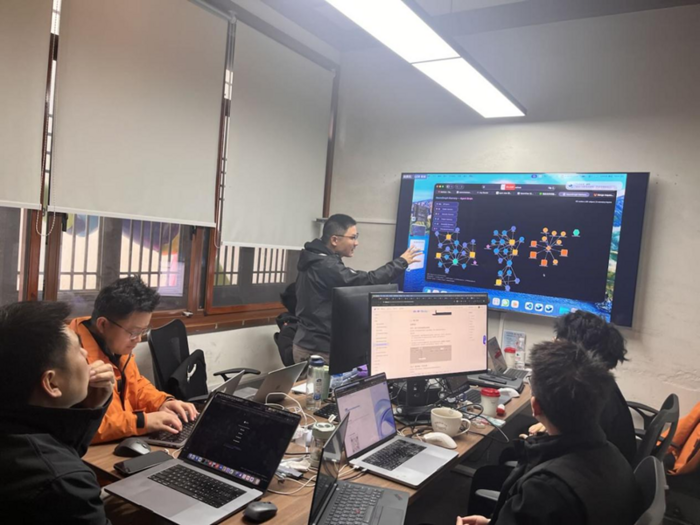
(图:云器科技Singclaw项目组在探索基于Memory Graph对生产可用智能体的优化效果)

 当通用大模型负责“通识”,沉淀了深厚数据底蕴的垂直 Agent 便负责“实战”。二者协同,正帮助千千万万的超级个体打破人效天花板,重塑商业范式。而这一切,才刚刚开始。

注:文/龚作仁,文章来源:Laborer,本文为作者独立观点,不代表亿邦动力立场。

【版权提示】亿邦动力倡导尊重与保护知识产权。未经许可,任何人不得复制、转载、或以其他方式使用本网站的内容。如发现本站文章存在版权问题,烦请提供版权疑问、身份证明、版权证明、联系方式等发邮件至run@ebrun.com,我们将及时沟通与处理。

已点赞

+1

{{ praise_text }}

好文章,值得被更多人看到

广告

下一篇

跨境电商资源对接

《全球跨境电商服务商资源手册》第二期手册现已发布,触达更多资源,了解跨境服务商信息,欢迎点击链接下载。

了解详情

物流管控再收紧!SHEIN 限制美区半托管和自运营商家自发货

平台将于2026年6月30日起,限制美国半托管和自运营商家订单的“导出地址发货”功能,仅支持使用“在线下单”(使用平台物流)发货功能。

跨境卖家 快时尚 服装 SHEIN

2026-06-03 18:07:03