• 亿邦公众号
    • APP下载

李佳琦半小时卖出2万亿Token 阿里激进推动算力零售化

作者:胡镤心 文章来源:亿邦动力

2026-11-03 11:00

作者:胡镤心 文章来源:亿邦动力

2026-11-03 11:00

邦小白快读

EN
全文速览

总1:最直接的干货是低价体验入口与获取路径。

1.李佳琦11月2日直播间上架千问办公个人会员月卡,0.01元补贴价,10分钟售出5万份、半小时近10万份,对应约2万亿Token权益额度,但这是权益额度,不是实际消耗的算力规模。

2.淘宝搜索Token可进入天猫AI空间站Token充值中心,京东有AI软件充值馆,淘宝充值中心把Token入口放在充话费、充流量、充水电煤旁,心智是获取AI服务像交水电费一样简单。

总2:普通用户不必懂技术,但要留意价格与续费。

1.使用者只需自然语言提需求,如把上周销售数据整理成带图表的PPT明早发,不必知道大模型和Token怎么算。

2.直播偏C端试水,当前大部分Token需求仍在开发者和企业侧;Token无公认价格、计价规则未统一,直播间万亿数字更像认知普及;10万份月卡下月是否原价续费未知,购买前要看清权益额度和续费条件。

总1:品牌营销与渠道打法出现新样本。

1.阿里把抽象Token包装成C端熟悉的会员月卡,用李佳琦直播间0.01元补贴价完成Token经济C端市场启蒙,半小时近10万份对应约2万亿Token权益额度,评论区刷起“321,上Token”形成传播。

2.渠道从企业IT采购转向电商货架和头部直播间:天猫AI空间站Token充值中心、京东AI软件充值馆,淘宝充值中心入口与话费、流量、水电煤并列,并用直播完成最后一段货架触达。

总2:定价、产品研发与消费趋势需重估。

1.定价上0.01元是补贴价,Token无公认价格、计价规则未统一,万亿数字更像大众认知普及而非成熟品类定价锚点。

2.产品研发趋向去技术化,用户不需懂API和Token,只需自然语言提需求;销售语言从降本增效变为早下班、自动写周报。

3.消费趋势是AI快消化,客群泛化到一二线白领、电商从业者、宝妈和注重性价比年轻女性;双11首日淘宝Token品类成交环比增长450%,个人创作者与小微企业会促销囤算力。

总1:Token零售化带来增长市场与新机会。

1.9月3日天猫上线AI空间站Token充值中心,接入阿里云、智谱、Kimi、MiniMax、DeepSeek等;京东同期上线AI软件充值馆,集纳智谱GLM、DeepSeek、豆包、Seedance、WorkBuddy等,卖家可关注平台入口和模型服务。

2.双11开售首日淘宝Token品类成交额环比增长450%,买家以个人创作者与小微企业为主,短视频博主、独立开发者、小电商卖家在促销窗口批量囤算力。

总2:可学习点是低门槛获客,风险是价格与续费。

1.李佳琦直播间0.01元补贴月卡10分钟5万份、半小时近10万份,说明低门槛标准化小额套餐能拉新;销售语言具象为早下班、自动写周报。

2.风险提示:Token无公认价格、计价规则未统一,消费者会比价;直播偏C端试水,大部分Token需求仍在开发者和企业侧;10万份月卡下月原价续费情况未知。

3.机会提示:零售端负责拉新与心智培育,低门槛套餐触达C端和小微用户;商家可借电商货架、充值中心和直播合作触达长尾。

总1:Token规模化供给与稳定交付是核心生产需求。

1.文章指出Token市场自然分层,零售端负责拉新与心智培育,工厂端负责规模化供给与稳定交付,服务企业和开发者的核心生产流,二者不是替代关系。

2.企业端需要的不是充值入口,而是一整套可靠的规模化生产与交付体系;当前大部分Token需求仍集中在开发者和企业侧。

总2:商业机会与数字化电商启示明确。

1.IDC预测2026至2031年国内企业智能体年度Token消耗量年均超30倍指数级跃升,2028年算力租赁厂商的Token分成收入有望达592亿元。

2.产品设计可走向标准化小额套餐和会员月卡,把算力包装成零售商品;通过电商平台、头部直播间和硬件捆绑触达海量长尾用户。

3.数字化启示是销售渠道下沉到电商货架和直播间,销售语言从并发吞吐私有化部署转为早下班、自动写周报等具象痛点,同时保留企业端规模化交付能力。

总1:行业趋势是AI快消化与Token零售化。

1.AI工具使用者从懂代码调API的开发者变为做PPT算Excel的普通白领,AI产品去技术化,销售模式快消品化;算力被包装成零售商品,渠道下沉到电商货架和头部直播间。

2.Token零售化已跑一个季度:天猫AI空间站、京东AI软件充值馆、淘宝充值中心入口,双11首日淘宝Token品类成交环比增长450%;AI商业化重心从技术侧向消费侧偏移。

总2:客户痛点与解决方案可落地。

1.客户痛点:普通白领、电商从业者、宝妈和小微店主不懂API、不会写代码、没有企业IT预算,面对PPT、Excel、客户消息和生活规划;企业端则需要可靠规模化生产与交付体系,不是充值入口。

2.解决方案:把Token包装成会员月卡和低门槛小额套餐,用直播和电商货架触达;用自然语言提需求替代提示词工作流;销售语言具象化;零售端拉新与工厂端规模化供给分层服务。

3.需注意Token无公认价格、计价规则未统一,消费者会比价,直播间万亿数字更偏向认知普及。

总1:平台正在承接Token零售化的入口与运营需求。

1.天猫9月3日上线AI空间站Token充值中心,接入阿里云、智谱、Kimi、MiniMax、DeepSeek等厂商,按周期订阅Plan和按用量充值方案并列陈列,淘宝搜索Token即可进入。

2.京东同期上线AI软件充值馆,集纳智谱GLM、DeepSeek、豆包、Seedance、WorkBuddy等模型与智能体服务;淘宝把Token入口放在充话费、充流量、充水电煤旁,植入AI服务像交水电费一样简单的心智。

总2:招商运营与风向规避重点。

1.招商运营可关注多模型厂商接入、Token品类专区、充值中心入口和直播货架联动;双11开售首日淘宝Token品类成交额环比增长450%,个人创作者与小微企业是主要买家。

2.风向规避:Token无公认价格、计价规则未统一,消费者本能比价,直播间万亿级数字更像认知普及而非成熟零售品类定价锚点;直播偏C端试水,当前大部分Token需求仍在开发者和企业侧,平台需分层运营零售端拉新与工厂端规模化交付。

总1:产业新动向是算力零售化与AI商业化重心偏移。

1.Token从企业IT预算里的一行账单变成普通人愿意用1分钱试的商品,李佳琦半小时卖出近10万份AI会员月卡,对应约2万亿Token权益额度,标志Token零售化走完从电商专区到头部主播货架的最后一段路。

2.AI产品去技术化、销售快消品化,客群从开发者扩展到普通白领、电商从业者、宝妈和小微店主;Token市场形成零售端拉新心智培育与工厂端规模化供给交付的自然分层。

总2:新问题与商业模式启示。

1.新问题:Token该卖多少钱没有公认答案,计价规则统一前直播间万亿数字更像大众认知普及而非定价锚点;C端付费习惯刚播种子,下月原价续费情况在货架之外。

2.商业模式:会员月卡、按周期订阅Plan与按用量充值、电商货架加头部直播、硬件捆绑、平台充值中心;IDC预测2026至2031年企业智能体年度Token消耗量年均超30倍,2028年算力租赁厂商Token分成收入有望达592亿元。

3.政策法规启示可归结为行业需面对计价规则与定价锚点缺失,但文章未涉及具体政策法规。

声明:快读内容全程由AI生成,请注意甄别信息。如您发现问题,请发送邮件至 run@ebrun.com 。

我是 品牌商 卖家 工厂 服务商 平台商 研究者 帮我再读一遍。

Quick Summary

Summary 1: The most direct takeaway is the low-price trial entry point and access path.

1. On Nov 2, Li Jiaqi's livestream listed the Qwen Office personal membership monthly card at a subsidized price of RMB 0.01; it sold 50,000 units in 10 minutes and nearly 100,000 in half an hour, corresponding to about 2 trillion Token entitlement quota, though this is an entitlement quota, not the actual scale of compute consumed.

2. Searching Token on Taobao leads to the Tmall AI Space Station Token top-up center, and JD.com has an AI software top-up hall. Taobao's top-up center places the Token entry alongside mobile phone top-ups, data top-ups, and utility bill payments, conveying the idea that accessing AI services is as simple as paying utility bills.

Summary 2: Ordinary users do not need to understand the technology, but should watch price and renewal terms.

1. Users only need to state needs in natural language, such as turning last week's sales data into a PPT with charts and sending it by tomorrow morning; they do not need to know how large models and Tokens are calculated.

2. Livestream sales are mainly a C-end trial; most Token demand remains on the developer and enterprise side. Token has no recognized price and pricing rules are not unified; the trillion-level figure in the livestream is more about awareness building. It is unknown whether the 100,000 monthly cards will renew at full price next month, so buyers should check entitlement quotas and renewal conditions before purchase.

Summary 1: A new sample has emerged in brand marketing and channel tactics.

1. Alibaba packaged abstract Tokens as a C-end-familiar membership monthly card and used a RMB 0.01 subsidized price in Li Jiaqi's livestream to complete C-end market education for the Token economy; nearly 100,000 cards in half an hour corresponded to about 2 trillion Token entitlement quota, and comments chanted 321, add Tokens to drive spread.

2. Channels shifted from enterprise IT procurement to e-commerce shelves and top livestreams: the Tmall AI Space Station Token top-up center and the JD AI software top-up hall, with Taobao's top-up center entry placed alongside phone, data, and utility top-ups; livestreaming completed the final stage of shelf reach.

Summary 2: Pricing, product R&D, and consumption trends need reassessment.

1. On pricing, RMB 0.01 is a subsidy; Token has no recognized price and pricing rules are not unified, so the trillion-level figure is more mass awareness building than a mature category pricing anchor.

2. Product R&D is moving toward de-technicalization; users do not need to understand APIs and Tokens, only state needs in natural language; sales language shifts from cost reduction and efficiency gains to leaving work early and automatically writing weekly reports.

3. The consumption trend is the FMCG-ization of AI, with customers broadening to tier-1 and tier-2 white-collar workers, e-commerce practitioners, mothers, and cost-conscious young women; on the first day of Double 11, Taobao's Token category transaction value rose 450% from the previous period, and individual creators and small micro enterprises will stock up on compute during promotions.

Summary 1: Token retailization creates a growth market and new opportunities.

1. On Sept 3, Tmall launched the AI Space Station Token top-up center, connecting Alibaba Cloud, Zhipu, Kimi, MiniMax, DeepSeek, and others; JD launched an AI software top-up hall in the same period, aggregating Zhipu GLM, DeepSeek, Doubao, Seedance, WorkBuddy, and other services; sellers can watch platform entries and model services.

2. On the first day of Double 11 sales, Taobao's Token category transaction value rose 450% from the previous period; buyers are mainly individual creators and small micro enterprises, with short-video bloggers, independent developers, and small e-commerce sellers bulk-stocking compute during the promotion window.

Summary 2: The lesson is low-threshold customer acquisition; the risk is price and renewal.

1. Li Jiaqi's livestream sold 50,000 subsidized RMB 0.01 monthly cards in 10 minutes and nearly 100,000 in half an hour, showing that low-threshold standardized small packages can acquire new users; sales language is concretized as leaving work early and automatically writing weekly reports.

2. Risk note: Token has no recognized price and pricing rules are not unified, so consumers will compare prices; livestreaming is mainly a C-end trial, and most Token demand remains on the developer and enterprise side; it is unknown whether the 100,000 monthly cards will renew at full price next month.

3. Opportunity note: Retail handles customer acquisition and awareness building; low-threshold packages reach C-end and small micro users; merchants can use e-commerce shelves, top-up centers, and livestream cooperation to reach the long tail.

Summary 1: Scaled Token supply and stable delivery are core production needs.

1. The article notes that the Token market is naturally layered: retail handles customer acquisition and awareness building, while factories handle scaled supply and stable delivery, serving the core production flow of enterprises and developers; the two are not substitutes.

2. Enterprises need not a top-up entry but a reliable end-to-end scaled production and delivery system; most Token demand is still concentrated on the developer and enterprise side.

Summary 2: Business opportunities and digital e-commerce implications are clear.

1. IDC forecasts that from 2026 to 2031, annual Token consumption by domestic enterprise agents will jump by more than 30x on average annually; by 2028, Token revenue sharing for compute leasing vendors is expected to reach RMB 59.2 billion.

2. Product design can move toward standardized small packages and membership monthly cards, packaging compute as retail goods; reach massive long-tail users through e-commerce platforms, top livestreams, and hardware bundling.

3. The digital implication is that sales channels sink to e-commerce shelves and livestreams; sales language shifts from concurrency, throughput, and private deployment to concrete pain points such as leaving work early and automatically writing weekly reports, while retaining enterprise-grade scaled delivery capability.

Summary 1: The industry trend is the FMCG-ization of AI and Token retailization.

1. AI tool users have shifted from developers who understand code and APIs to ordinary white-collar workers making PPTs and Excel sheets; AI products are de-technicalizing and sales models are becoming FMCG-like; compute is packaged as retail goods, with channels sinking to e-commerce shelves and top livestreams.

2. Token retailization has run for a quarter: Tmall AI Space Station, JD AI software top-up hall, Taobao top-up center entry; on the first day of Double 11, Taobao's Token category transaction value rose 450% from the previous period; the focus of AI commercialization is shifting from technology to consumption.

Summary 2: Customer pain points and solutions can be implemented.

1. Customer pain points: ordinary white-collar workers, e-commerce practitioners, mothers, and small micro shop owners do not understand APIs, cannot write code, and have no enterprise IT budget, while facing PPTs, Excel, customer messages, and life planning; enterprises need a reliable scaled production and delivery system, not a top-up entry.

2. Solutions: package Tokens as membership monthly cards and low-threshold small packages, and reach users via livestreams and e-commerce shelves; replace prompt workflows with natural-language requests; make sales language concrete; serve customer acquisition at retail and scaled supply at factories in layers.

3. Note that Token has no recognized price and pricing rules are not unified, so consumers will compare prices; the trillion-level livestream figure is more about awareness building.

Summary 1: Platforms are taking on the entry and operations needs of Token retailization.

1. Tmall launched the AI Space Station Token top-up center on Sept 3, connecting Alibaba Cloud, Zhipu, Kimi, MiniMax, DeepSeek, and other vendors, with periodic subscription Plans and usage-based top-up options displayed side by side; users can enter by searching Token on Taobao.

2. JD launched an AI software top-up hall in the same period, aggregating model and agent services such as Zhipu GLM, DeepSeek, Doubao, Seedance, and WorkBuddy; Taobao placed the Token entry next to phone, data, and utility top-ups, implanting the idea that AI services are as simple as paying utility bills.

Summary 2: Key points for merchant recruitment and operations, and trend risk avoidance.

1. Merchant recruitment and operations can focus on multi-model vendor access, Token category zones, top-up center entries, and livestream-shelf linkage; on the first day of Double 11 sales, Taobao's Token category transaction value rose 450% from the previous period, with individual creators and small micro enterprises as the main buyers.

2. Trend risk avoidance: Token has no recognized price and pricing rules are not unified, so consumers instinctively compare prices; trillion-level livestream figures are more awareness building than pricing anchors for a mature retail category; livestreaming is mainly a C-end trial, and most Token demand remains on the developer and enterprise side, so platforms need layered operations: retail for customer acquisition and factories for scaled delivery.

Summary 1: The new industry development is compute retailization and a shift in the focus of AI commercialization.

1. Tokens have moved from a line item in enterprise IT budgets to a product ordinary people are willing to try for RMB 0.01; Li Jiaqi sold nearly 100,000 AI membership monthly cards in half an hour, corresponding to about 2 trillion Token entitlement quota, marking that Token retailization has completed the last leg from e-commerce zones to top streamer shelves.

2. AI products are de-technicalizing and sales are becoming FMCG-like; the customer base has expanded from developers to ordinary white-collar workers, e-commerce practitioners, mothers, and small micro shop owners; the Token market has formed a natural layering: retail for customer acquisition and awareness building, and factories for scaled supply and delivery.

Summary 2: New questions and business model implications.

1. New questions: There is no recognized answer on how much Tokens should cost; before pricing rules are unified, trillion-level livestream figures are more mass awareness building than pricing anchors; C-end payment habits have just been seeded, and full-price renewal next month remains outside the shelf.

2. Business models: membership monthly cards, periodic subscription Plans and usage-based top-ups, e-commerce shelves plus top livestreams, hardware bundling, platform top-up centers; IDC forecasts that from 2026 to 2031 annual Token consumption by enterprise agents will rise by more than 30x on average annually, and by 2028 Token revenue sharing for compute leasing vendors is expected to reach RMB 59.2 billion.

3. Policy and regulatory implications can be summarized as the industry needing to address the lack of pricing rules and pricing anchors, but the article does not cover specific policies or regulations.

Disclaimer: The "Quick Summary" content is entirely generated by AI. Please exercise discretion when interpreting the information. For issues or corrections, please email run@ebrun.com .

I am a Brand Seller Factory Service Provider Marketplace Seller Researcher Read it again.

【亿邦原创】11月2日晚,李佳琦直播间上架了一件没有色号、无法试用的商品:千问办公个人会员月卡。开卖10分钟售出5万份,半小时累计近10万份,对应约2万亿Token的算力额度。直播间评论区刷起“321,上Token”。

1992年出生的阿里副总裁陈宇森坐在李佳琦旁边,被要求“做个AI分身24小时陪女生聊天”时,他回答“AI取代不了李佳琦”。
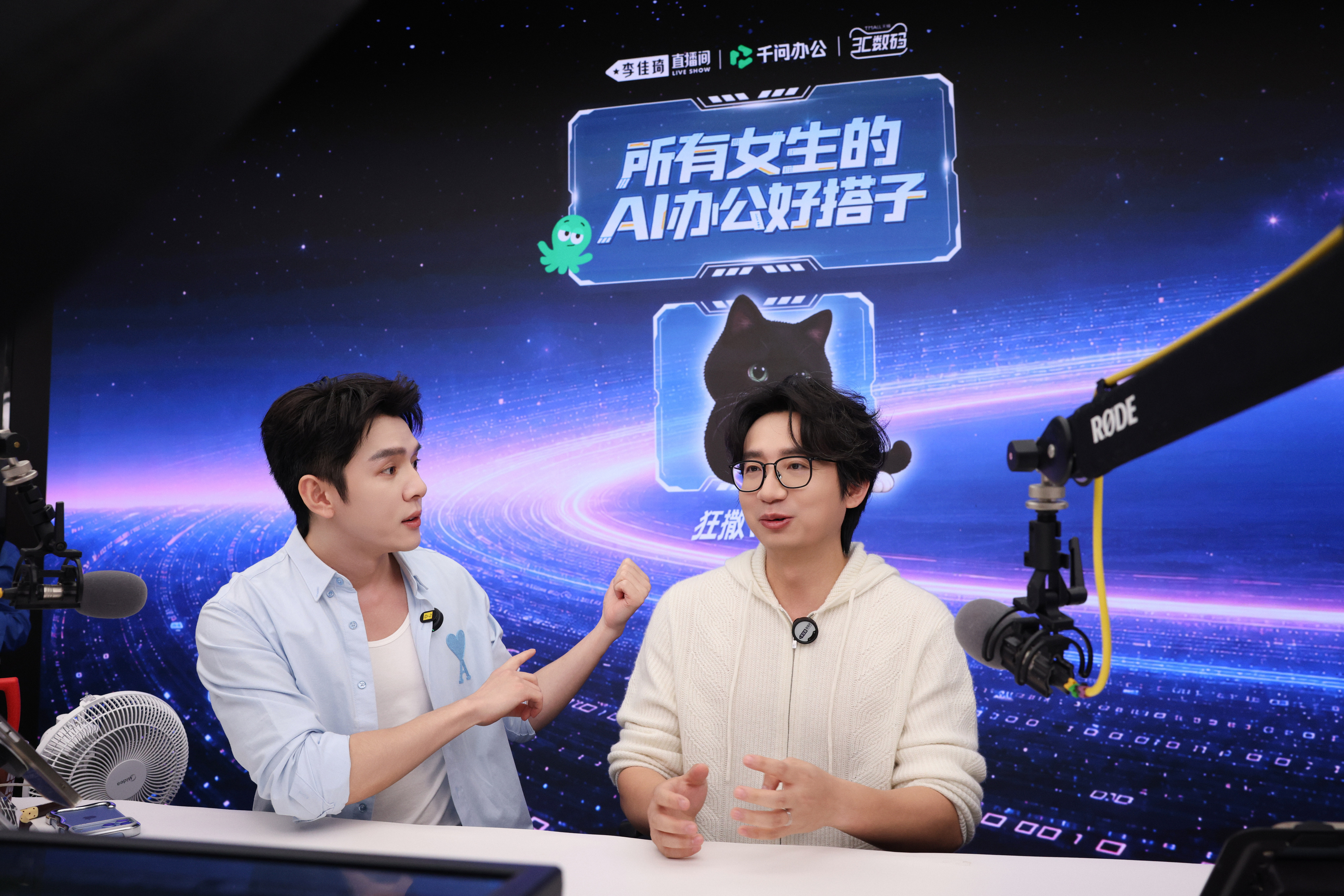
当晚售出的是0.01元补贴价月卡。2万亿是权益额度,不是实际消耗的算力规模。

通过李佳琦的直播间,阿里把Token这个抽象的计量单位,包装成C端熟悉的“会员月卡”,为未来的C端付费习惯播下种子,也在B端API销售之外,硬砸出一条支撑百亿美元ARR的C端分销新链路。

1、AI的快消化革命

李佳琦直播间的受众主要是一二线城市的职场白领、电商从业者(如运营、客服、小微店主)、宝妈以及注重效率与性价比的年轻女性。她们不懂API,不会写代码,也没有企业的IT预算去采购重型软件,每天面对的是做不完的PPT、算不完的Excel表格、难缠的客户消息以及琐碎的生活规划。

当这群人成为AI工具的购买主力时,意味着AI工具的使用者从懂代码、调API的开发者,变成坐在工位上做PPT、算Excel的普通白领,也意味着AI工具从一种需要被集成和调试的前沿技术,转变为触手可及的大众消费品。

AI产品正在经历彻底的“去技术化”。在早期,它只能作为中间件卖给懂技术的人,用户需要自己去摸索提示词、搭建工作流;现在,普通白领根本不需要知道大模型是什么、Token怎么算,只需要说:“把上周的销售数据整理成一份带图表的PPT,明早发给我”,就可以了。

客群的泛化,直接逼着AI行业的销售模式发生了一场“快消品化”的革命。

过去,大厂的B2B销售需要去敲CIO的门,讲的是并发、吞吐和私有化部署;现在面对几十块钱的月卡,销售渠道直接下沉到了电商货架和头部直播间。

算力被包装成零售商品,销售语言也从降本增效这样的大词,变成了“早下班、自动写周报”这样具象的痛点。这种类似卖快消品的打法,让AI工具绕过了企业传统的IT采购部门,通过电商平台和硬件捆绑,直接触达了海量的长尾用户。

2、从企业后台到电商货架:Token零售化已经跑了一个季度

李佳琦直播间不是起点。

9月3日,天猫上线“AI空间站”Token充值中心,接入阿里云、智谱、Kimi、MiniMax、DeepSeek等厂商,按周期订阅的Plan和按用量充值的方案并列陈列,用户在淘宝搜索“Token”即可进入。京东同期上线“AI软件充值馆”,集纳智谱GLM、DeepSeek、豆包、Seedance、WorkBuddy等模型与智能体服务。

双11开售首日(10月20日),淘宝Token品类成交额环比增长450%。买家画像以个人创作者与小微企业为主——短视频博主、独立开发者、小电商卖家,在促销窗口批量“囤”算力。在淘宝充值中心,Token的入口被放在充话费、充流量、充水电煤的旁边,平台试图植入的消费心智很直接:获取AI服务,应该像交水电费一样简单。

李佳琦直播间是这个链条上最显眼的一环,但远不是全部。它标志着Token零售化走完了从电商专区到头部主播货架的最后一段路。

3、直播之后:信号意义与真实的分层

当然,此次直播更偏向试水,直播渠道以C端用户为主,而当前大部分Token需求仍集中在开发者和企业侧。

IDC预测2026至2031年国内企业智能体年度Token消耗量有望实现年均超30倍的指数级跃升,到2028年算力租赁厂商的Token分成收入有望达到592亿元。与电商货架不同,企业端需要的不是充值入口,而是一整套可靠的规模化生产与交付体系。

这指向Token市场正在形成的自然分层:零售端负责拉新与心智培育,用低门槛、标准化的小额套餐触达C端和小微用户;工厂端负责规模化供给与稳定交付,服务企业和开发者的核心生产流。两者不是替代关系,而是同一产业链的不同环节。

当Token被摆上货架,消费者的本能反应是比价,但“Token到底该卖多少钱”目前没有公认的答案。在计价规则统一之前,直播间的万亿级数字,更像一场面向大众的认知普及,而非一个成熟零售品类的定价锚点。

李佳琦曾经用5分钟卖出1.5万支口红,验证了直播电商售卖实体商品的能力。十三年后,他用半小时卖出10万份AI会员,验证的是算力正在从企业IT预算里的一行账单,变成普通人愿意用1分钱“试一下”的东西。

AI商业化的重心,开始从技术侧向消费侧偏移。

至于这10万份月卡里有多少会在下个月变成原价续费——那是货架之外的事。

本文首发于 亿邦动力 官方网站

【版权提示】亿邦动力倡导尊重与保护知识产权。未经许可,任何人不得复制、转载、或以其他方式使用本网站的内容。如发现本站文章存在版权问题,烦请提供版权疑问、身份证明、版权证明、联系方式等发邮件至run@ebrun.com,我们将及时沟通与处理。

已点赞

+1

{{ praise_text }}

好文章,值得被更多人看到

FAQ回顾

Token零售化是什么,AI算力为什么会被包装成会员月卡?

Token零售化指把大模型算力额度包装成标准化小额套餐,在电商货架和直播间销售。李佳琦直播间上架千问办公个人会员月卡,0.01元补贴价,10分钟售出5万份、半小时近10万份,对应约2万亿Token权益额度,让不懂API和代码的普通白领也能低门槛获取AI服务。

AI Token零售目前有哪些主要渠道和平台?

9月3日天猫上线AI空间站Token充值中心,接入阿里云、智谱、Kimi、MiniMax、DeepSeek等;京东上线AI软件充值馆,集纳智谱GLM、DeepSeek、豆包、Seedance、WorkBuddy等;李佳琦直播间则上架千问办公个人会员月卡。淘宝还把Token入口放在充话费、充流量、充水电煤旁。

Token零售化对AI行业销售模式有什么影响?

AI销售从面向CIO的B2B模式,讲并发、吞吐和私有化部署,转向电商货架和头部直播间;销售语言从“降本增效”变为“早下班、自动写周报”等具象痛点。这种快消品化打法绕过企业传统IT采购部门,直接触达个人创作者、小微企业和长尾用户,行业叙事也从参数与榜单转向转化率、客单价和拉新成本。

C端Token零售与企业端算力需求有什么区别?

零售端以低门槛、标准化小额套餐触达C端和小微用户,负责拉新与消费心智培育;企业端需要可靠的规模化生产与交付体系,服务企业和开发者的核心生产流。IDC预测2026至2031年国内企业智能体年度Token消耗量年均增长超30倍,2028年算力租赁厂商Token分成收入有望达592亿元。

普通用户购买AI会员月卡能解决哪些工作场景?

普通白领无需懂API或写代码,购买AI会员月卡后可用于做PPT、算Excel、整理销售数据并生成带图表的PPT、处理客户消息和规划生活事务。直播间受众包括一二线城市职场白领、电商运营与客服、小微店主、宝妈及注重效率与性价比的年轻女性。

广告

下一篇

2021亿邦产业互联网大会

12月16-17日,在北京,让中小企业“不会转、不能转、不敢转”的数字化难题,被产业互联网3+1范式实效化解。

点我报名

江苏夫妇 身家超过马云和李嘉诚

中国富豪榜,杀出一对来自江苏的黑马夫妇。